English

Royal Society of London
The Royal Society is the independent scientific academy of the United Kingdom…
Reads at Grades 3–5 Listens at Grades 1–5
Print & create
Answer keys·No prep·Free with an account
28 worksheets · answer keys · full story · quiz · Ages 8-10 · CEFR B1
Plus adds 116,000+ more stories in 27 languages, audio for every one, and printables for all of them.
Just want Royal Society of London?
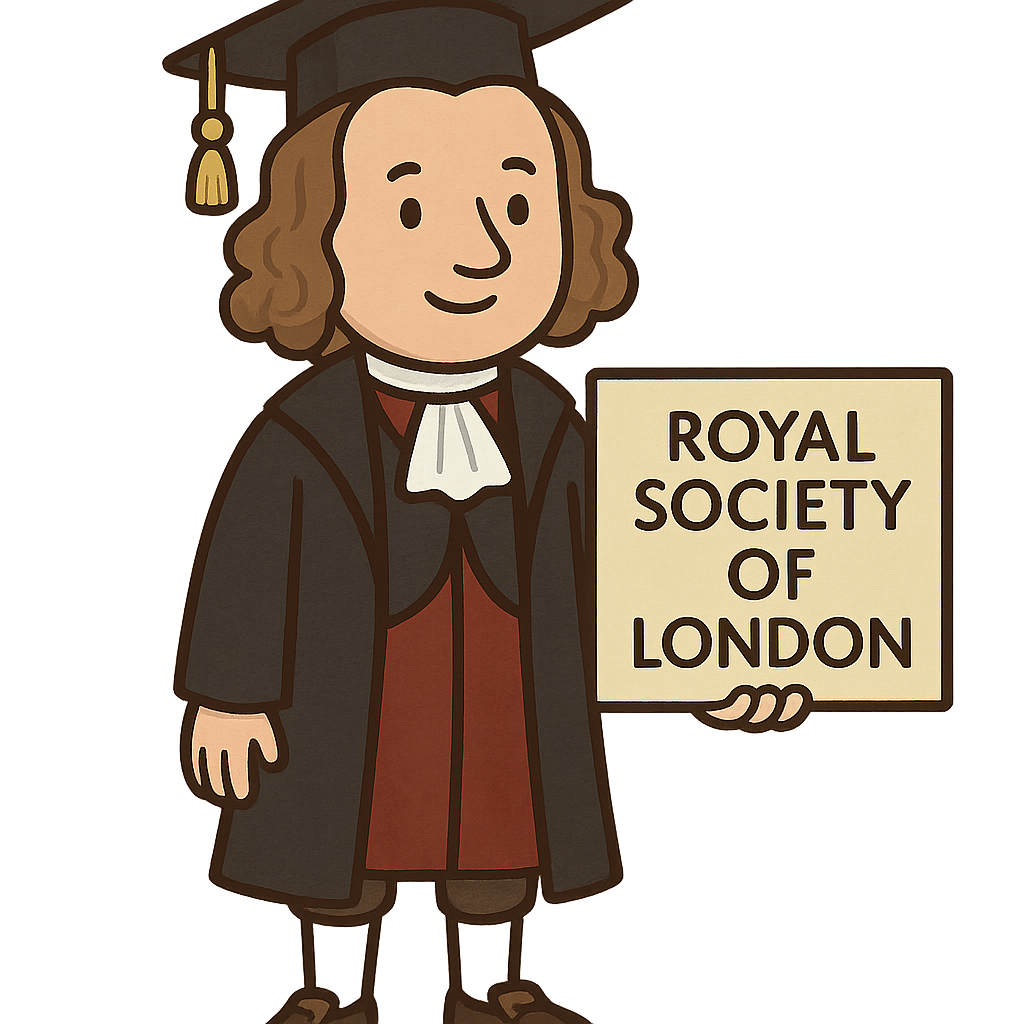
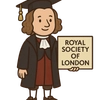
Hello! We are the Royal Society of London for Improving Natural Knowledge. That’s a long name, so most people just call us the Royal Society. Our story begins in London, England, on a chilly day, November 28th, 1660. On that day, a group of 12 friends gathered together. They were thinkers, doctors, and architects, including the famous Christopher Wren, who would later help rebuild London. They shared a powerful idea: the best way to understand the world was not just by reading old books, but by doing experiments and carefully observing the results. They wanted to create a special club, or society, where they could meet to discuss science and share what they had learned.
From these early meetings, we chose a motto to guide all of our work: 'Nullius in verba.' It is a phrase in the Latin language that means 'Take nobody's word for it.' This became our most important rule. It serves as a constant reminder that scientific ideas should not be accepted just because someone important said them. Instead, every claim must be tested and supported by evidence found through experiments. This principle of questioning and testing is the very foundation of modern science, and it was the central purpose for our creation.
Only two years after we started meeting, something very important happened. In 1662, King Charles II gave us a Royal Charter. This was a special document from the king that officially recognized us and gave us his support, turning our informal club into a formal, respected society. Our mission was clear: to use the power of scientific discovery for the good of all people. To help achieve this, we did something that changed the world of science forever. In 1665, we began publishing the world's very first scientific journal, which we called 'Philosophical Transactions.' Before this journal existed, it was difficult for scientists to share their work. A discovery made in one country might not be known in another for years. Our journal created a way for scientists everywhere to read about new experiments, learn from each other’s results, and build upon each other’s work, which allowed knowledge to grow much faster.
The Royal Society: A Story of Science
Hello! We are the Royal Society of London for Improving Natural Knowledge. That’s a long name, so most people just call us the Royal Society. Our story begins in London, England, on a chilly day, November 28th, 1660. On that day, a group of 12 friends gathered together. They were thinkers, doctors, and architects, including the famous Christopher Wren, who would later help rebuild London. They shared a powerful idea: the best way to understand the world was not just by reading old books, but by doing experiments and carefully observing the results. They wanted to create a special club, or society, where they could meet to discuss science and share what they had learned.
From these early meetings, we chose a motto to guide all of our work: 'Nullius in verba.' It is a phrase in the Latin language that means 'Take nobody's word for it.' This became our most important rule. It serves as a constant reminder that scientific ideas should not be accepted just because someone important said them. Instead, every claim must be tested and supported by evidence found through experiments. This principle of questioning and testing is the very foundation of modern science, and it was the central purpose for our creation.
Only two years after we started meeting, something very important happened. In 1662, King Charles II gave us a Royal Charter. This was a special document from the king that officially recognized us and gave us his support, turning our informal club into a formal, respected society. Our mission was clear: to use the power of scientific discovery for the good of all people. To help achieve this, we did something that changed the world of science forever. In 1665, we began publishing the world's very first scientific journal, which we called 'Philosophical Transactions.' Before this journal existed, it was difficult for scientists to share their work. A discovery made in one country might not be known in another for years. Our journal created a way for scientists everywhere to read about new experiments, learn from each other’s results, and build upon each other’s work, which allowed knowledge to grow much faster.
Over the many centuries since our founding, some of the most brilliant minds in history have become our members, whom we call 'Fellows.' Being elected a Fellow of the Royal Society is a great honor for a scientist. Sir Isaac Newton, the incredible scientist who explained the laws of gravity and motion, was one of our early members and even served as our president. Much later, Charles Darwin, whose theory of evolution changed how we understand life on Earth, shared his groundbreaking ideas with our Fellows. Our meeting rooms have been places for discussion and debate about some of the biggest discoveries ever made, from identifying new gases like oxygen to figuring out the complex structure of DNA. We provided a trusted place for scientists to present, challenge, and perfect their work before sharing it with the world.
While we are proud of our famous Fellows, our work has never been about keeping science inside a private club. We firmly believe that science is for everyone. A big part of our mission is to share knowledge and inspire curiosity in people of all ages. To do this, we give out money through grants and awards to support new and exciting research projects. We also make a special effort to help young scientists at the start of their careers, ensuring that fresh ideas and new talent can flourish. We also open our doors to the public. We host lectures and events, including our yearly Summer Science Exhibition. This is a fantastic festival of science where anyone can visit, see the latest amazing discoveries up close, and even talk to the scientists who made them.
Today, more than 360 years after that first meeting in London, we are still a very active and important scientific academy. Our original goals remain, but our work has adapted to the challenges of the modern world. We use the knowledge of our expert Fellows to advise the British government on critical scientific topics, such as how to deal with climate change and how to prepare for new diseases. We also work hard to improve science education in schools, hoping to inspire the next generation of scientists and thinkers. We collaborate with scientific organizations across the globe, because we know that the world's biggest challenges require people everywhere to work together. Our fundamental mission has never changed: to recognize and support the very best science and to use that knowledge to build a better future for everyone.
Wow facts
About
The Royal Society is the independent scientific academy of the United Kingdom, dedicated to promoting excellence in science for the benefit of humanity.
Take a Quiz
Question 1 of 5
What does the Royal Society's motto, 'Nullius in verba,' mean in English?
Explore next





Want to do even more?
Go beyond exploring. Unlock tools that turn every story into real learning.

Storypie Plus for families
Full stories, quizzes, and printables. Nights and car rides, sorted.
- Unlimited audio stories
- Create Mode: your child stars in the story
- Offline downloads
- Printable worksheets & coloring pages

Why Storypie for Schools
Students engaged. Prep in seconds. Evenings back to you.
- Worksheets & Quizzes
- Classroom Management
- Formative Assessment
- Custom Curriculum & Lesson Plans
- 27 Languages

Why Storypie for Homeschool
Curriculum done. They'll ask for more. Hours back in your day.
- Worksheet Generator
- First-Person Audio Stories
- Built-in Comprehension Quizzes
- Custom Curriculum & Lesson Plans
- Print & Go Activities