English

Royal Society of London
The Royal Society is the independent scientific academy of the United Kingdom…
Reads at Grades K-2 Listens at K–3
Print & create
Answer keys·No prep·Free with an account
28 worksheets · answer keys · full story · quiz · Ages 6-8 · CEFR A2
Plus adds 116,000+ more stories in 27 languages, audio for every one, and printables for all of them.
Just want Royal Society of London?
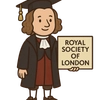
Hello! We are the Royal Society. Our full name is a bit long: The Royal Society of London for Improving Natural Knowledge. We started a very long time ago, in the year 1660, in a busy city called London, in England. At first, we were just a small club. A group of friends who loved science wanted a special place where they could get together. These friends, including a famous architect named Christopher Wren and a scientist named Robert Boyle, were very curious about the world. They didn't just want to read about things in books; they wanted to see how things worked for themselves. They believed the best way to learn was by doing experiments. This idea was so important to us that we chose a motto. A motto is like a special saying that explains what you believe. Our motto is 'Nullius in verba.' In English, that means 'Take nobody's word for it.' This reminds us to always ask questions and test ideas to find out what is really true.
Once our members started doing experiments, they made many exciting discoveries. But a discovery isn't very helpful if you keep it to yourself! We knew it was important to share what we were learning with other scientists and curious people. So, in 1665, we came up with a new idea. We started one of the world's very first science magazines, which we called *Philosophical Transactions*. This magazine was a place where scientists could write down what they did in their experiments and what they found out. Then, other people could read it, learn from it, and even try the experiments themselves. This helped science grow faster than ever before. One of our most famous members was Sir Isaac Newton. He was a brilliant scientist who shared his incredible ideas with us. He wrote about gravity, which is the force that keeps us on the ground, and about how light is made of all the colors of the rainbow. His work helped change how everyone understood the whole universe.
The Royal Society: A Club for Curious Minds
Hello! We are the Royal Society. Our full name is a bit long: The Royal Society of London for Improving Natural Knowledge. We started a very long time ago, in the year 1660, in a busy city called London, in England. At first, we were just a small club. A group of friends who loved science wanted a special place where they could get together. These friends, including a famous architect named Christopher Wren and a scientist named Robert Boyle, were very curious about the world. They didn't just want to read about things in books; they wanted to see how things worked for themselves. They believed the best way to learn was by doing experiments. This idea was so important to us that we chose a motto. A motto is like a special saying that explains what you believe. Our motto is 'Nullius in verba.' In English, that means 'Take nobody's word for it.' This reminds us to always ask questions and test ideas to find out what is really true.
Once our members started doing experiments, they made many exciting discoveries. But a discovery isn't very helpful if you keep it to yourself! We knew it was important to share what we were learning with other scientists and curious people. So, in 1665, we came up with a new idea. We started one of the world's very first science magazines, which we called Philosophical Transactions. This magazine was a place where scientists could write down what they did in their experiments and what they found out. Then, other people could read it, learn from it, and even try the experiments themselves. This helped science grow faster than ever before. One of our most famous members was Sir Isaac Newton. He was a brilliant scientist who shared his incredible ideas with us. He wrote about gravity, which is the force that keeps us on the ground, and about how light is made of all the colors of the rainbow. His work helped change how everyone understood the whole universe.
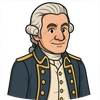
Our love for science didn't stay inside our meeting rooms in London. We wanted to learn about the entire planet. To do this, we helped send explorers on long voyages to faraway places. In the 1760s, we supported a brave sailor named Captain James Cook. He sailed his ship all the way to the Pacific Ocean. One of his special jobs for us was to study the planet Venus as it passed in front of the sun. Watching this from a different part of the world gave scientists important new information. But that wasn't all! On these amazing trips, Captain Cook and the scientists with him also explored lands that many people in Europe had never seen before. They carefully collected new kinds of plants, drew pictures of new animals, and made better maps of the world.
Even though we began hundreds of years ago, we are still very busy today. We are now the United Kingdom's national science academy. This means we are a special group that helps lead and support science for the whole country. Our members are some of the most respected scientists in the world, and they are called Fellows. We are proud of the great work scientists do, so we give out awards to celebrate their amazing discoveries. We also use our knowledge to help governments make smart decisions about important topics. For example, we help them understand science so they can make good rules about protecting our planet. Today, we support research that tries to solve big, modern problems, like climate change and finding cures for diseases. Our mission has always been the same: to support science for the benefit of all of humanity.
Wow facts
About
The Royal Society is the independent scientific academy of the United Kingdom, dedicated to promoting excellence in science for the benefit of humanity.
Take a Quiz
Question 1 of 4
What does the Royal Society's motto, 'Nullius in verba,' mean in English?
Explore next



Want to do even more?
Go beyond exploring. Unlock tools that turn every story into real learning.

Storypie Plus for families
Full stories, quizzes, and printables. Nights and car rides, sorted.
- Unlimited audio stories
- Create Mode: your child stars in the story
- Offline downloads
- Printable worksheets & coloring pages

Why Storypie for Schools
Students engaged. Prep in seconds. Evenings back to you.
- Worksheets & Quizzes
- Classroom Management
- Formative Assessment
- Custom Curriculum & Lesson Plans
- 27 Languages

Why Storypie for Homeschool
Curriculum done. They'll ask for more. Hours back in your day.
- Worksheet Generator
- First-Person Audio Stories
- Built-in Comprehension Quizzes
- Custom Curriculum & Lesson Plans
- Print & Go Activities