English

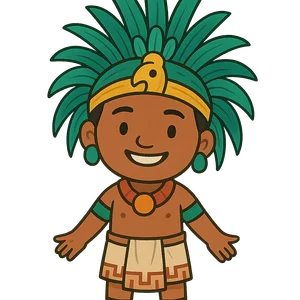
Aztec Empire
A powerful Mesoamerican empire that flourished in central Mexico from the 15th to the 16th centuries…
Reads at Grades 6–8 Listens at Grades 4–8
Print & create
Answer keys·No prep·Free with an account
28 worksheets · answer keys · full story · quiz · Ages 10-12 · CEFR B2
Plus adds 164,000+ more stories in 27 languages, audio for every one, and printables for all of them.
Just want Aztec Empire?
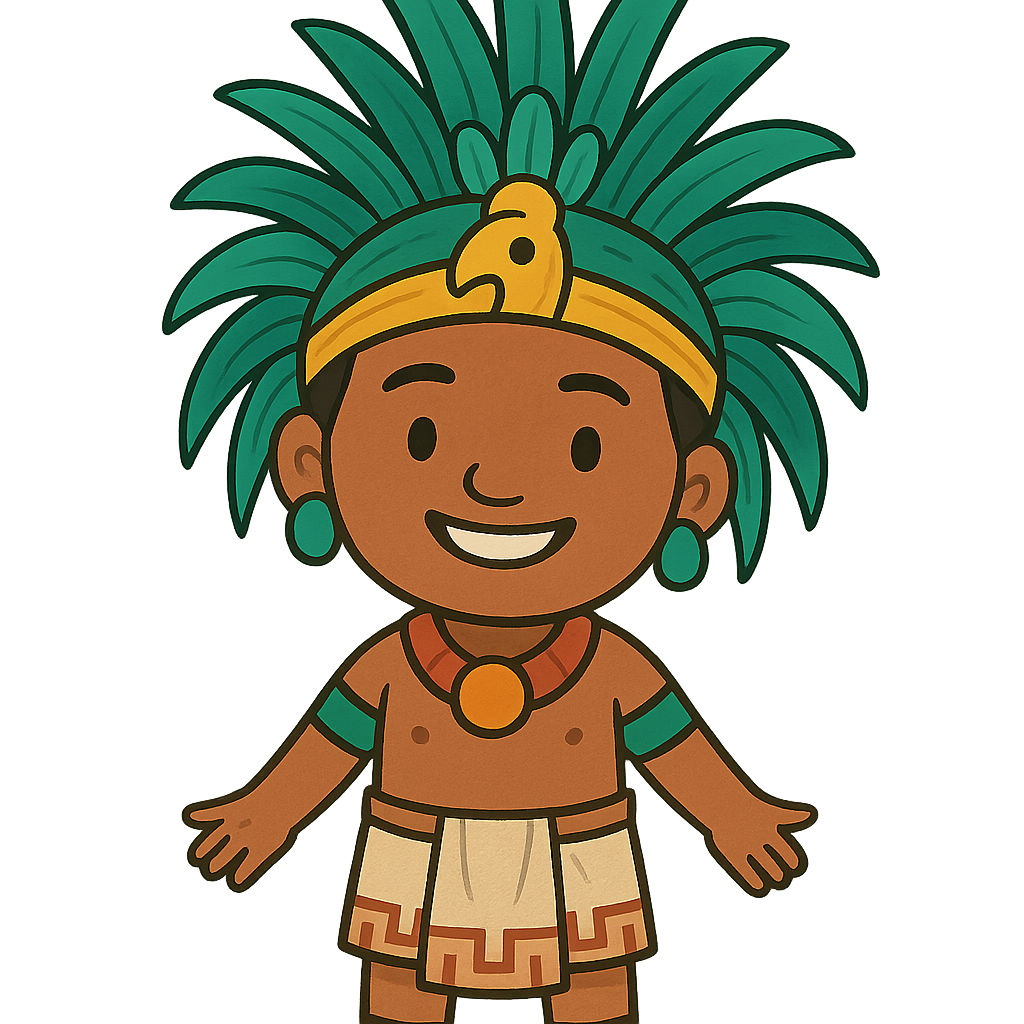
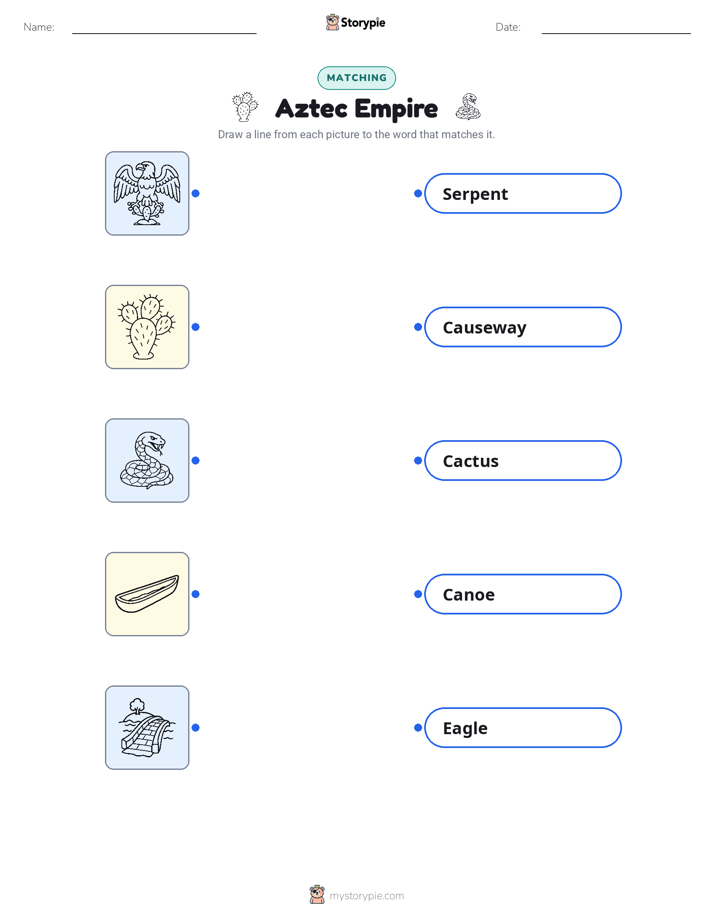
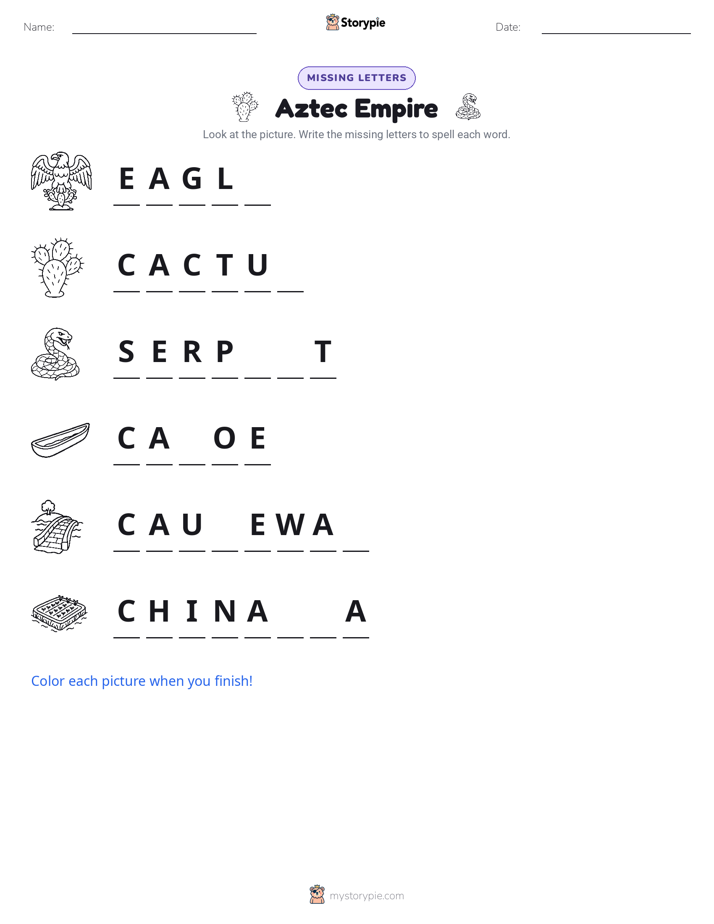
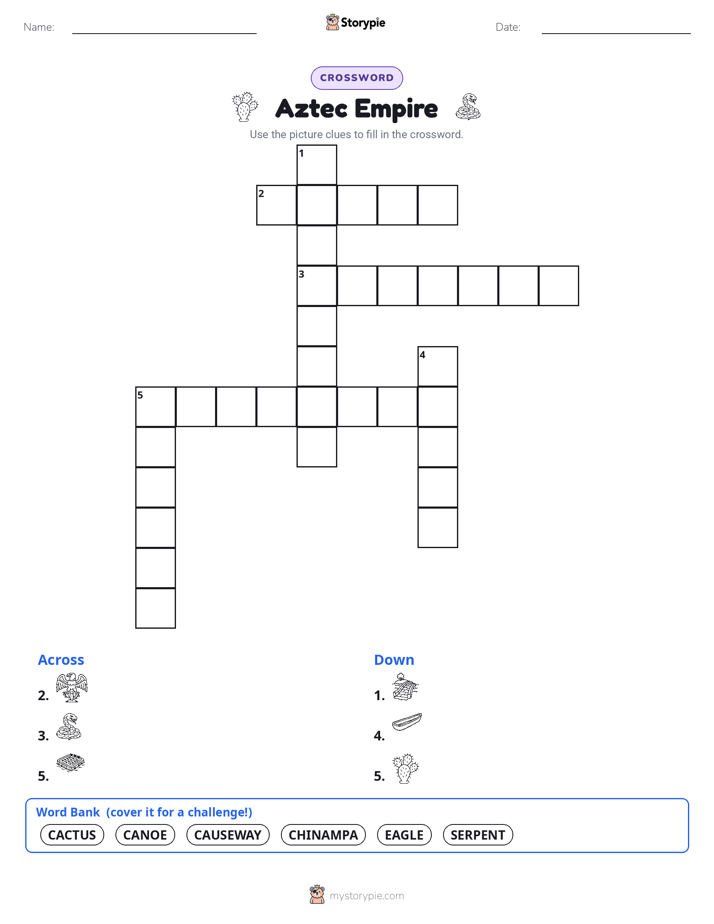
We are the Mexica, a people whose story is written on the surface of a great lake and in the heart of a vibrant land. Our history is one of journey, innovation, and strength. According to our origin stories, we began a long journey hundreds of years ago from a mythical homeland our ancestors called Aztlan. For generations, we traveled, guided by a prophecy from Huitzilopochtli, our patron god of the sun and war. The prophecy declared that we would find our true home where we saw an eagle perched on a cactus, devouring a serpent. After a long and difficult migration, our priests saw this very sign on a swampy island in the middle of Lake Texcoco. It was there, upon that sacred ground, that we began to build our magnificent capital city, Tenochtitlan. This was not just the end of a journey; it was the beginning of our empire.
From our island city, we knew that strength came from unity. To grow and protect our home, we formed a powerful bond with two of our neighbors, the city-states of Texcoco and Tlacopan. This agreement, known as the Triple Alliance, was the foundation of our empire. Together, our three cities became the dominant power in the Valley of Mexico. We combined our military might to expand our influence across the region, conquering other city-states. The peoples we brought under our control were required to pay us tribute, which could be anything from food and textiles to precious materials and goods. This system of tribute made our capital wealthy and powerful, allowing our civilization to flourish and our cities to grow into centers of art, trade, and learning.
We Are the People of the Sun
We are the Mexica, a people whose story is written on the surface of a great lake and in the heart of a vibrant land. Our history is one of journey, innovation, and strength. According to our origin stories, we began a long journey hundreds of years ago from a mythical homeland our ancestors called Aztlan. For generations, we traveled, guided by a prophecy from Huitzilopochtli, our patron god of the sun and war. The prophecy declared that we would find our true home where we saw an eagle perched on a cactus, devouring a serpent. After a long and difficult migration, our priests saw this very sign on a swampy island in the middle of Lake Texcoco. It was there, upon that sacred ground, that we began to build our magnificent capital city, Tenochtitlan. This was not just the end of a journey; it was the beginning of our empire.
From our island city, we knew that strength came from unity. To grow and protect our home, we formed a powerful bond with two of our neighbors, the city-states of Texcoco and Tlacopan. This agreement, known as the Triple Alliance, was the foundation of our empire. Together, our three cities became the dominant power in the Valley of Mexico. We combined our military might to expand our influence across the region, conquering other city-states. The peoples we brought under our control were required to pay us tribute, which could be anything from food and textiles to precious materials and goods. This system of tribute made our capital wealthy and powerful, allowing our civilization to flourish and our cities to grow into centers of art, trade, and learning.
Building a great city on a lake presented many challenges, but we were engineers and innovators. We transformed the watery landscape to suit our needs. To connect our island capital to the mainland, we constructed massive stone causeways, wide enough for people to travel across easily. A network of canals crisscrossed the city, acting as watery roads for canoes that carried people and goods everywhere. To feed our growing population, we created one of our most remarkable inventions: the chinampas. These were artificial islands, often called 'floating gardens,' that we built by weaving together reeds and piling mud and soil from the lakebed on top. On these incredibly fertile plots of land, we grew maize, beans, squash, and flowers, allowing us to harvest multiple crops a year and sustain a massive population in a place others might have seen as uninhabitable.
Our society was highly organized, with a clear structure that gave everyone a role to play. At the very top was the emperor, our ruler who was seen as a connection to the gods. Below him were nobles, priests, and decorated warriors who held important positions in the government and military. The largest group was the commoners, who were farmers, artisans, and merchants. We valued knowledge and discipline, and education was important for our children. Both boys and girls attended schools, though they learned different skills to prepare them for their future roles in society. Religion was at the center of our lives. We worshipped many gods, including Quetzalcoatl, the feathered serpent god, and believed they controlled the natural world. To keep the world in balance and ensure the sun would rise each day, we held complex ceremonies and believed that offerings were necessary to honor and nourish the gods. We developed sophisticated calendars to track time, plan agricultural cycles, and determine auspicious days for rituals and warfare.
In the year 1519, our world began to change forever. Strangers arrived on our shores from across the sea. They were the Spanish conquistadors, led by a man named Hernán Cortés. When our emperor, Moctezuma II, first heard of them, there was uncertainty and curiosity. We met them and saw their strange clothes, their powerful weapons, and the horses they rode, which were animals we had never seen before. The Spanish had technological advantages like steel swords and cannons. They also found allies among the peoples we had conquered, who were unhappy with paying tribute to our empire and saw the Spanish as a way to gain their own freedom. These alliances gave Cortés a much larger army, and soon, our initial interactions turned into a devastating conflict that brought war and disease to our great city of Tenochtitlan.
After a long and brutal siege, our magnificent capital city fell to the Spanish and their allies in 1521. This marked the end of our empire as a political power, but it was not the end of our people or our culture. We, the descendants of the Mexica and other neighboring groups, are still here. Our legacy endures in countless ways. Our language, Nahuatl, is still spoken by many people in Mexico today. The ruins of our grand temples and palaces lie beneath the streets of modern Mexico City, which was built directly on top of Tenochtitlan. Our contributions to the world are still enjoyed every day, from the foods we cultivated, like chocolate and avocados, to our intricate art and sophisticated understanding of astronomy. Though our empire is a part of history, our story continues. Our culture, traditions, and resilience live on.
Wow facts
About
A powerful Mesoamerican empire that flourished in central Mexico from the 15th to the 16th centuries, known for its capital city Tenochtitlan and complex cultural traditions.
Take a Quiz
Question 1 of 5
According to the story, what was the main purpose of the Triple Alliance between the Mexica and the city-states of Texcoco and Tlacopan?
Explore next


Want to do even more?
Go beyond exploring. Unlock tools that turn every story into real learning.

Storypie Plus for families
Full stories, quizzes, and printables. Nights and car rides, sorted.
- Unlimited audio stories
- Create Mode: your child stars in the story
- Offline downloads
- Printable worksheets & coloring pages

Why Storypie for Schools
Students engaged. Prep in seconds. Evenings back to you.
- Worksheets & Quizzes
- Classroom Management
- Formative Assessment
- Custom Curriculum & Lesson Plans
- 27 Languages

Why Storypie for Homeschool
Curriculum done. They'll ask for more. Hours back in your day.
- Worksheet Generator
- First-Person Audio Stories
- Built-in Comprehension Quizzes
- Custom Curriculum & Lesson Plans
- Print & Go Activities