English

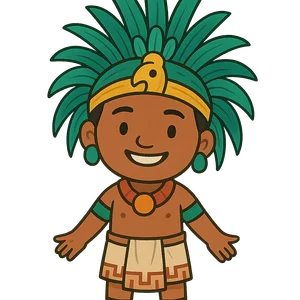
Aztec Empire
A powerful Mesoamerican empire that flourished in central Mexico from the 15th to the 16th centuries…
Reads at Grades K-2 Listens at K–3
Print & create
Answer keys·No prep·Free with an account
28 worksheets · answer keys · full story · quiz · Ages 6-8 · CEFR A2
Plus adds 164,000+ more stories in 27 languages, audio for every one, and printables for all of them.
Just want Aztec Empire?
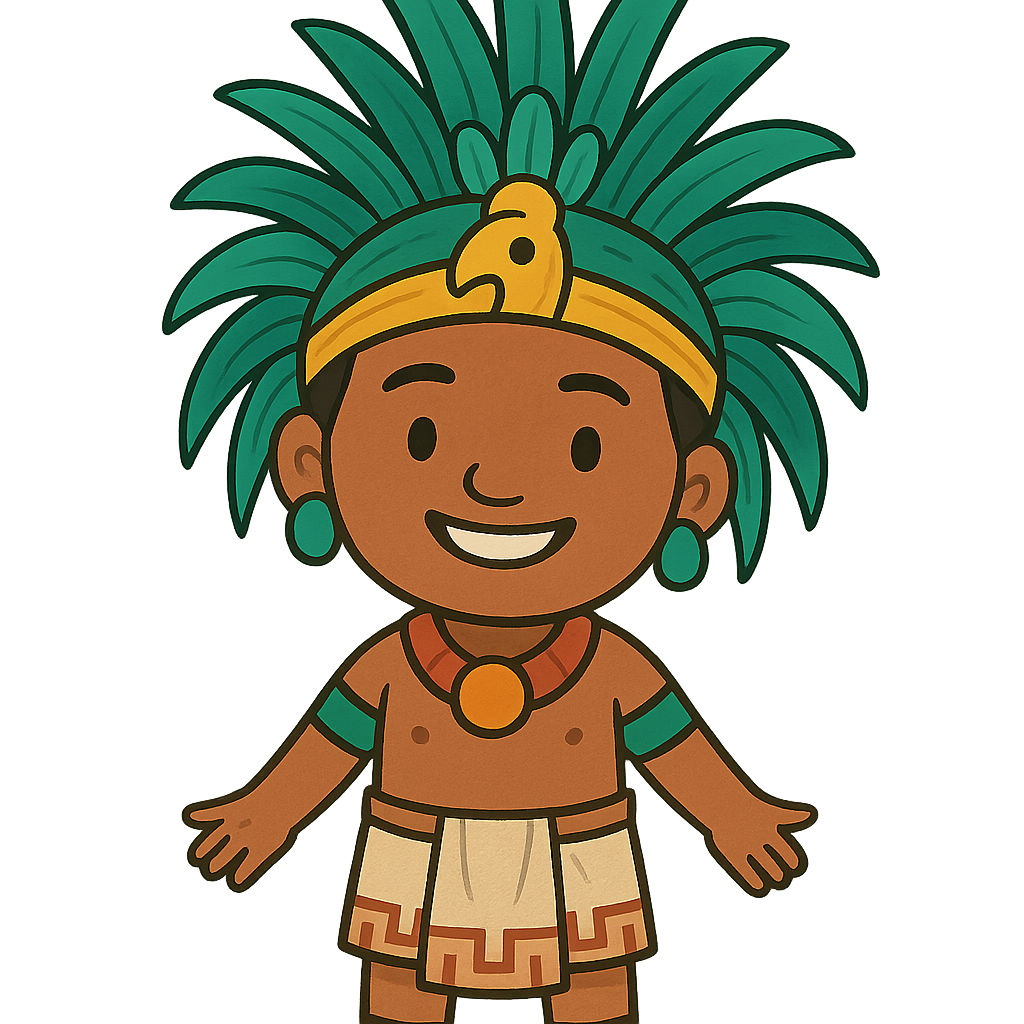
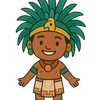
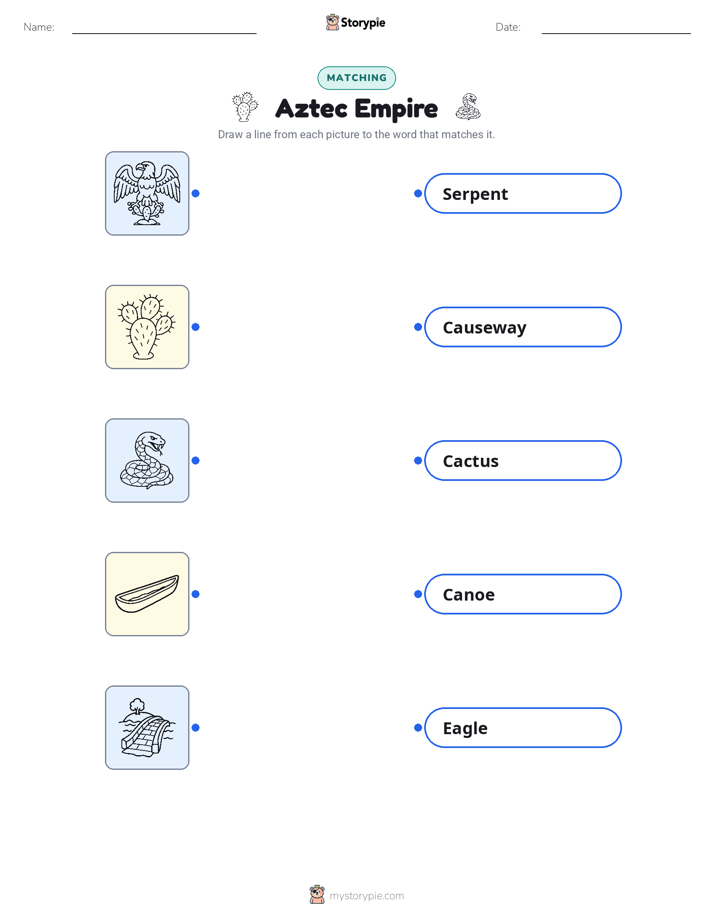
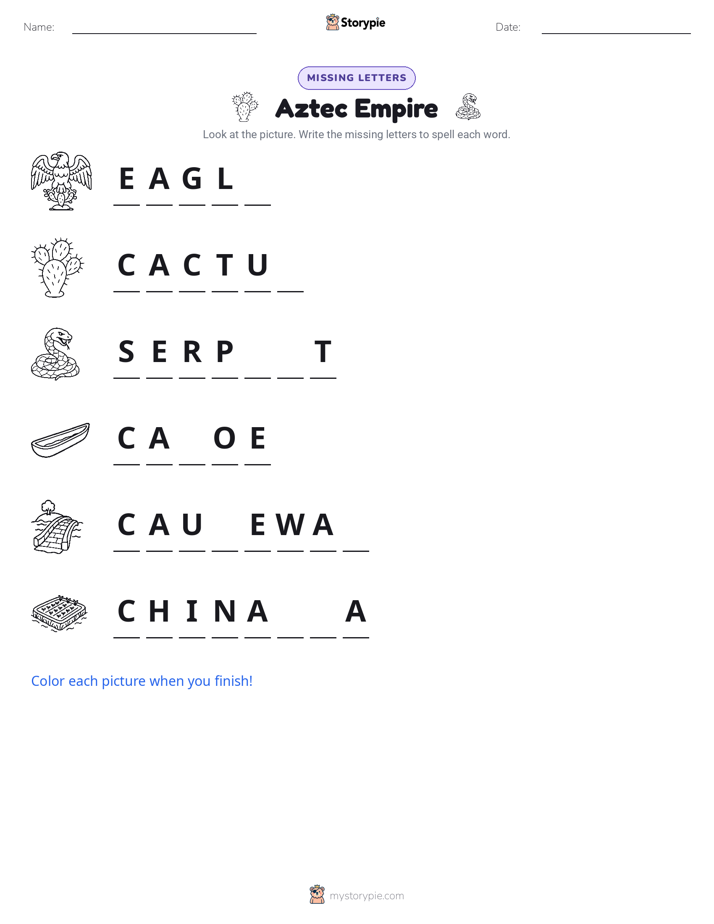
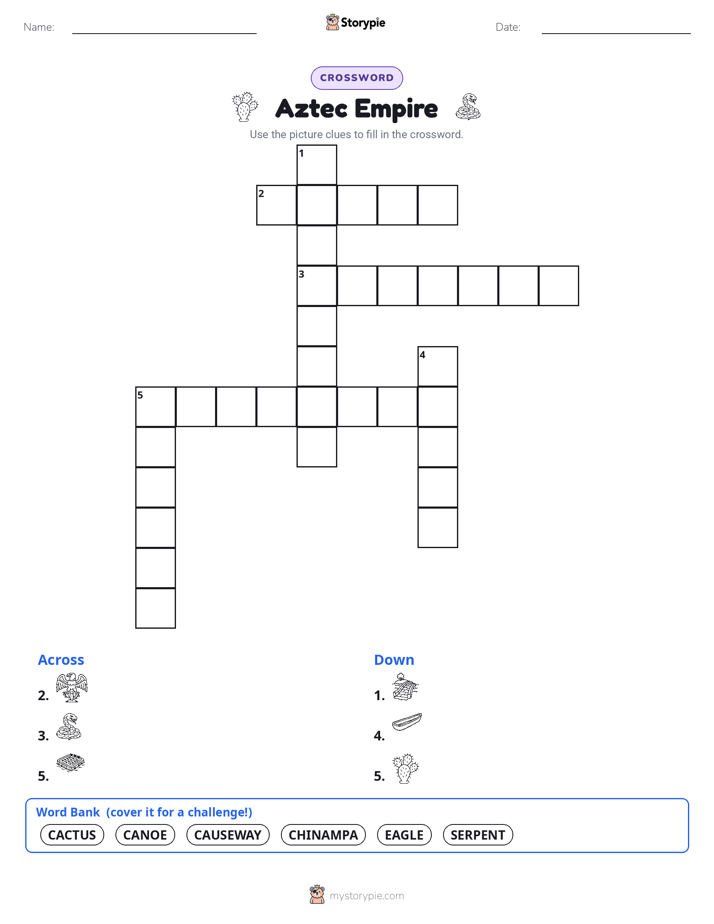
Hello! We are the people of the Aztec Empire, and we want to share the story of our amazing home. Long ago, we built our capital city, Tenochtitlan, in a very special place. It wasn't on a mountain or in a valley, but right on an island in the middle of a beautiful lake called Lake Texcoco. Imagine a whole city surrounded by sparkling water! Because our home was an island, we needed a way to travel to the land around the lake. So, we built long, wide bridges of land called causeways that stretched across the water. These special roads allowed people to walk or carry goods easily to and from our busy city.
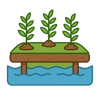
Living on a lake meant we had to find a clever way to grow our food. We couldn't just plant seeds in the ground like people in other places. Instead, we created something wonderful called chinampas, which were like floating gardens. We built these gardens by piling up mud from the bottom of the lake and planting trees to hold them in place. On these rich, watery plots of land, we grew delicious and important foods like corn, beans, and squash to feed everyone in the city. We also loved a special food that came from cacao beans. We would grind them up to make a wonderful chocolate drink that was very important to us.
We believed that learning was important for everyone. We had our own way of writing things down, not with letters, but with pictures and symbols. Each picture stood for a word or an idea. We would paint these symbols on long pages called codices to tell our stories, record our history, and keep track of important information. We thought it was so important for everyone to learn that all of our children went to school. It did not matter if they were boys or girls; every child had the chance to get an education and learn about our world, our history, and our traditions.
The City on the Lake: Our Aztec Story
Hello! We are the people of the Aztec Empire, and we want to share the story of our amazing home. Long ago, we built our capital city, Tenochtitlan, in a very special place. It wasn't on a mountain or in a valley, but right on an island in the middle of a beautiful lake called Lake Texcoco. Imagine a whole city surrounded by sparkling water! Because our home was an island, we needed a way to travel to the land around the lake. So, we built long, wide bridges of land called causeways that stretched across the water. These special roads allowed people to walk or carry goods easily to and from our busy city.
Living on a lake meant we had to find a clever way to grow our food. We couldn't just plant seeds in the ground like people in other places. Instead, we created something wonderful called chinampas, which were like floating gardens. We built these gardens by piling up mud from the bottom of the lake and planting trees to hold them in place. On these rich, watery plots of land, we grew delicious and important foods like corn, beans, and squash to feed everyone in the city. We also loved a special food that came from cacao beans. We would grind them up to make a wonderful chocolate drink that was very important to us.
We believed that learning was important for everyone. We had our own way of writing things down, not with letters, but with pictures and symbols. Each picture stood for a word or an idea. We would paint these symbols on long pages called codices to tell our stories, record our history, and keep track of important information. We thought it was so important for everyone to learn that all of our children went to school. It did not matter if they were boys or girls; every child had the chance to get an education and learn about our world, our history, and our traditions.
Life wasn't all work and school, of course. We had a very exciting and challenging ball game that was played for fun and during important ceremonies. The game was called ōllamaliztli. Teams would play on a long court with high walls. On one of the walls was a stone hoop, and the goal was to get a heavy rubber ball to go through it. It was much harder than it sounds! The rules were very strict. We were not allowed to use our hands or our feet to hit the ball. Instead, we had to use our hips, our knees, and our elbows to move the ball down the court and try to score.
Our empire was strong for a long time, but it ended around the year 1521 when soldiers arrived from a faraway country called Spain. Even though our empire is part of history, our culture did not disappear. Many of our descendants, the Nahua people, continue to live in Mexico today, carrying on traditions and speaking our language. You might even use some of our words without knowing it! The words “chocolate” and “avocado” came from our language. And if you visit modern-day Mexico City, you can still see the ruins of our great city, Tenochtitlan, reminding everyone of the amazing civilization we built on a lake.
Wow facts
About
A powerful Mesoamerican empire that flourished in central Mexico from the 15th to the 16th centuries, known for its capital city Tenochtitlan and complex cultural traditions.
Take a Quiz
Question 1 of 4
What did the people of the Aztec Empire build to travel across the water?
Explore next

Want to do even more?
Go beyond exploring. Unlock tools that turn every story into real learning.

Storypie Plus for families
Full stories, quizzes, and printables. Nights and car rides, sorted.
- Unlimited audio stories
- Create Mode: your child stars in the story
- Offline downloads
- Printable worksheets & coloring pages

Why Storypie for Schools
Students engaged. Prep in seconds. Evenings back to you.
- Worksheets & Quizzes
- Classroom Management
- Formative Assessment
- Custom Curriculum & Lesson Plans
- 27 Languages

Why Storypie for Homeschool
Curriculum done. They'll ask for more. Hours back in your day.
- Worksheet Generator
- First-Person Audio Stories
- Built-in Comprehension Quizzes
- Custom Curriculum & Lesson Plans
- Print & Go Activities