English

Aztec Empire
A powerful Mesoamerican empire that flourished in central Mexico from the 15th to the 16th centuries…
Reads at Grades 3–5 Listens at Grades 1–5
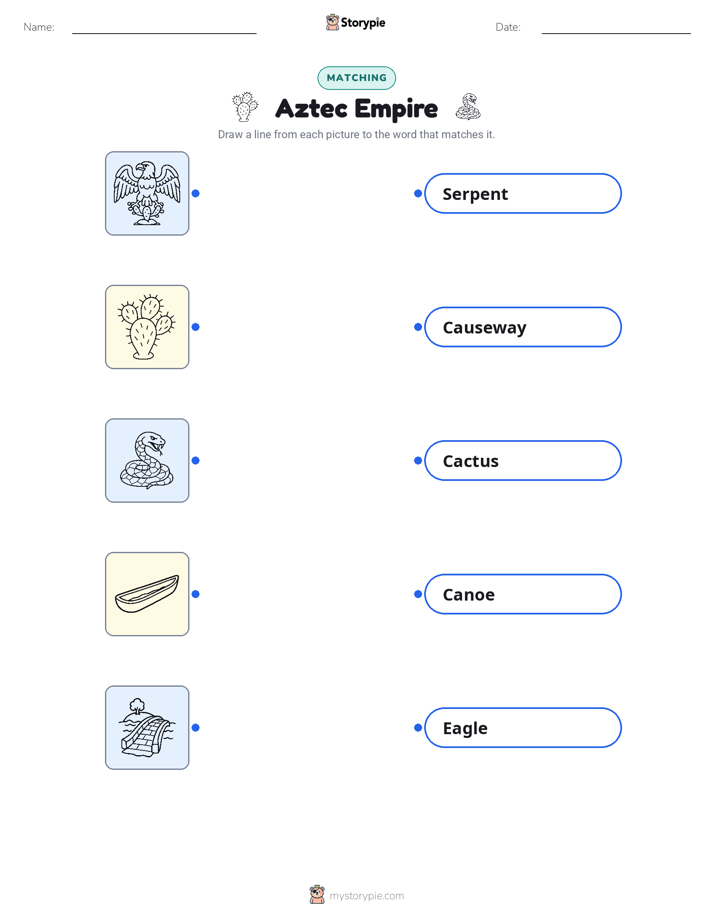
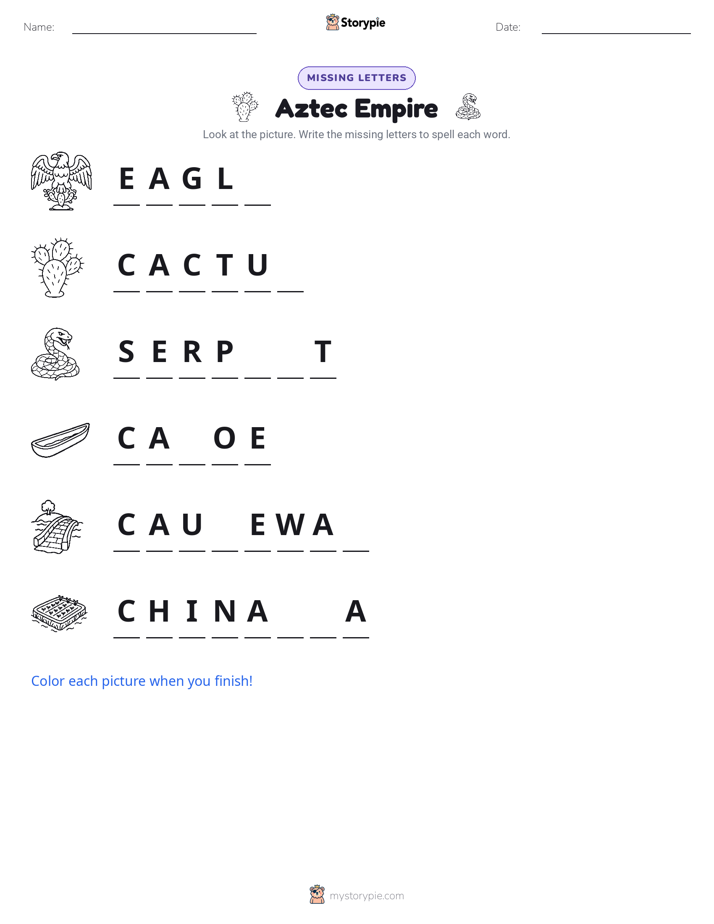
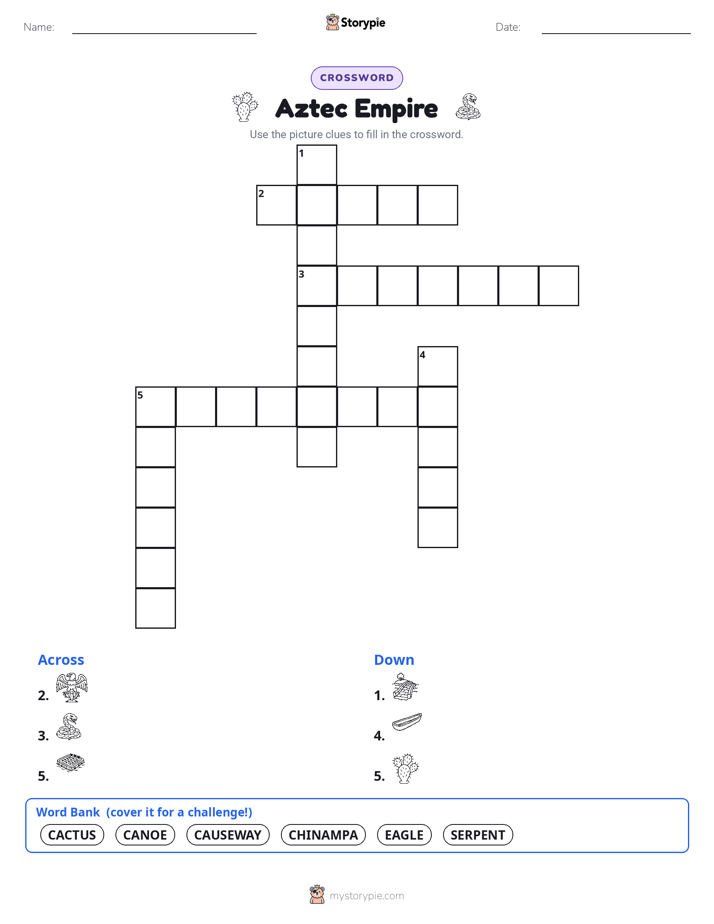
Print & create
Answer keys·No prep·Free with an account
28 worksheets · answer keys · full story · quiz · Ages 8-10 · CEFR B1
Plus adds 164,000+ more stories in 27 languages, audio for every one, and printables for all of them.
Just want Aztec Empire?
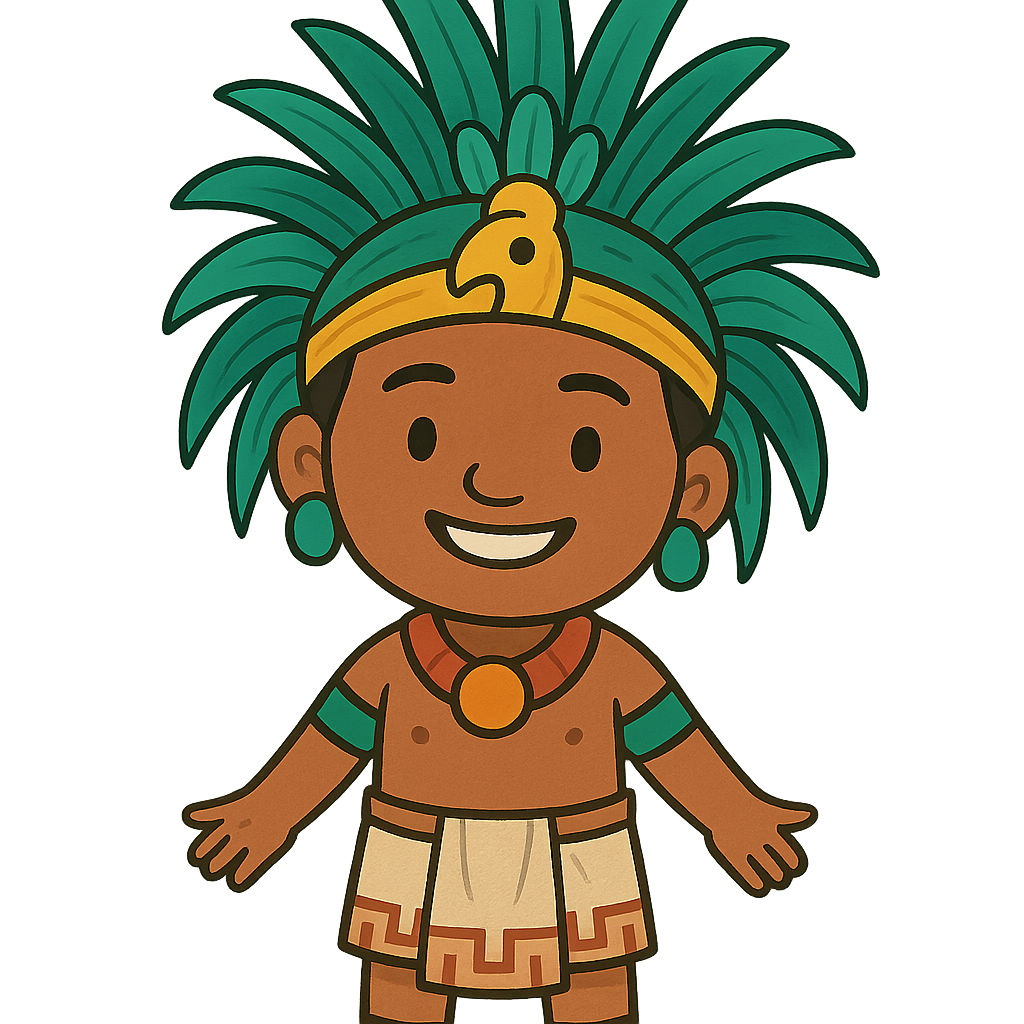
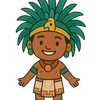
Hello. We are the Mexica people, and we are the builders of the great civilization that many people today call the Aztec Empire. Our story begins long ago, with a journey to find a new home. Our legends told us to search for a special sign: an eagle perched on a cactus. For years we traveled, until one day, around the year 1325, we saw the exact sign on an island in the middle of a sparkling lake. This was Lake Texcoco, and it was here that we built our amazing capital city, Tenochtitlan.
Building a city on an island in a lake was a challenge, but we were clever engineers and builders. Tenochtitlan grew to become one of the largest and most organized cities in the world at that time. To connect our island home to the land around the lake, we built wide, raised roads called causeways. These incredible structures allowed people and goods to travel safely back and forth, turning our island city into the bustling heart of our empire. The city itself was a wonder, with towering temples, busy marketplaces, and canals that served as streets for our canoes.
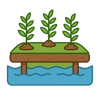
Living on a lake meant we had to find a special way to grow food for our many people. We couldn't just plant fields on the water, so we invented a brilliant method of farming called chinampas. You might know them as “floating gardens.” We created these by weaving together reeds and branches to make rectangular frames, which we anchored to the bottom of the shallow lake. Then, we piled rich mud and decaying plants from the lakebed onto these frames, building them up until they formed fertile, man-made islands. On our chinampas, we grew delicious and important crops like corn, beans, and tomatoes. This system was so effective that we could harvest food all year round, which allowed our city to grow and thrive.
The City on the Lake: Our Story of the Aztec Empire
Hello. We are the Mexica people, and we are the builders of the great civilization that many people today call the Aztec Empire. Our story begins long ago, with a journey to find a new home. Our legends told us to search for a special sign: an eagle perched on a cactus. For years we traveled, until one day, around the year 1325, we saw the exact sign on an island in the middle of a sparkling lake. This was Lake Texcoco, and it was here that we built our amazing capital city, Tenochtitlan.
Building a city on an island in a lake was a challenge, but we were clever engineers and builders. Tenochtitlan grew to become one of the largest and most organized cities in the world at that time. To connect our island home to the land around the lake, we built wide, raised roads called causeways. These incredible structures allowed people and goods to travel safely back and forth, turning our island city into the bustling heart of our empire. The city itself was a wonder, with towering temples, busy marketplaces, and canals that served as streets for our canoes.
Living on a lake meant we had to find a special way to grow food for our many people. We couldn't just plant fields on the water, so we invented a brilliant method of farming called chinampas. You might know them as “floating gardens.” We created these by weaving together reeds and branches to make rectangular frames, which we anchored to the bottom of the shallow lake. Then, we piled rich mud and decaying plants from the lakebed onto these frames, building them up until they formed fertile, man-made islands. On our chinampas, we grew delicious and important crops like corn, beans, and tomatoes. This system was so effective that we could harvest food all year round, which allowed our city to grow and thrive.
Our society was very organized, and we believed that education was important for everyone. In our empire, all children had to go to school. This was a rule for every family, whether they were nobles or commoners. Most of us attended a school called the telpochcalli. There, we learned about our history, our traditions, and the practical skills we would need as adults, including how to be good citizens and warriors. The children of nobles, however, went to a different school called the calmecac. At the calmecac, students received special training to become future leaders, priests, and scholars, learning how to read, write, and understand our complex calendar.
We were also careful observers of the world around us, especially the sky. As skilled astronomers, we watched the stars and planets to track time. This knowledge allowed us to create two very complex and accurate calendars that guided our lives. One was a 365-day calendar that we used for farming, helping us know the best times to plant and harvest our crops. The other was a 260-day sacred calendar that was used for our religious ceremonies and rituals. Our beliefs were a central part of our lives, and we honored our many gods through our art. We created detailed stone carvings and sculptures, and our artisans were famous for their beautiful featherwork, weaving colorful feathers into shields, headdresses, and clothing.
The time of our empire came to an end in the year 1521. A group of Spanish conquistadors led by a man named Hernán Cortés arrived and, after a long and difficult war, they conquered our capital city of Tenochtitlan. While our empire fell, our story did not end there. We, the people, did not disappear. Today, millions of our descendants, who are known as the Nahua people, live in Mexico. Our language, Nahuatl, is still spoken, and some of our most wonderful foods, like chocolate, are now loved by people all over the world. Our culture, language, and traditions continue to be an important part of Mexico's identity.
Wow facts
About
A powerful Mesoamerican empire that flourished in central Mexico from the 15th to the 16th centuries, known for its capital city Tenochtitlan and complex cultural traditions.
Take a Quiz
Question 1 of 5
What were the chinampas, also known as 'floating gardens,' made from?
Explore next
Want to do even more?
Go beyond exploring. Unlock tools that turn every story into real learning.

Storypie Plus for families
Full stories, quizzes, and printables. Nights and car rides, sorted.
- Unlimited audio stories
- Create Mode: your child stars in the story
- Offline downloads
- Printable worksheets & coloring pages

Why Storypie for Schools
Students engaged. Prep in seconds. Evenings back to you.
- Worksheets & Quizzes
- Classroom Management
- Formative Assessment
- Custom Curriculum & Lesson Plans
- 27 Languages

Why Storypie for Homeschool
Curriculum done. They'll ask for more. Hours back in your day.
- Worksheet Generator
- First-Person Audio Stories
- Built-in Comprehension Quizzes
- Custom Curriculum & Lesson Plans
- Print & Go Activities