English

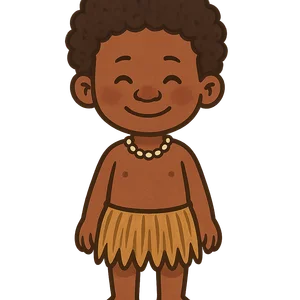
Baka people
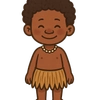
The Baka are an indigenous hunter-gatherer people who live in the tropical rainforests of Central Africa.
Reads at Grades 6–8 Listens at Grades 4–8
Print & create
Answer keys·No prep·Free with an account
28 worksheets · answer keys · full story · quiz · Ages 10-12 · CEFR B2
Plus adds 116,000+ more stories in 27 languages, audio for every one, and printables for all of them.
Just want Baka people?
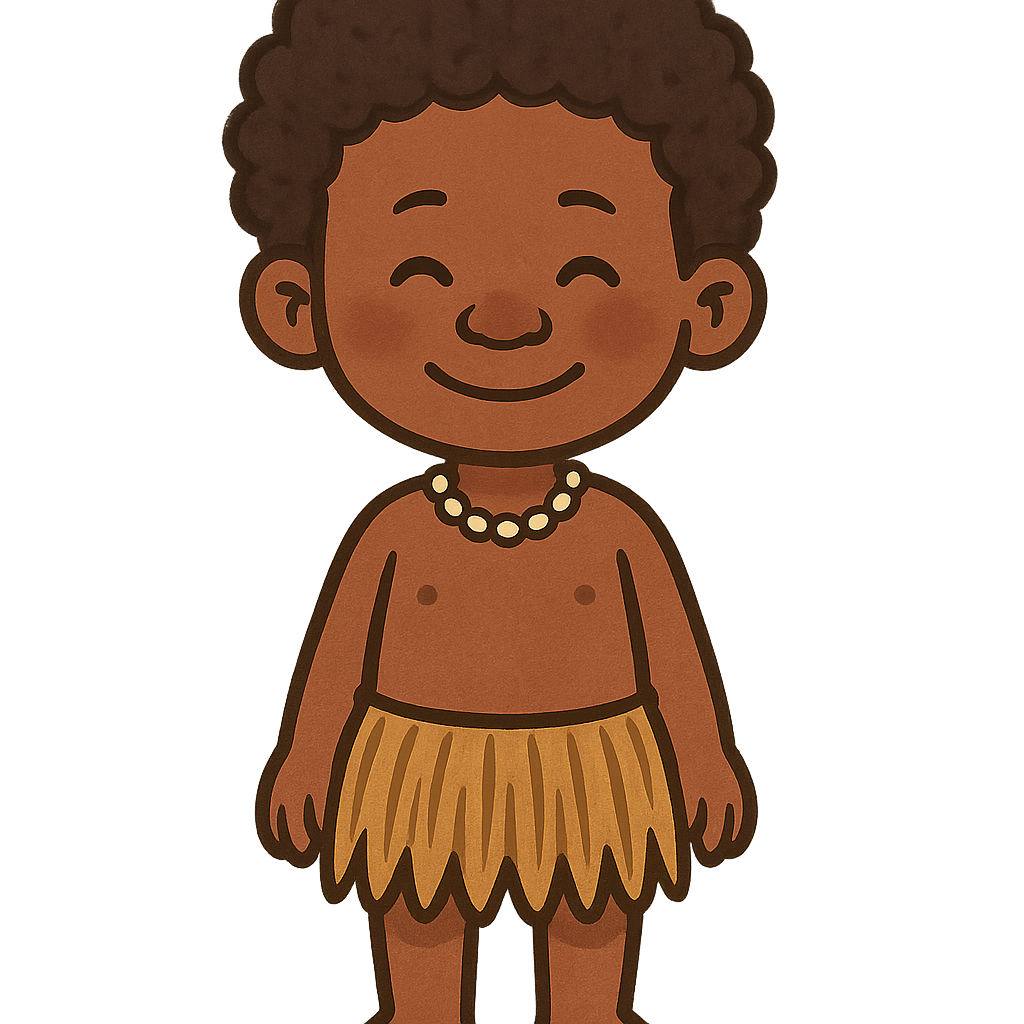
We are the Baka people, and for thousands of years, our home has been the dense, vibrant rainforests of Central Africa. The forest is not just a place where we live; it is the center of our world. We call it jengi, and our connection to it is both physical and spiritual. Jengi provides everything we need to live. From its trees and vines, we gather the materials to build our dome-shaped homes, which we call mongulu. From its soil and streams, we find our food, and among its countless plants, we find our medicine. The forest sustains us, and in return, we see it as a living, spiritual presence that deserves our respect and gratitude.
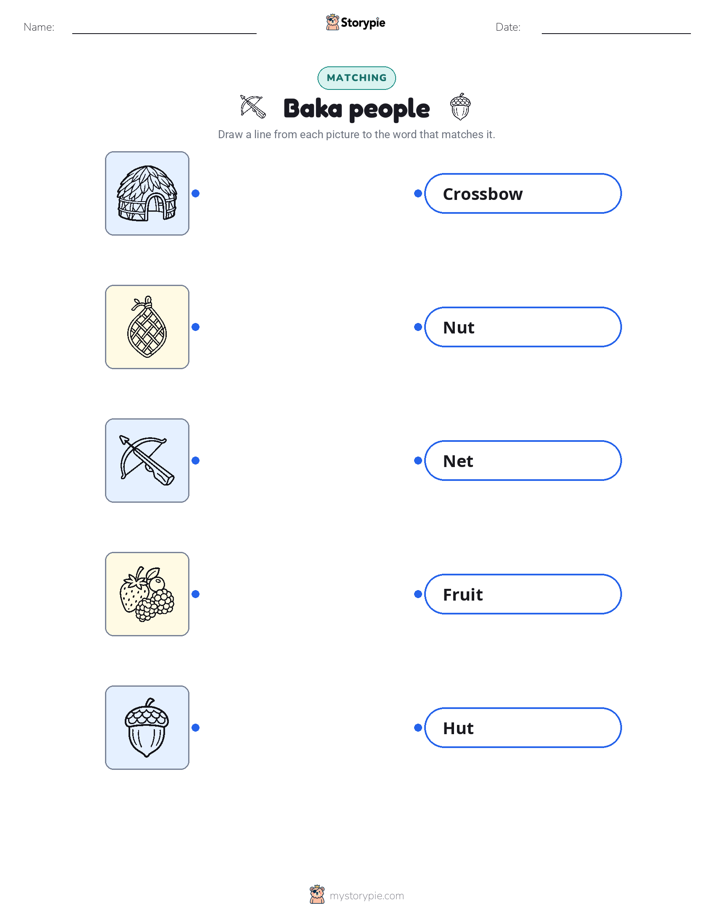
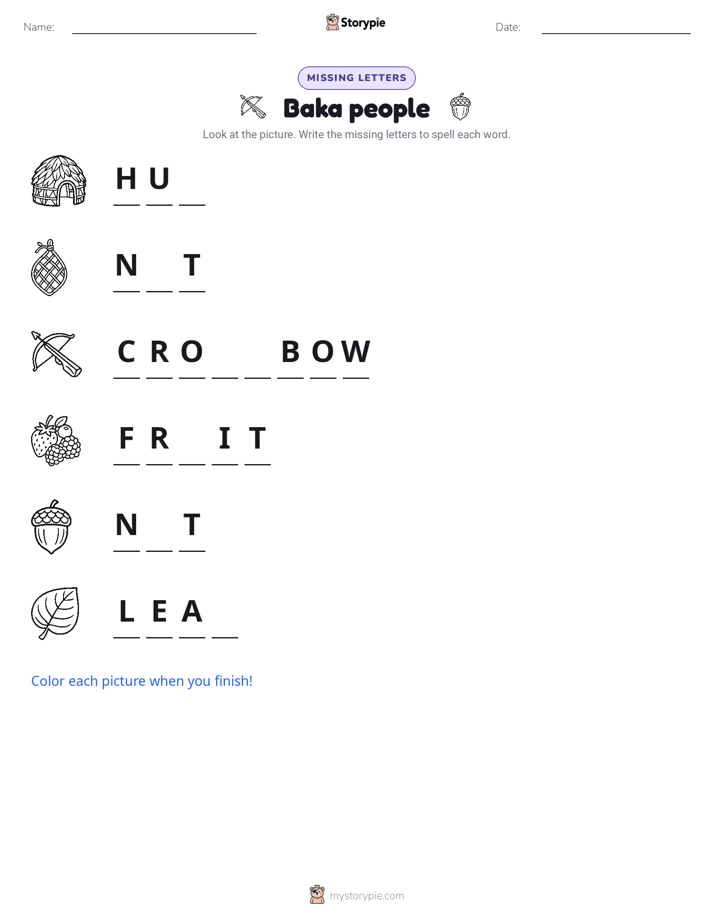
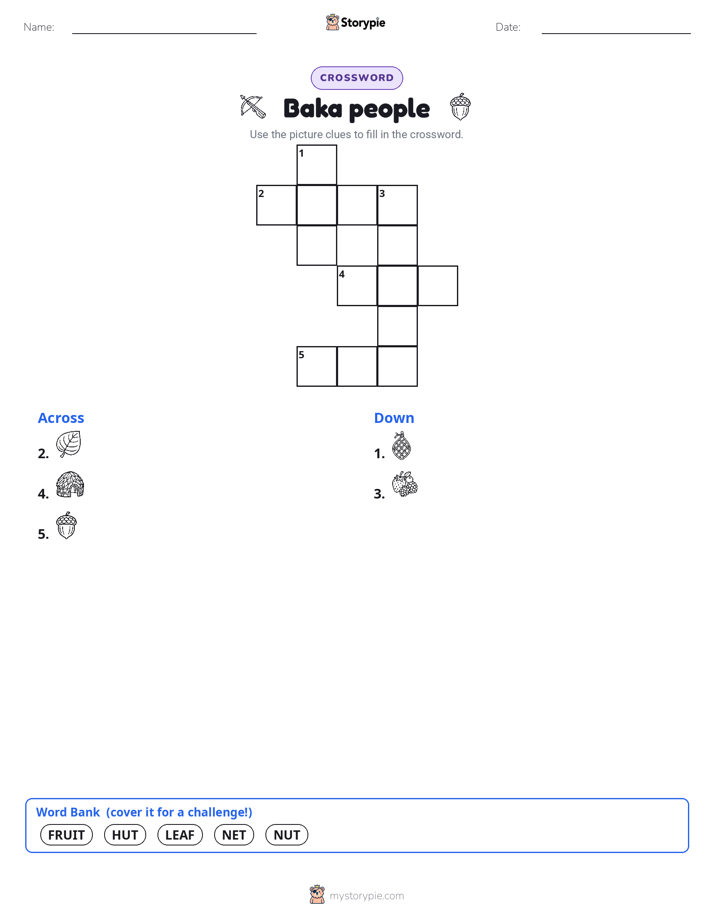
Our way of life is built on a deep understanding of the forest's rhythms. We live as hunter-gatherers, moving with the seasons and working together as a community to find food. Traditionally, our men are skilled hunters, using nets and crossbows to bring back meat for our families. At the same time, our women are experts in the forest’s plant life. They gather a wide variety of foods, including nuts, fruits, and other edible plants that provide essential nourishment. This is not just a way to get food; it is a shared effort that strengthens the bonds between us. Our knowledge extends to healing as well. For generations, we have passed down an extensive understanding of medicinal plants, knowing which leaves, roots, and barks can be used to treat illnesses and keep our communities healthy.
In our communities, life is filled with sound. Music and dance are not just for special occasions; they are woven into the fabric of our daily lives. We sing while we work, and we sing to celebrate. Our unique style of singing is polyphonic, which means that many voices join together, each with its own melody, weaving together to create a complex and beautiful harmony. This music reflects our belief in community, where every individual voice is important to the whole. We create rhythms with instruments like water drums, and our songs and dances are essential parts of our spiritual ceremonies. Through music, we honor the forest spirit and express our deep connection to jengi and to one another.
The Baka People: Voices of the Rainforest
We are the Baka people, and for thousands of years, our home has been the dense, vibrant rainforests of Central Africa. The forest is not just a place where we live; it is the center of our world. We call it jengi, and our connection to it is both physical and spiritual. Jengi provides everything we need to live. From its trees and vines, we gather the materials to build our dome-shaped homes, which we call mongulu. From its soil and streams, we find our food, and among its countless plants, we find our medicine. The forest sustains us, and in return, we see it as a living, spiritual presence that deserves our respect and gratitude.
Our way of life is built on a deep understanding of the forest's rhythms. We live as hunter-gatherers, moving with the seasons and working together as a community to find food. Traditionally, our men are skilled hunters, using nets and crossbows to bring back meat for our families. At the same time, our women are experts in the forest’s plant life. They gather a wide variety of foods, including nuts, fruits, and other edible plants that provide essential nourishment. This is not just a way to get food; it is a shared effort that strengthens the bonds between us. Our knowledge extends to healing as well. For generations, we have passed down an extensive understanding of medicinal plants, knowing which leaves, roots, and barks can be used to treat illnesses and keep our communities healthy.
In our communities, life is filled with sound. Music and dance are not just for special occasions; they are woven into the fabric of our daily lives. We sing while we work, and we sing to celebrate. Our unique style of singing is polyphonic, which means that many voices join together, each with its own melody, weaving together to create a complex and beautiful harmony. This music reflects our belief in community, where every individual voice is important to the whole. We create rhythms with instruments like water drums, and our songs and dances are essential parts of our spiritual ceremonies. Through music, we honor the forest spirit and express our deep connection to jengi and to one another.
Today, our world is changing, and we face serious challenges to our way of life. The forests that have sustained us for so long are shrinking due to deforestation caused by logging. In some places, our ancestral lands have been turned into national parks, which can limit our ability to hunt, gather, and live as we have for centuries. In response to these pressures, many of us are adapting. Some now live in more permanent villages instead of moving through the forest. But even as our lives change, we have not forgotten who we are. We continue to fight to preserve our unique culture and to protect our rights to our land. We are dedicated to passing our traditions, our knowledge of the forest, and our music to our children, ensuring that the voice of the Baka people continues to be heard.
Wow facts
About
The Baka are an indigenous hunter-gatherer people who live in the tropical rainforests of Central Africa. They are known for their deep connection to the forest, their traditionally equal society, and their complex polyphonic music.
Take a Quiz
Question 1 of 5
What is the Baka name for the forest, which they view as a spiritual and physical provider?
Explore next





Want to do even more?
Go beyond exploring. Unlock tools that turn every story into real learning.

Storypie Plus for families
Full stories, quizzes, and printables. Nights and car rides, sorted.
- Unlimited audio stories
- Create Mode: your child stars in the story
- Offline downloads
- Printable worksheets & coloring pages

Why Storypie for Schools
Students engaged. Prep in seconds. Evenings back to you.
- Worksheets & Quizzes
- Classroom Management
- Formative Assessment
- Custom Curriculum & Lesson Plans
- 27 Languages

Why Storypie for Homeschool
Curriculum done. They'll ask for more. Hours back in your day.
- Worksheet Generator
- First-Person Audio Stories
- Built-in Comprehension Quizzes
- Custom Curriculum & Lesson Plans
- Print & Go Activities