English

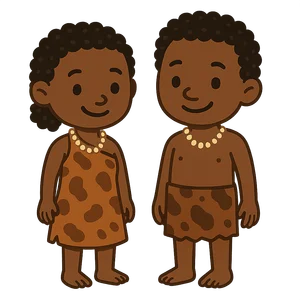
Mbuti people
The Mbuti are one of several Indigenous hunter-gatherer groups, known as Pygmies…
Reads at Grades 6–8 Listens at Grades 4–8
Print & create
Answer keys·No prep·Free with an account
28 worksheets · answer keys · full story · quiz · Ages 10-12 · CEFR B2
Plus adds 116,000+ more stories in 27 languages, audio for every one, and printables for all of them.
Just want Mbuti people?
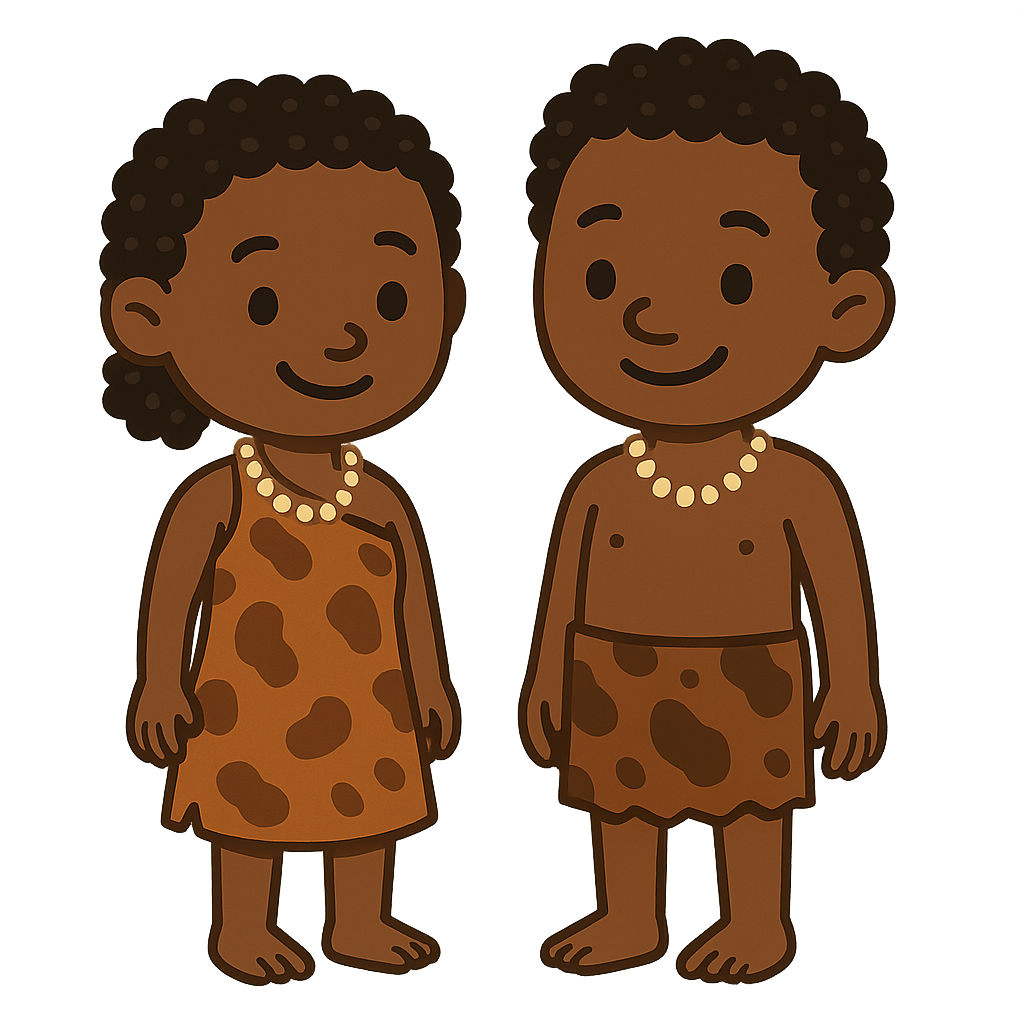
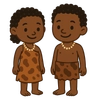
Hello. We are the Mbuti people. For thousands of years, our home has been the vibrant, living world of the Ituri Rainforest in Central Africa. To us, this is not just a collection of trees and animals; it is the center of our entire existence. The forest provides everything we need to live. It gives us the food we eat, the clean water we drink, and the materials we use to build our homes. From its plants, we create medicines to heal us when we are sick. But our connection is deeper than just survival. We have a sacred relationship with the forest, which we call ‘ndura.’ We see the forest as a loving and generous parent, and we are its children. ‘Ndura’ protects us, cares for us, and provides for our needs, and in return, we live in a way that respects and honors our home.
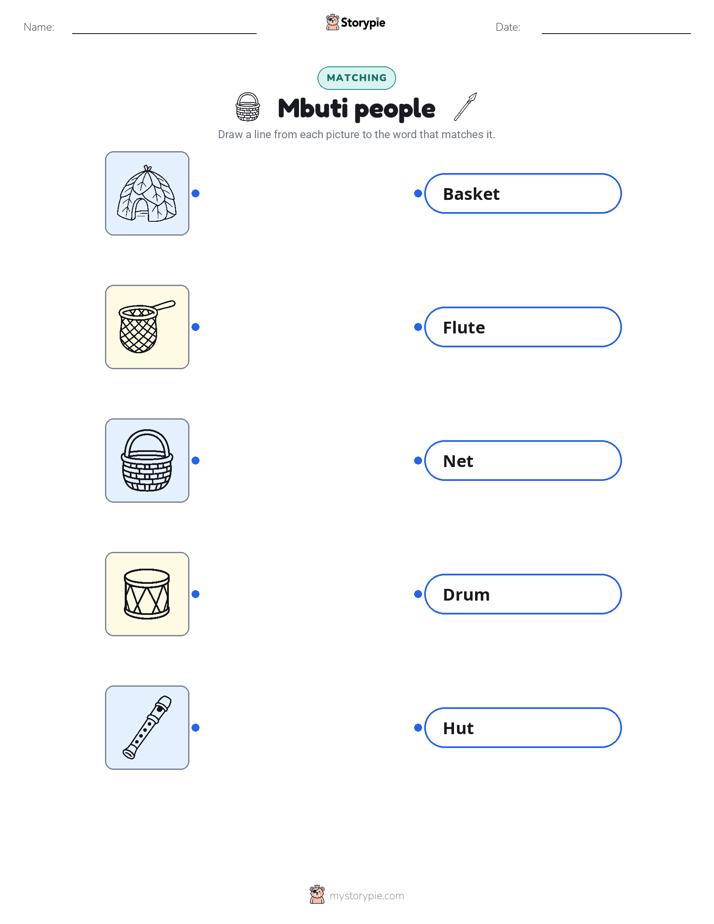
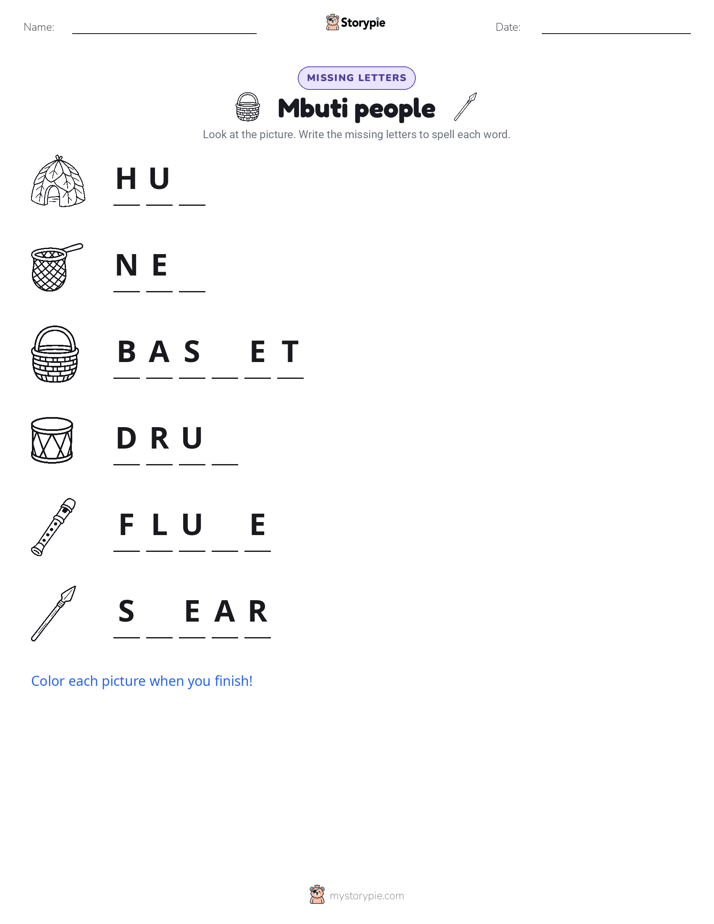
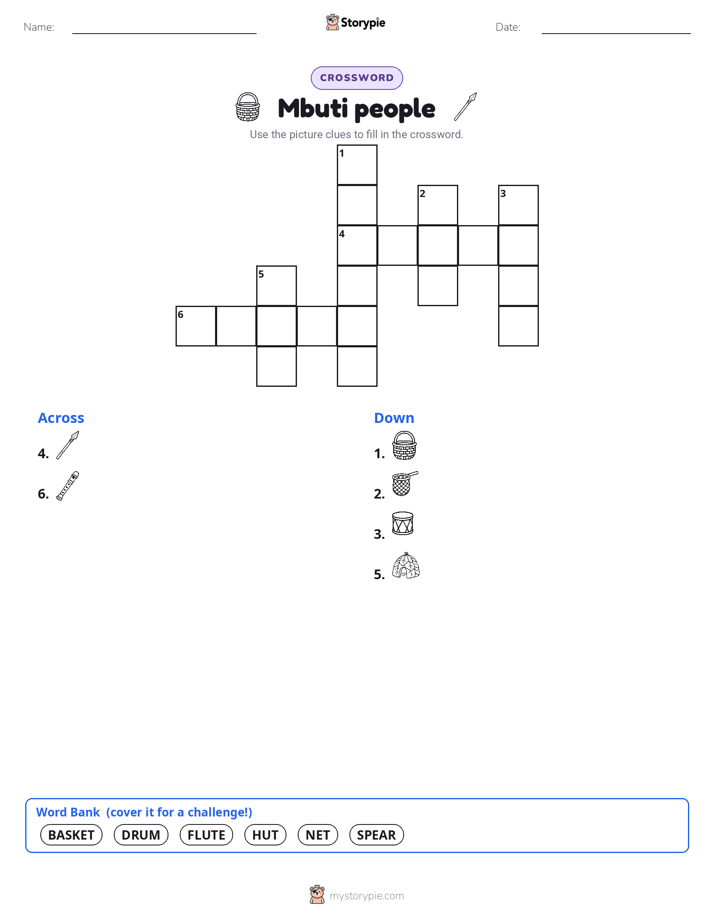
Our communities are founded on the idea of equality. We do not have chiefs, rulers, or anyone who holds power over others. Instead, when a decision needs to be made, we all come together to talk about it. We listen to each other’s thoughts and concerns, and through careful discussion, we arrive at an agreement that works for everyone. We live in small, mobile groups that can move easily through the forest, following the seasons and the resources that ‘ndura’ provides. Everyone has an important role that contributes to the well-being of our community. Traditionally, our men are skilled hunters who work together in cooperative groups. Using large, strong nets, they coordinate their efforts to catch game, sharing what they bring back with the entire group. Our women are experts at gathering the forest’s gifts, such as mushrooms, roots, fruits, and other edible plants. Women also build our homes, which are dome-shaped structures made from flexible saplings and covered with large leaves, creating a cozy and waterproof shelter.
We Are the Children of the Forest
Hello. We are the Mbuti people. For thousands of years, our home has been the vibrant, living world of the Ituri Rainforest in Central Africa. To us, this is not just a collection of trees and animals; it is the center of our entire existence. The forest provides everything we need to live. It gives us the food we eat, the clean water we drink, and the materials we use to build our homes. From its plants, we create medicines to heal us when we are sick. But our connection is deeper than just survival. We have a sacred relationship with the forest, which we call ‘ndura.’ We see the forest as a loving and generous parent, and we are its children. ‘Ndura’ protects us, cares for us, and provides for our needs, and in return, we live in a way that respects and honors our home.
Our communities are founded on the idea of equality. We do not have chiefs, rulers, or anyone who holds power over others. Instead, when a decision needs to be made, we all come together to talk about it. We listen to each other’s thoughts and concerns, and through careful discussion, we arrive at an agreement that works for everyone. We live in small, mobile groups that can move easily through the forest, following the seasons and the resources that ‘ndura’ provides. Everyone has an important role that contributes to the well-being of our community. Traditionally, our men are skilled hunters who work together in cooperative groups. Using large, strong nets, they coordinate their efforts to catch game, sharing what they bring back with the entire group. Our women are experts at gathering the forest’s gifts, such as mushrooms, roots, fruits, and other edible plants. Women also build our homes, which are dome-shaped structures made from flexible saplings and covered with large leaves, creating a cozy and waterproof shelter.
Music and song are woven into the fabric of our daily lives. A song can rise up at any moment—to celebrate a successful hunt, to tell an ancient story around the fire, or simply to express the joy of being alive. We believe that our songs are a way to communicate directly with the forest itself, to thank it for its generosity and to maintain our close relationship with it. When our community faces hardship, such as sickness or a period of bad hunting, we believe the forest is sleeping or unhappy. To restore balance and harmony, we perform a special ceremony of song called the ‘molimo.’ Over several nights, we sing together, our voices rising through the trees. The purpose of the ‘molimo’ is to gently awaken the forest, to remind it of its children, and to ask it to bring goodness and health back to our community. It is a powerful reminder that we are all connected—to each other and to our forest home.
In recent years, our ancient way of life has come under threat from the outside world. The forest that has sustained us for generations is shrinking. Deforestation caused by logging companies and mining operations is destroying large areas of our homeland, scarring the earth and driving away the animals we depend on. At the same time, regional conflicts have sometimes swept through the Ituri, making life unpredictable and dangerous. In some cases, our ancestral lands have been turned into national parks. While these parks are meant to protect the trees, the rules often forbid us from living there. We are no longer allowed to hunt or gather the resources we need to survive. As a result, many of us have been forced to leave our forest home and settle in permanent villages at the edge of the Ituri. This has profoundly changed our relationship with the forest, making it harder to practice our traditions and live as our ancestors did.
Despite these serious challenges, we are still here, and our culture remains strong. We hold onto our heritage by passing down our traditions to the next generation. We teach our children the songs of our ancestors, the stories that hold our history, and the deep, complex knowledge of the forest that has been gathered over countless lifetimes. We are also finding new ways to protect our world. We are working to have our rights to our land recognized, so that we can continue to live in and care for the Ituri Rainforest as we have always done. We believe our culture has an important message for the world: it is possible for people to live in balance with nature, not by taking more than they need, but by living as a respectful part of the natural world. Our story is one of resilience, and we continue to fight for our future and the future of our forest home.
Wow facts
About
The Mbuti are one of several Indigenous hunter-gatherer groups, known as Pygmies, who live in the Ituri Rainforest of the Democratic Republic of Congo.
Take a Quiz
Question 1 of 5
How has the creation of national parks on Mbuti ancestral lands affected their way of life?
Explore next





Want to do even more?
Go beyond exploring. Unlock tools that turn every story into real learning.

Storypie Plus for families
Full stories, quizzes, and printables. Nights and car rides, sorted.
- Unlimited audio stories
- Create Mode: your child stars in the story
- Offline downloads
- Printable worksheets & coloring pages

Why Storypie for Schools
Students engaged. Prep in seconds. Evenings back to you.
- Worksheets & Quizzes
- Classroom Management
- Formative Assessment
- Custom Curriculum & Lesson Plans
- 27 Languages

Why Storypie for Homeschool
Curriculum done. They'll ask for more. Hours back in your day.
- Worksheet Generator
- First-Person Audio Stories
- Built-in Comprehension Quizzes
- Custom Curriculum & Lesson Plans
- Print & Go Activities