English

Moche Culture
The Moche culture was an ancient civilization that flourished in northern Peru from approximately 100 to 800…
Reads at Grades 6–8 Listens at Grades 4–8
Print & create
Answer keys·No prep·Free with an account
28 worksheets · answer keys · full story · quiz · Ages 10-12 · CEFR B2
Plus adds 116,000+ more stories in 27 languages, audio for every one, and printables for all of them.
Just want Moche Culture?
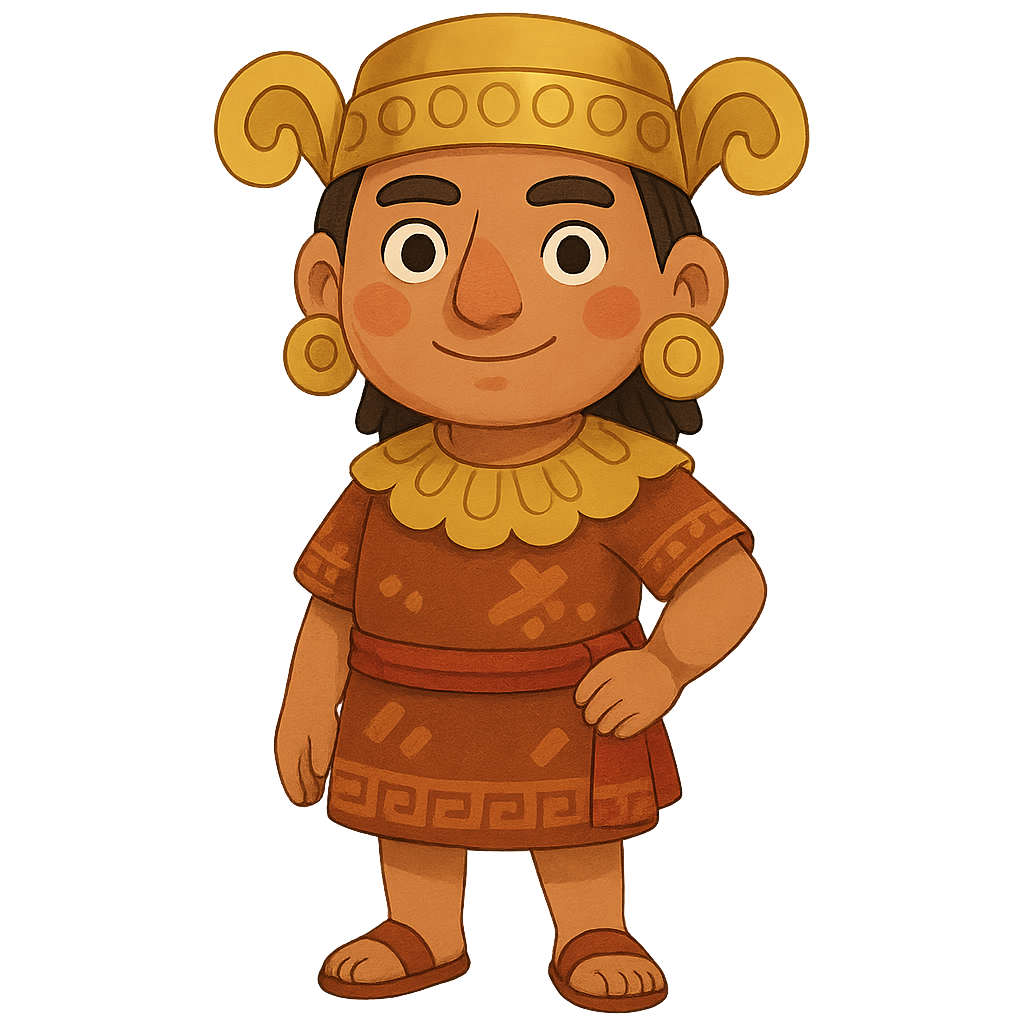
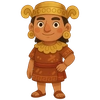
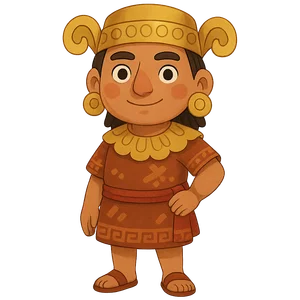
Hello. We are the Moche, and our story is written not in books, but in the earth, the clay, and the precious metals we shaped with our hands. Our civilization thrived on the northern coast of what is now Peru, in a place and time that might seem very distant. We lived between approximately 100 and 800 CE, hundreds of years before the famous Inca Empire rose to power in the mountains. Our home was a challenging one: a long, arid strip of desert squeezed between the vast Pacific Ocean and the towering Andes Mountains. To many, it would have looked like an impossible place to build a society. But we saw potential where others might have seen only sand.
The key to our survival and success flowed down from the mountains. Rivers, fed by Andean snow and rain, carved their way through the desert on their journey to the sea. We understood that this water was life itself. With great ingenuity and immense effort, we engineered and built a complex network of canals. These canals were our lifelines, carefully designed to capture river water and guide it across the dry landscape to our fields. By harnessing the power of these rivers, we transformed the desert. We turned dusty plains into fertile valleys, allowing us to build a world of bustling communities, towering temples, and rich traditions in one of the driest places on Earth.
Our mastery of irrigation allowed us to become expert farmers. The water from our canals nourished fields of maize, beans, and other crops, providing the food needed to support a large and complex society. With a stable food supply, many of our people could specialize in other skills, becoming builders, priests, and artists of incredible talent. Our most impressive structures were the massive pyramids we built from millions of adobe bricks, which you may know by their later name, 'huacas'. These monumental structures served as the centers of our religious and political life, rising high above our valleys. Our artisans were among the most skilled in the ancient Americas. If you were to see our pottery, you would see our world come to life. We created ceramics that told stories of our rituals, our gods, and our daily activities. Most famous are our portrait vessels, which are so realistic that they seem to capture the unique expressions and personalities of our leaders and ancestors. It feels as if you are looking into the face of someone from our time. Our metalworkers were also masters of their craft, transforming gold and silver into exquisite jewelry, masks, and ornaments for our most powerful leaders, whose elaborate tombs show the great respect we held for them.
We Are the Moche: Voices from the Desert Coast
Hello. We are the Moche, and our story is written not in books, but in the earth, the clay, and the precious metals we shaped with our hands. Our civilization thrived on the northern coast of what is now Peru, in a place and time that might seem very distant. We lived between approximately 100 and 800 CE, hundreds of years before the famous Inca Empire rose to power in the mountains. Our home was a challenging one: a long, arid strip of desert squeezed between the vast Pacific Ocean and the towering Andes Mountains. To many, it would have looked like an impossible place to build a society. But we saw potential where others might have seen only sand.
The key to our survival and success flowed down from the mountains. Rivers, fed by Andean snow and rain, carved their way through the desert on their journey to the sea. We understood that this water was life itself. With great ingenuity and immense effort, we engineered and built a complex network of canals. These canals were our lifelines, carefully designed to capture river water and guide it across the dry landscape to our fields. By harnessing the power of these rivers, we transformed the desert. We turned dusty plains into fertile valleys, allowing us to build a world of bustling communities, towering temples, and rich traditions in one of the driest places on Earth.
Our mastery of irrigation allowed us to become expert farmers. The water from our canals nourished fields of maize, beans, and other crops, providing the food needed to support a large and complex society. With a stable food supply, many of our people could specialize in other skills, becoming builders, priests, and artists of incredible talent. Our most impressive structures were the massive pyramids we built from millions of adobe bricks, which you may know by their later name, 'huacas'. These monumental structures served as the centers of our religious and political life, rising high above our valleys. Our artisans were among the most skilled in the ancient Americas. If you were to see our pottery, you would see our world come to life. We created ceramics that told stories of our rituals, our gods, and our daily activities. Most famous are our portrait vessels, which are so realistic that they seem to capture the unique expressions and personalities of our leaders and ancestors. It feels as if you are looking into the face of someone from our time. Our metalworkers were also masters of their craft, transforming gold and silver into exquisite jewelry, masks, and ornaments for our most powerful leaders, whose elaborate tombs show the great respect we held for them.
Our spiritual world was deeply connected to the forces of nature that surrounded us. We held ceremonies that we believed kept the world in balance, ensuring the sun would rise, the rains would come, and our crops would grow. One of our most important deities was a figure archaeologists have named Ai Apaec, or the 'Decapitator God,' who was often shown with fangs and a powerful expression. We believed that powerful rituals were necessary to please the gods and sustain our world. Archaeological evidence has suggested that some of our most important ceremonies involved the solemn act of human sacrifice. For many years, our systems of belief and agriculture allowed us to flourish. However, our world was eventually threatened by the same forces of nature we sought to balance. Our coastal home was vulnerable to extreme climate events. At times, devastating floods, likely caused by the weather pattern known as El Niño, would have destroyed our canals and washed away our fields. At other times, long and severe droughts would have withered our crops, leaving our people without food. These repeated environmental disasters damaged our agriculture, the very foundation of our society, and likely contributed to a period of great instability that led to the weakening of our way of life.
Our distinct civilization came to an end around 800 CE, but our story did not stop there. We, the Moche people, did not simply vanish. Our culture, knowledge, and traditions left a lasting mark on the region. The societies that rose after us, such as the Chimú and later the Inca, built upon our achievements in engineering and art. Today, we are remembered through the incredible legacy of artifacts we left behind. Because we did not have a written language, it is our art that tells our story. The discovery of tombs, like that of the famous Lord of Sipán, has revealed breathtaking treasures and given the world a glimpse into the richness of our culture and the power of our leaders. Through the work of archaeologists who carefully study our huacas, our pottery, and our graves, our voice can still be heard, sharing the story of a people who made the desert bloom.
Wow facts
About
The Moche culture was an ancient civilization that flourished in northern Peru from approximately 100 to 800 CE, renowned for its sophisticated irrigation systems, monumental adobe pyramids, and highly artistic pottery and metalwork.
Take a Quiz
Question 1 of 5
According to the story, what was the primary purpose of the canal systems the Moche built?
Want to do even more?
Go beyond exploring. Unlock tools that turn every story into real learning.

Storypie Plus for families
Full stories, quizzes, and printables. Nights and car rides, sorted.
- Unlimited audio stories
- Create Mode: your child stars in the story
- Offline downloads
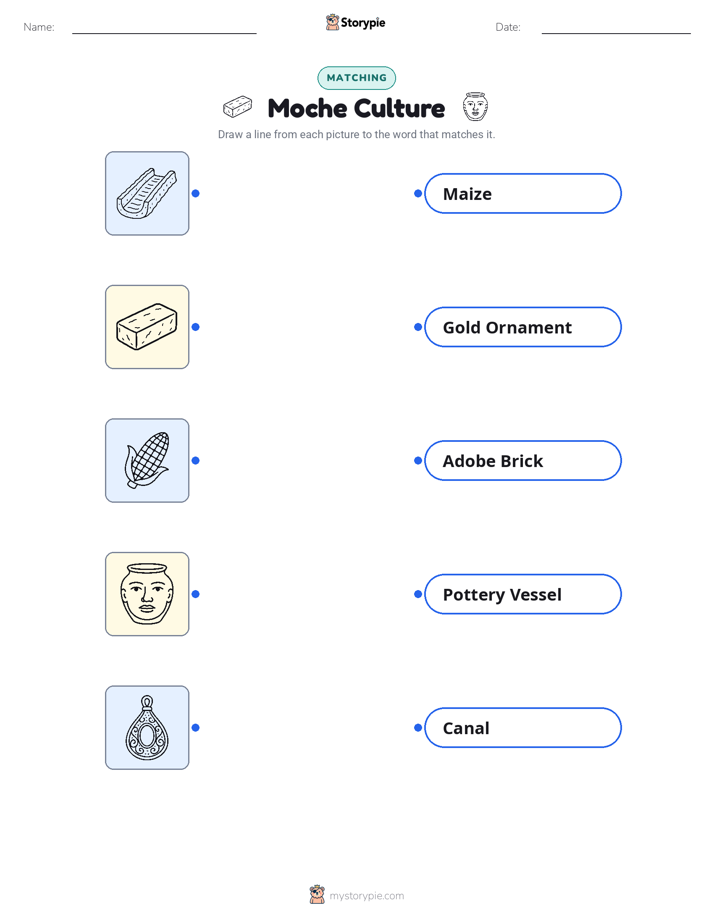
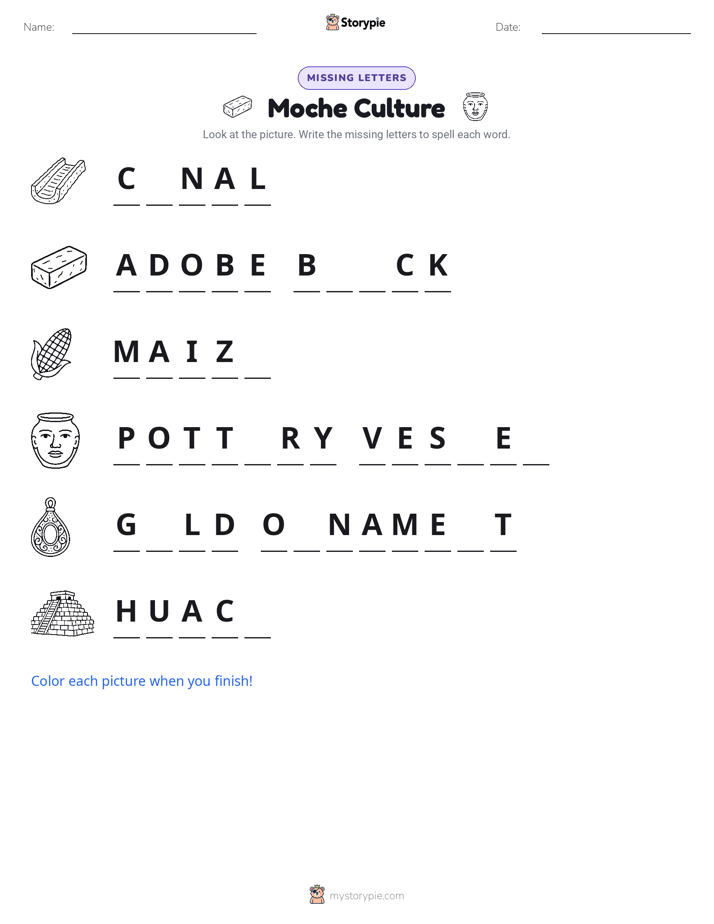
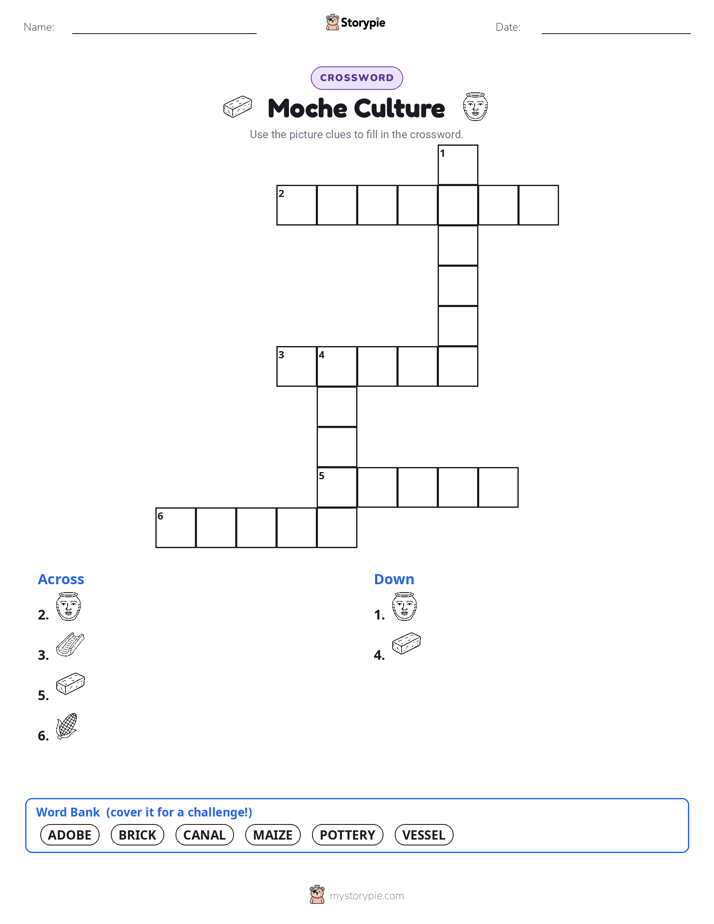
- Printable worksheets & coloring pages

Why Storypie for Schools
Students engaged. Prep in seconds. Evenings back to you.
- Worksheets & Quizzes
- Classroom Management
- Formative Assessment
- Custom Curriculum & Lesson Plans
- 27 Languages

Why Storypie for Homeschool
Curriculum done. They'll ask for more. Hours back in your day.
- Worksheet Generator
- First-Person Audio Stories
- Built-in Comprehension Quizzes
- Custom Curriculum & Lesson Plans
- Print & Go Activities