English

Moche Culture
The Moche culture was an ancient civilization that flourished in northern Peru from approximately 100 to 800…
Reads at Grades 3–5 Listens at Grades 1–5
Print & create
Answer keys·No prep·Free with an account
28 worksheets · answer keys · full story · quiz · Ages 8-10 · CEFR B1
Plus adds 116,000+ more stories in 27 languages, audio for every one, and printables for all of them.
Just want Moche Culture?
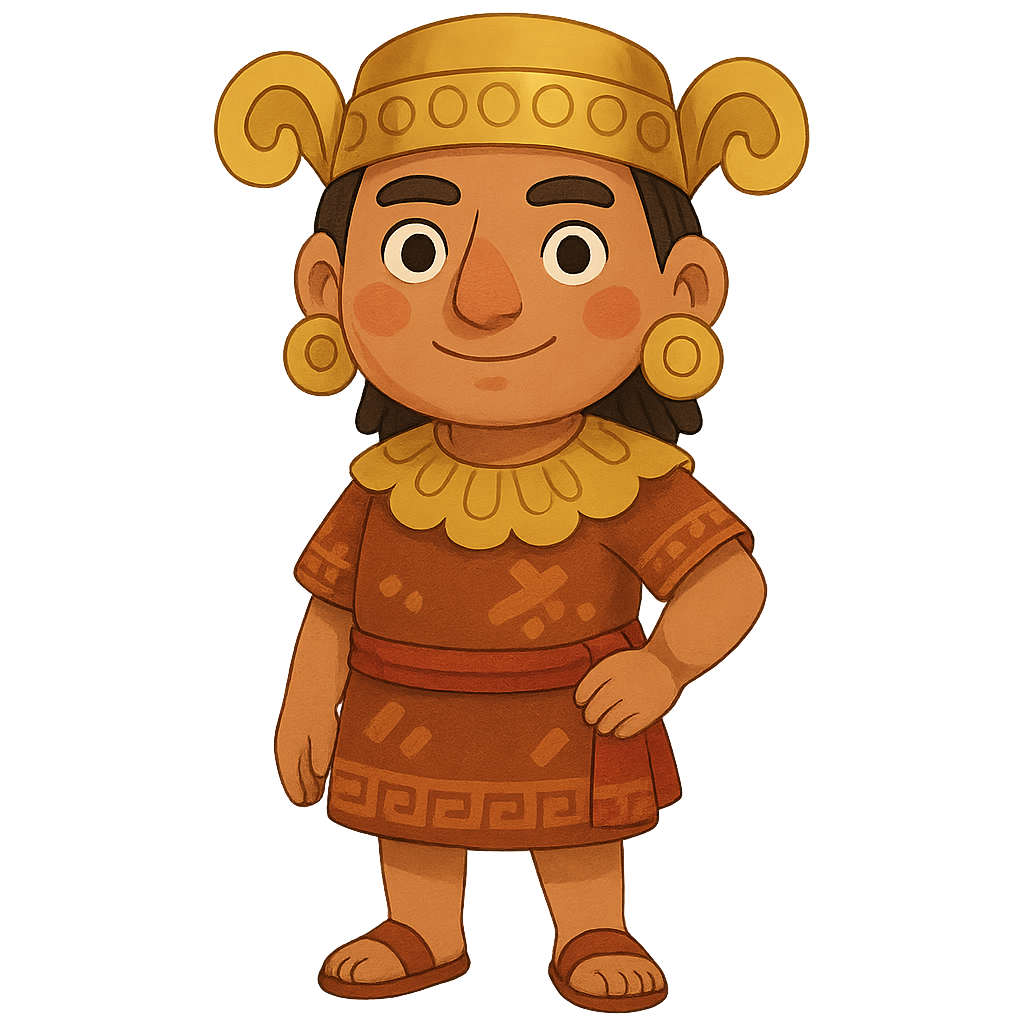
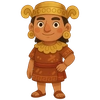
Hello. We are the Moche people, and we want to share the story of our ancestors who lived long ago. Our culture thrived on the northern coast of the land now called Peru, from about the year 100 to 800 CE. Imagine a long, narrow strip of land, a dry desert tucked between two great powers of nature. On one side was the vast Pacific Ocean, with its endless blue water, and on the other side stood the tall, rugged Andes Mountains, which seemed to touch the sky. Our home was in the river valleys that cut through this dry landscape. Living in a desert meant that water was precious, and we had to be clever to grow the food our communities needed to flourish.
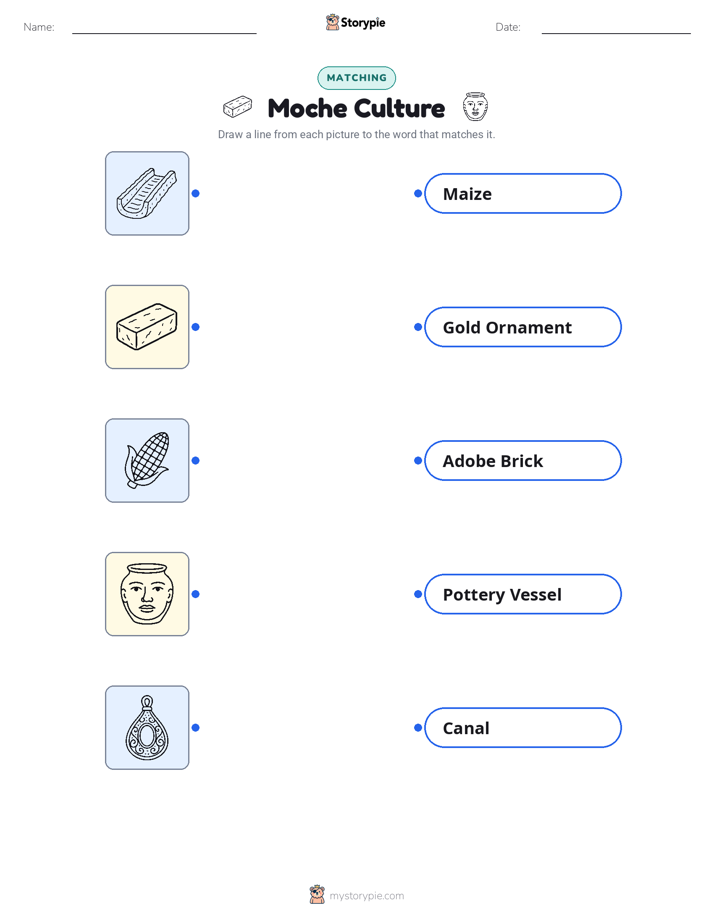
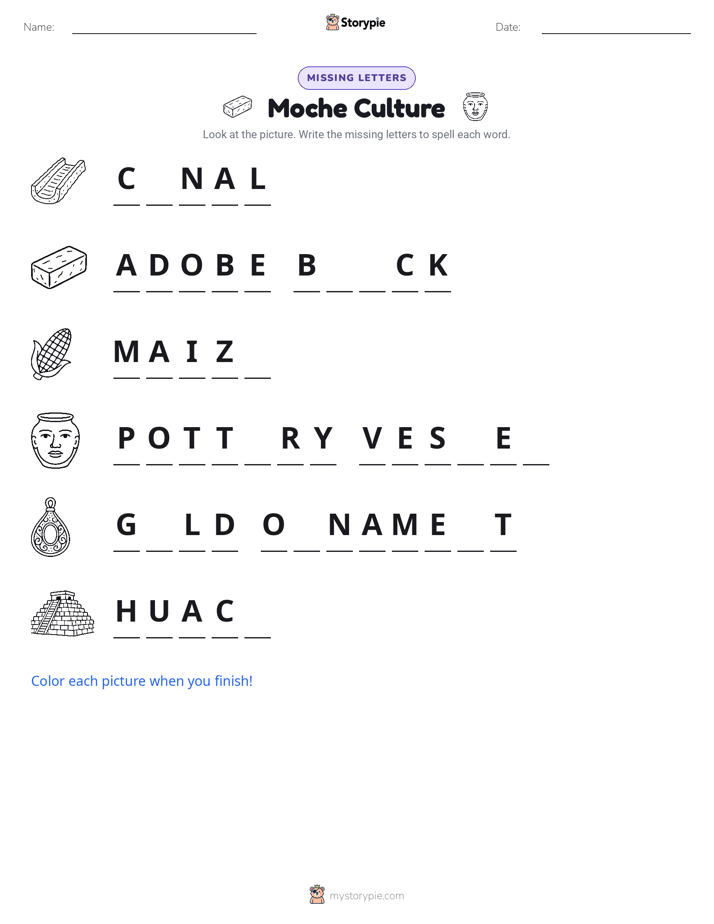
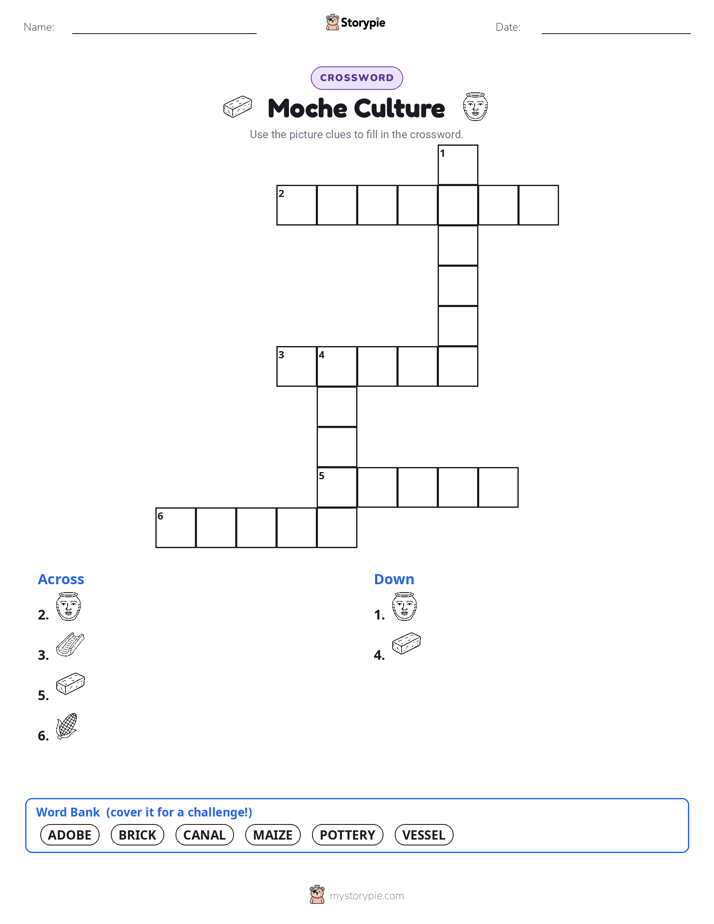
To solve the problem of the dry land, we became expert farmers. The rivers that flowed down from the Andes Mountains were our source of life, but they were not always close to the fields where we wanted to plant. So, we engineered and built an amazing system of canals. These waterways were carefully dug channels that guided the river water across the desert, sometimes for many miles, bringing it directly to our fields. This network of canals was a lifeline that transformed the dry earth into fertile farmland. Thanks to our irrigation system, we were able to grow plenty of healthy food, including corn, beans, and potatoes, which fed our families and allowed our villages and cities to grow.
As our communities grew, we also became great builders. We worked together to construct enormous structures that rose from the desert floor. The most impressive of these were our temples, which we call huacas. These were not built of stone, but from millions of mud bricks, which we made by mixing earth, water, and straw and leaving them to bake in the hot sun. Two of our most famous temples are the Huaca del Sol, or Temple of the Sun, and the Huaca de la Luna, or Temple of the Moon. Building these pyramid-like structures was a huge task that took many people a very long time. Each brick was made by hand and carefully placed, creating massive centers for the religious and social lives of our people.
The People of the Desert Valleys
Hello. We are the Moche people, and we want to share the story of our ancestors who lived long ago. Our culture thrived on the northern coast of the land now called Peru, from about the year 100 to 800 CE. Imagine a long, narrow strip of land, a dry desert tucked between two great powers of nature. On one side was the vast Pacific Ocean, with its endless blue water, and on the other side stood the tall, rugged Andes Mountains, which seemed to touch the sky. Our home was in the river valleys that cut through this dry landscape. Living in a desert meant that water was precious, and we had to be clever to grow the food our communities needed to flourish.
To solve the problem of the dry land, we became expert farmers. The rivers that flowed down from the Andes Mountains were our source of life, but they were not always close to the fields where we wanted to plant. So, we engineered and built an amazing system of canals. These waterways were carefully dug channels that guided the river water across the desert, sometimes for many miles, bringing it directly to our fields. This network of canals was a lifeline that transformed the dry earth into fertile farmland. Thanks to our irrigation system, we were able to grow plenty of healthy food, including corn, beans, and potatoes, which fed our families and allowed our villages and cities to grow.
As our communities grew, we also became great builders. We worked together to construct enormous structures that rose from the desert floor. The most impressive of these were our temples, which we call huacas. These were not built of stone, but from millions of mud bricks, which we made by mixing earth, water, and straw and leaving them to bake in the hot sun. Two of our most famous temples are the Huaca del Sol, or Temple of the Sun, and the Huaca de la Luna, or Temple of the Moon. Building these pyramid-like structures was a huge task that took many people a very long time. Each brick was made by hand and carefully placed, creating massive centers for the religious and social lives of our people.
Beyond our skills in farming and building, we were also artists who left behind a record of our world through our creations. We are especially known for our incredible pottery. Our potters were so talented that they could shape clay to look like the real faces of our people, showing their unique expressions and features. These famous pots are like portraits that allow you to look into the past and see us as we saw ourselves. We also crafted beautiful jewelry and masks from shiny metals. Our metalworkers were masters of their craft, skillfully shaping gold, silver, and copper into intricate designs. The discovery of the tomb of a great leader, known today as the Lord of Sipán, showed the world some of the stunning treasures we created.
After many centuries of our culture thriving in these desert valleys, our society faced great challenges. We depended on a careful balance with nature, and historians believe this balance was disrupted by extreme weather. Our region probably suffered from long periods of drought, when the rivers dried up and our canals became useless. At other times, powerful floods may have rushed down from the mountains, destroying our fields and canal systems. Life would have become very difficult for a society built on farming. Faced with these environmental hardships, our large cities were eventually left behind as our people adapted to new circumstances and ways of life.
Even though our great cities fell silent, our story did not end. Our skills in farming, building, and art were passed down, and our traditions influenced the other cultures that rose in the Andes after us. We left a lasting legacy that is still a source of wonder and pride. Today, you can learn all about us and our achievements. You can visit museums to see our amazing portrait pottery and the beautiful gold masks our artists made. You can even travel to Peru and stand in the shadow of our giant huacas, the incredible mud-brick temples that have survived for more than a thousand years, telling the story of our life in the desert valleys.
Wow facts
About
The Moche culture was an ancient civilization that flourished in northern Peru from approximately 100 to 800 CE, renowned for its sophisticated irrigation systems, monumental adobe pyramids, and highly artistic pottery and metalwork.
Take a Quiz
Question 1 of 5
What were the two large, pyramid-like temples built by the Moche people called?
Want to do even more?
Go beyond exploring. Unlock tools that turn every story into real learning.

Storypie Plus for families
Full stories, quizzes, and printables. Nights and car rides, sorted.
- Unlimited audio stories
- Create Mode: your child stars in the story
- Offline downloads
- Printable worksheets & coloring pages

Why Storypie for Schools
Students engaged. Prep in seconds. Evenings back to you.
- Worksheets & Quizzes
- Classroom Management
- Formative Assessment
- Custom Curriculum & Lesson Plans
- 27 Languages

Why Storypie for Homeschool
Curriculum done. They'll ask for more. Hours back in your day.
- Worksheet Generator
- First-Person Audio Stories
- Built-in Comprehension Quizzes
- Custom Curriculum & Lesson Plans
- Print & Go Activities