English

Sherpa people
The Sherpa are an ethnic group from the mountainous regions of Nepal…
Reads at Grades 3–5 Listens at Grades 1–5
Print & create
Answer keys·No prep·Free with an account
28 worksheets · answer keys · full story · quiz · Ages 8-10 · CEFR B1
Plus adds 116,000+ more stories in 27 languages, audio for every one, and printables for all of them.
Just want Sherpa people?
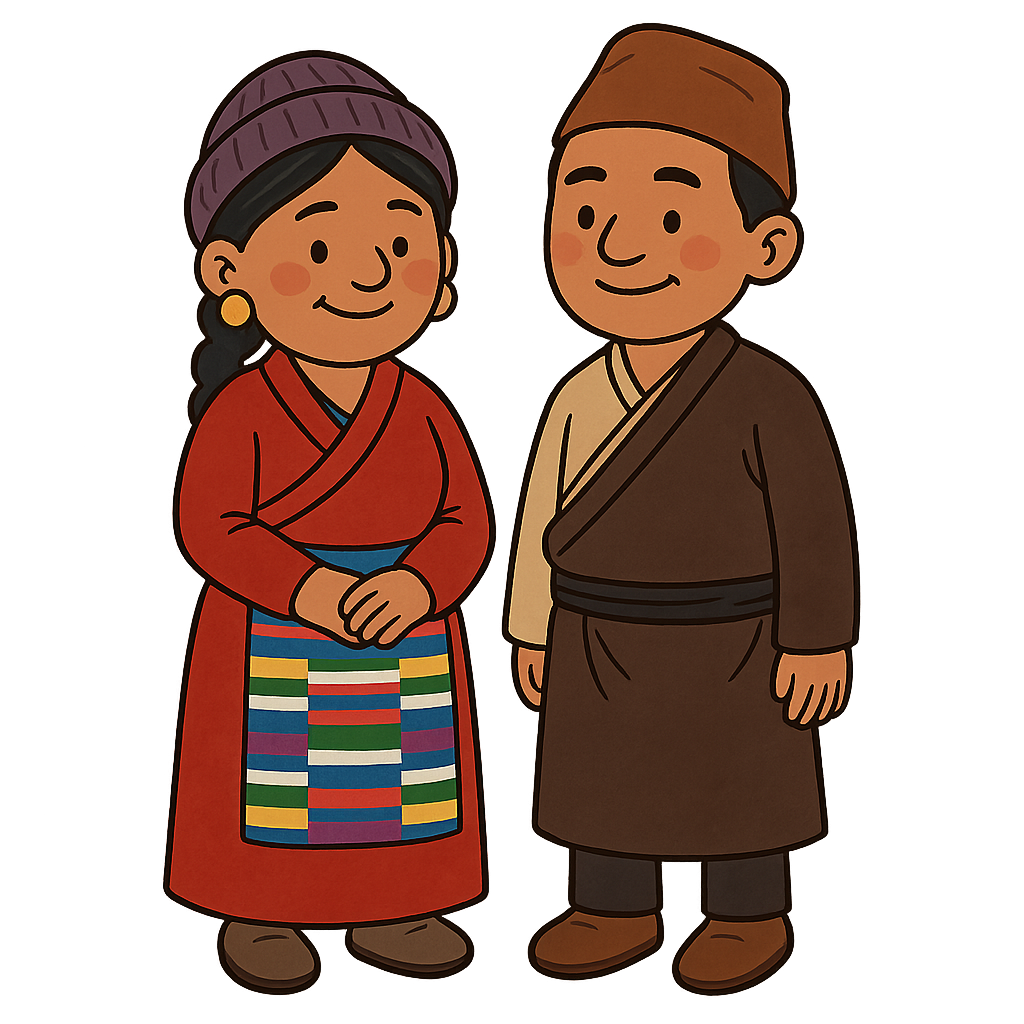
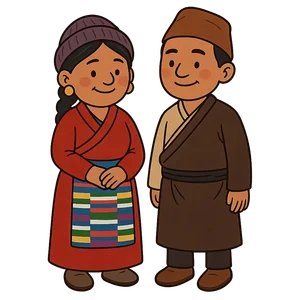
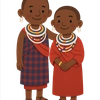
Hello! We are the Sherpa people, and we want to share our story with you. Our name, Sherpa, means 'eastern people' in our language. This name tells part of our history, reminding us that our ancestors came from the east. About 500 years ago, our people began a long journey, migrating from our original homes in Tibet. We traveled until we found a new place to live, settling in the beautiful and rugged Khumbu Valley in Nepal. This became our home, a place nestled among the world’s highest mountains. Living so close to these towering peaks has shaped our culture and our way of life for centuries.
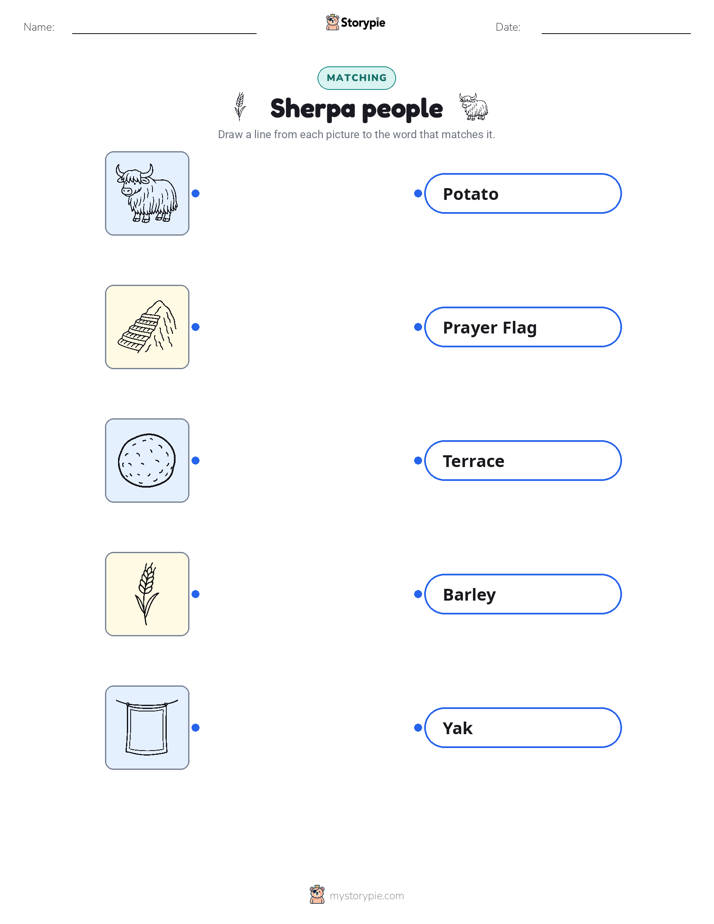
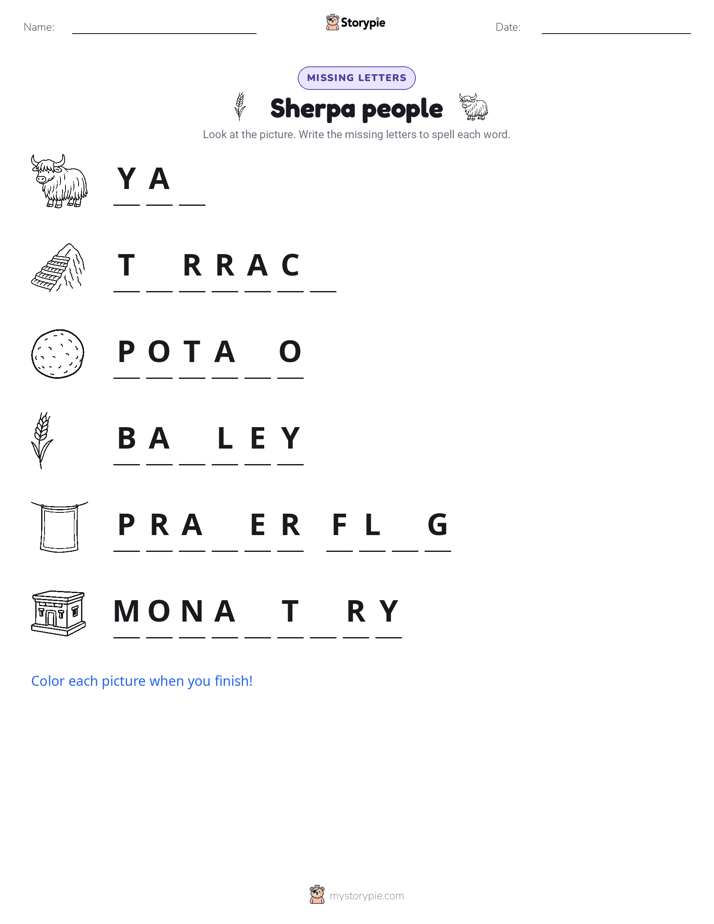
In our mountain villages, we learned to live with the land. For generations, our traditional life involved farming and herding. We planted and harvested potatoes, a crop that grew well in the high-altitude soil and provided food for our families. We also herded yaks, strong animals perfectly suited for the mountain environment. Our connection to our homeland is also deeply spiritual. We follow a tradition of Tibetan Buddhism, which is a central part of our community. You can see signs of our faith throughout our villages. We build monasteries, which we call gompas, that serve as centers for prayer and learning. You might also see colorful prayer flags fluttering in the wind, sending blessings across the landscape. Each year, we celebrate important festivals, and one of the most special is Losar, our New Year celebration. These traditions connect us to our history, to each other, and to the mountains we call home.
Our Story from the Mountaintops
Hello! We are the Sherpa people, and we want to share our story with you. Our name, Sherpa, means 'eastern people' in our language. This name tells part of our history, reminding us that our ancestors came from the east. About 500 years ago, our people began a long journey, migrating from our original homes in Tibet. We traveled until we found a new place to live, settling in the beautiful and rugged Khumbu Valley in Nepal. This became our home, a place nestled among the world’s highest mountains. Living so close to these towering peaks has shaped our culture and our way of life for centuries.
In our mountain villages, we learned to live with the land. For generations, our traditional life involved farming and herding. We planted and harvested potatoes, a crop that grew well in the high-altitude soil and provided food for our families. We also herded yaks, strong animals perfectly suited for the mountain environment. Our connection to our homeland is also deeply spiritual. We follow a tradition of Tibetan Buddhism, which is a central part of our community. You can see signs of our faith throughout our villages. We build monasteries, which we call gompas, that serve as centers for prayer and learning. You might also see colorful prayer flags fluttering in the wind, sending blessings across the landscape. Each year, we celebrate important festivals, and one of the most special is Losar, our New Year celebration. These traditions connect us to our history, to each other, and to the mountains we call home.
For centuries, the high peaks of the Himalayas were our neighbors. As mountaineers from around the world began arriving to climb them, they learned that we are naturally adapted to living at high altitudes where the air is thin. This ability made us excellent guides and partners for expeditions. A new chapter in our history began, one that would take us to the highest places on Earth. Our skills and strength in the mountains became known, but one event shared our story with the entire world. In 1953, one of our own, a brave climber named Tenzing Norgay, stood on the summit of Mount Everest, the world's tallest mountain. He made this historic ascent with his climbing partner, Edmund Hillary. Their incredible achievement brought great recognition to our community and highlighted the important role we play in mountaineering.
Today, our lives continue to grow and change. While many of us are still famous for our work as mountaineers and guides, our community is full of people with many different professions. You will find Sherpa who are doctors, teachers, and business owners. We live in our traditional villages, but also in cities and countries around the world. As we look to the future, we hold two important goals. We are deeply committed to preserving our unique culture—our language, our Buddhist faith, and our community traditions. At the same time, we work hard to protect the Himalayan environment. The mountains have given us so much, and we feel a great responsibility to care for them for all the generations to come. Our story continues as a vibrant culture in the modern world.
Wow facts
About
The Sherpa are an ethnic group from the mountainous regions of Nepal, renowned for their mountaineering skills, resilience at high altitudes, and deep connection to Tibetan Buddhism.
Take a Quiz
Question 1 of 5
What does the name 'Sherpa' mean?
Explore next


Want to do even more?
Go beyond exploring. Unlock tools that turn every story into real learning.

Storypie Plus for families
Full stories, quizzes, and printables. Nights and car rides, sorted.
- Unlimited audio stories
- Create Mode: your child stars in the story
- Offline downloads
- Printable worksheets & coloring pages

Why Storypie for Schools
Students engaged. Prep in seconds. Evenings back to you.
- Worksheets & Quizzes
- Classroom Management
- Formative Assessment
- Custom Curriculum & Lesson Plans
- 27 Languages

Why Storypie for Homeschool
Curriculum done. They'll ask for more. Hours back in your day.
- Worksheet Generator
- First-Person Audio Stories
- Built-in Comprehension Quizzes
- Custom Curriculum & Lesson Plans
- Print & Go Activities