English

Anatolia
A large peninsula in Western Asia, also known as Asia Minor…
Reads at Grades 6–8 Listens at Grades 4–8
Print & create
Answer keys·No prep·Free with an account
28 worksheets · answer keys · full story · quiz · Ages 10-12 · CEFR B2
Plus adds 164,000+ more stories in 27 languages, audio for every one, and printables for all of them.
Just want Anatolia?
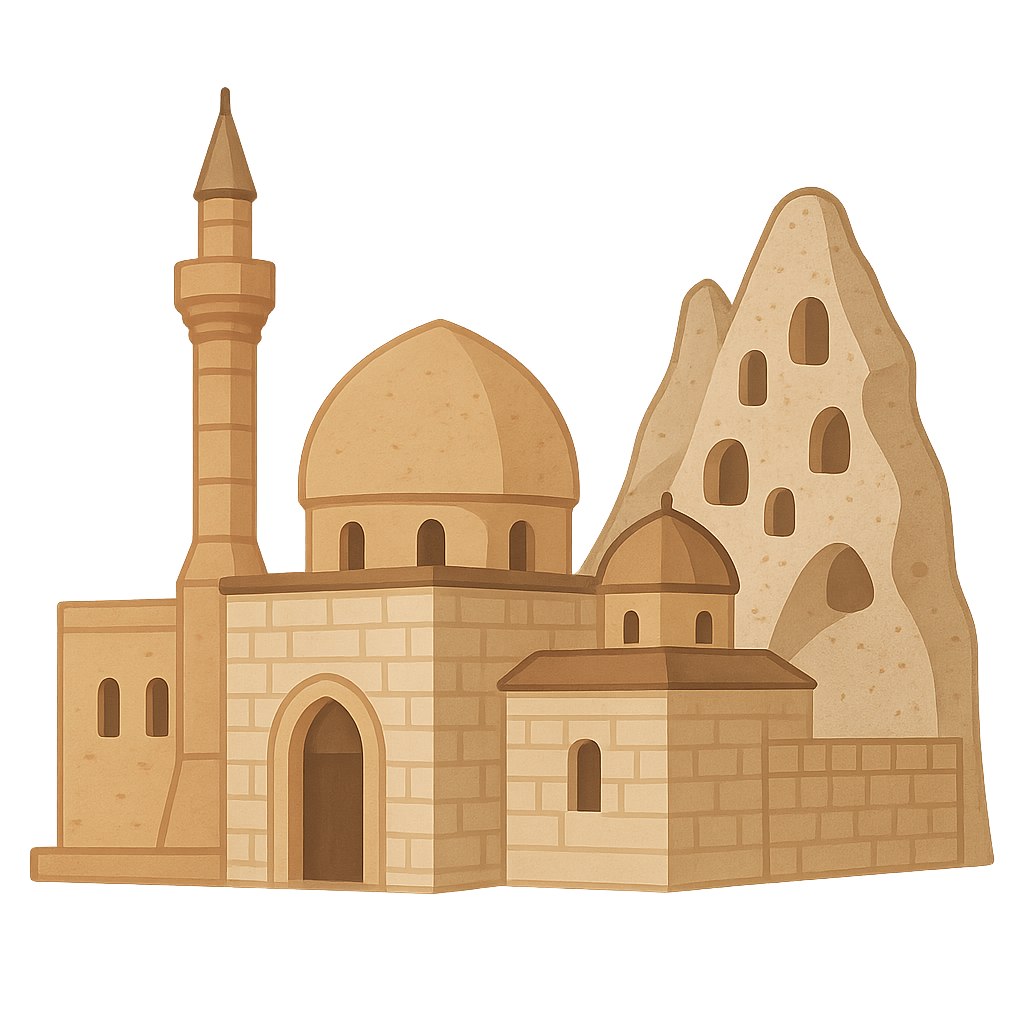
I stretch out like a vast, welcoming hand, with my fingers touching Europe and my palm resting in Asia. The deep, dark waters of the Black Sea wash my northern shores, while the brilliant blues of the Aegean and Mediterranean seas sparkle to my west and south. For thousands of years, I have felt the pulse of history beating beneath my soil. Great armies have marched across my plains, merchants have sailed along my coasts carrying silk and spices, and philosophers have walked through my olive groves, pondering the mysteries of the universe. I have been a meeting place, a battleground, and a cradle for new ideas. I am a land of layered cities, where the ruins of one civilization lie directly beneath the foundations of another. Every stone and every gust of wind carries a story of who I have been and who I am becoming. I am Anatolia, the land many call Asia Minor.
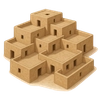
Long before the world knew of kings and empires, people came to me to build their first homes. Imagine a time, around 9600 BCE, when hunter-gatherers decided to create something permanent. On a high ridge, they carved enormous stone pillars with images of animals at a place you now call Göbekli Tepe. It was not a city for living, but perhaps the world’s first temple, a sacred place for communities to gather, share stories, and look at the stars. Thousands of years later, around 7500 BCE, one of the world's first large towns, Çatalhöyük, grew on my fertile plains. It was a fascinating place unlike any city today. The houses were built so close together that there were no streets. People walked across the rooftops and climbed down ladders into their homes. These early people were true pioneers. They learned to farm the land, domesticate animals, and live together in large communities. They were laying the very first bricks in the foundation of what we call civilization, right here on my soil.
Anatolia: The Land of a Thousand Stories
I stretch out like a vast, welcoming hand, with my fingers touching Europe and my palm resting in Asia. The deep, dark waters of the Black Sea wash my northern shores, while the brilliant blues of the Aegean and Mediterranean seas sparkle to my west and south. For thousands of years, I have felt the pulse of history beating beneath my soil. Great armies have marched across my plains, merchants have sailed along my coasts carrying silk and spices, and philosophers have walked through my olive groves, pondering the mysteries of the universe. I have been a meeting place, a battleground, and a cradle for new ideas. I am a land of layered cities, where the ruins of one civilization lie directly beneath the foundations of another. Every stone and every gust of wind carries a story of who I have been and who I am becoming. I am Anatolia, the land many call Asia Minor.
Long before the world knew of kings and empires, people came to me to build their first homes. Imagine a time, around 9600 BCE, when hunter-gatherers decided to create something permanent. On a high ridge, they carved enormous stone pillars with images of animals at a place you now call Göbekli Tepe. It was not a city for living, but perhaps the world’s first temple, a sacred place for communities to gather, share stories, and look at the stars. Thousands of years later, around 7500 BCE, one of the world's first large towns, Çatalhöyük, grew on my fertile plains. It was a fascinating place unlike any city today. The houses were built so close together that there were no streets. People walked across the rooftops and climbed down ladders into their homes. These early people were true pioneers. They learned to farm the land, domesticate animals, and live together in large communities. They were laying the very first bricks in the foundation of what we call civilization, right here on my soil.
The rhythm of my history quickened with the thunder of chariot wheels. Around 1600 BCE, a powerful people called the Hittites built a mighty empire from their capital, Hattusa. They were masters of a new, revolutionary technology: iron. Forging strong weapons and tools from this metal gave them a significant advantage, and their influence spread far and wide across my lands and beyond. Yet, their strength was not just in warfare; they were also skilled diplomats. After the great Battle of Kadesh in 1274 BCE, a massive clash of chariots against the Egyptian pharaoh Ramesses II, the Hittites did something extraordinary. They negotiated and signed the world's first known international peace treaty, a copy of which you can still see today. As the Hittite empire faded, new legends rose from my western coast. The blind poet Homer sang of heroes, gods, and a decade-long conflict at the city of Troy. His epic tales, the Iliad and the Odyssey, immortalized my shores and have captivated people for centuries. Following these heroic ages, Greek colonists sailed across the Aegean Sea, establishing magnificent cities like Ephesus and Miletus. They built stunning temples, bustling marketplaces, and theaters where new ideas about philosophy and democracy echoed. My identity was being shaped by new languages and philosophies. Then, in 334 BCE, a brilliant and ambitious young general, Alexander the Great, marched his army from Greece across my plains. He did not just conquer; he connected. He dreamed of uniting East and West, and his journey forever altered the cultural map of the world, leaving a lasting legacy of Greek culture and thought in his wake.
After Alexander, my lands became a prized possession of another great power: the Roman Empire. Roman engineers built incredible roads that crisscrossed my landscape, connecting distant cities and allowing legions and merchants to travel with ease. They constructed massive aqueducts to carry water to bustling cities, and built grand theaters and stadiums where thousands gathered for entertainment. I was a vital region, providing grain, soldiers, and resources to the heart of the empire in Rome. However, by the 4th century CE, the vast empire began to change. In 330 CE, Emperor Constantine the Great made a monumental decision. He founded a new capital city right on the strait that separates Europe and Asia, a city he named Constantinople. When the Roman Empire eventually split, I became the heart of the Eastern Roman, or Byzantine, Empire, with Constantinople as its shining center. For over a thousand years, this city was a beacon of civilization. Its artists created stunning mosaics, its scholars preserved ancient Greek and Roman knowledge, and its architects built one of the most breathtaking structures in the world: Hagia Sophia, a cathedral with a dome so vast it seemed to float on a cushion of light. I was no longer just a province; I was the center of an empire that shaped the course of Western history.
A new chapter began in the 11th century with the arrival of the Seljuk Turks from Central Asia. They brought with them new traditions, art, and a new faith, blending their culture with the ones that already existed on my soil. From the Seljuks rose another great power, the Ottoman Empire. The Ottomans grew stronger and stronger, and in 1453 CE, their sultan, Mehmed the Conqueror, achieved what many thought impossible: he captured the great city of Constantinople. The city was reborn as Istanbul, the magnificent capital of the Ottoman Empire, which would last for over 600 years. Under sultans like Suleiman the Magnificent, the empire entered a golden age. Mosques with soaring minarets, grand palaces, and bustling bazaars filled Istanbul's streets, making it one of the most important cities in the world. But like all empires, the Ottoman era eventually came to an end. After World War I, a visionary leader named Mustafa Kemal Atatürk led a movement to create a new, modern nation. On October 29th, 1923, he founded the Republic of Turkey, with its capital in Ankara, turning my ancient lands toward a new future.
Today, my spirit endures. I am a land where you can walk through the marble columns of an ancient Roman temple in the morning and look up at the gleaming skyscrapers of a modern city in the afternoon. My history is not locked away in books; it is a living part of the landscape. The call to prayer from a centuries-old mosque mingles with the sounds of a bustling street market. The stories of Hittites, Greeks, Romans, Byzantines, and Ottomans are etched into my mountains and valleys. I remain a bridge—not just a physical link between continents, but a bridge of cultures, ideas, and people. My story is one of resilience and transformation, and it is still being written every day by the millions who call me home and the visitors who come to listen to my tales.
Wow facts
About
A large peninsula in Western Asia, also known as Asia Minor, that constitutes the majority of modern-day Turkey. It is renowned as a cradle of civilizations and a historic crossroads between Europe and Asia.
Take a Quiz
Question 1 of 5
In the story, Anatolia is called a 'bridge between worlds.' Why is the word 'bridge' a good metaphor to describe this place?
Explore next

Want to do even more?
Go beyond exploring. Unlock tools that turn every story into real learning.

Storypie Plus for families
Full stories, quizzes, and printables. Nights and car rides, sorted.
- Unlimited audio stories
- Create Mode: your child stars in the story
- Offline downloads
- Printable worksheets & coloring pages

Why Storypie for Schools
Students engaged. Prep in seconds. Evenings back to you.
- Worksheets & Quizzes
- Classroom Management
- Formative Assessment
- Custom Curriculum & Lesson Plans
- 27 Languages

Why Storypie for Homeschool
Curriculum done. They'll ask for more. Hours back in your day.
- Worksheet Generator
- First-Person Audio Stories
- Built-in Comprehension Quizzes
- Custom Curriculum & Lesson Plans
- Print & Go Activities