English

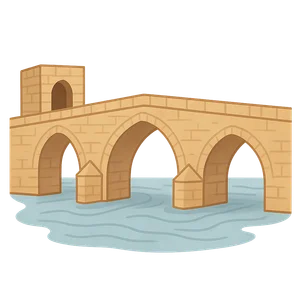
Euphrates River
The longest river in Western Asia, the Euphrates, along with the Tigris, defined the region of Mesopotamia…
Reads at Grades 6–8 Listens at Grades 4–8
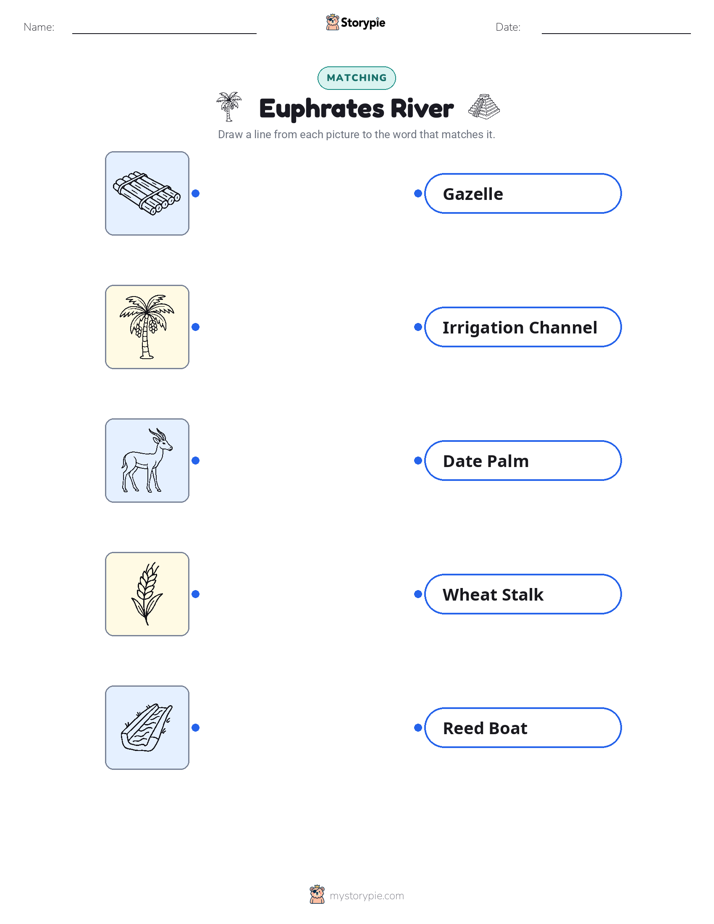
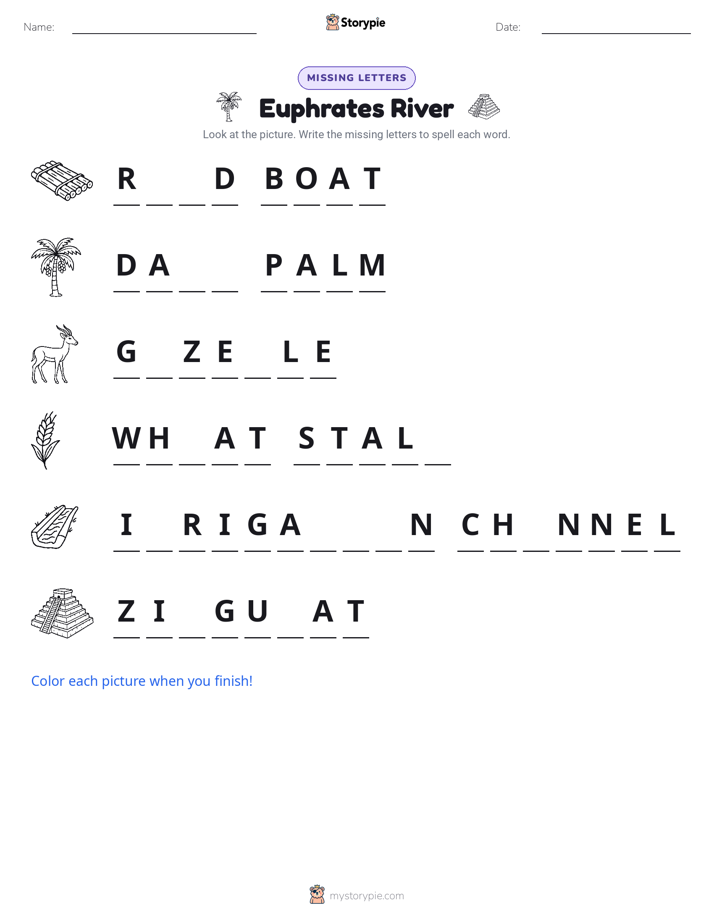
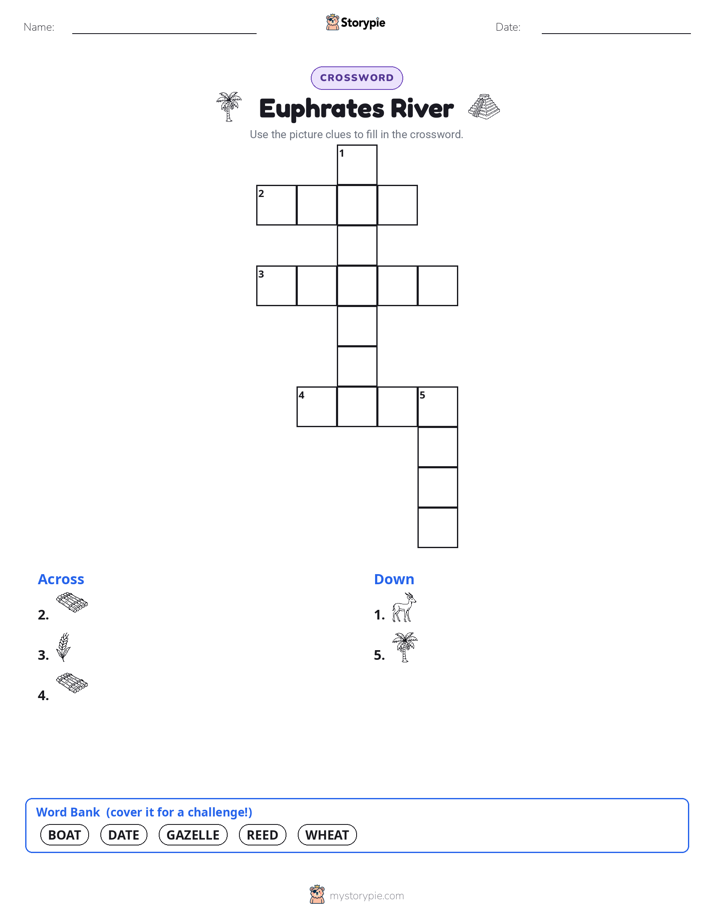
Print & create
Answer keys·No prep·Free with an account
28 worksheets · answer keys · full story · quiz · Ages 10-12 · CEFR B2
Plus adds 102,000+ more stories in 27 languages, audio for every one, and printables for all of them.
Just want Euphrates River?
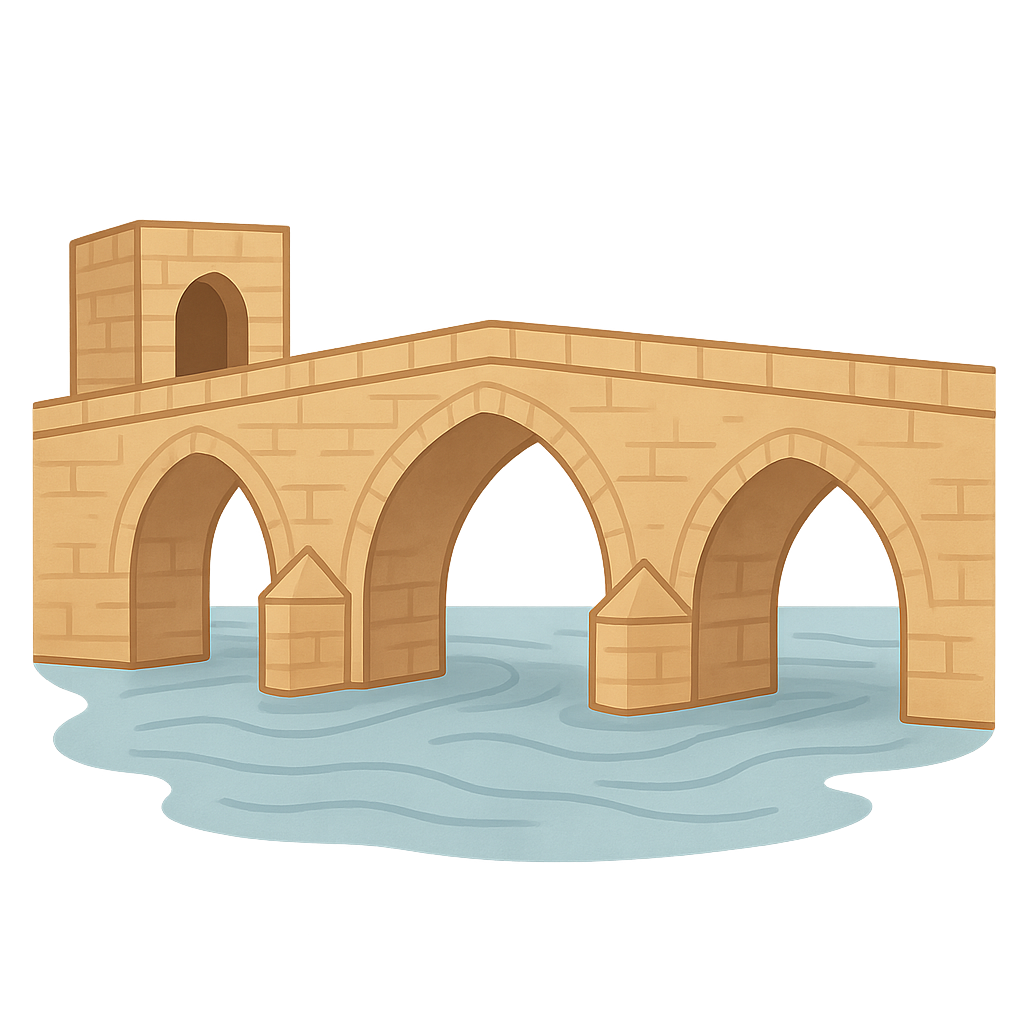
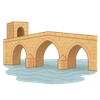
My journey begins as a whisper, a trickle of icy water from melting snow high in the mountains of eastern Turkey. I tumble and crash over ancient stones, gathering strength from countless streams until I am a powerful current. I carve my path south, leaving the cool, misty peaks behind for the vast, sun-baked plains of Syria and Iraq. Here, the earth is thirsty, and I am life. I feel the roots of date palms and reeds reach for me, their leaves whispering secrets on the wind. For thousands of years, I have watched gazelles drink from my banks at dawn and listened to the songs of birds nesting in the brush. I have carried the silt that built civilizations and washed away the footprints of kings. I have seen empires turn to dust, yet I continue to flow, a constant witness to the endless story of humanity. I am the Euphrates River.
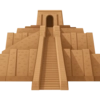
For millennia, I was a wild and unpredictable force, but then, something changed. Around 6000 BCE, clever people living in the land between my banks and those of my brother, the Tigris, learned to work with me. They saw my life-giving power and decided to guide it. They dug small channels from my sides, creating the world's first irrigation systems. This invention transformed their world and created what historians now call the Fertile Crescent. With my water nourishing their fields of wheat and barley, they no longer had to wander in search of food. Around 4000 BCE, people known as the Sumerians used this newfound stability to build the world's first great cities, like Uruk and Ur. They used the rich, sticky clay from my banks to form bricks, which they dried in the hot sun to build homes, workshops, and towering temples called ziggurats. Around 3200 BCE, they discovered another use for my clay. They shaped it into small, flat tablets and used sharpened reeds to press wedge-shaped marks into them, creating the first written language, cuneiform. I didn't just help build their cities; I gave them the material to record their history.
A Voice from the Mountains
My journey begins as a whisper, a trickle of icy water from melting snow high in the mountains of eastern Turkey. I tumble and crash over ancient stones, gathering strength from countless streams until I am a powerful current. I carve my path south, leaving the cool, misty peaks behind for the vast, sun-baked plains of Syria and Iraq. Here, the earth is thirsty, and I am life. I feel the roots of date palms and reeds reach for me, their leaves whispering secrets on the wind. For thousands of years, I have watched gazelles drink from my banks at dawn and listened to the songs of birds nesting in the brush. I have carried the silt that built civilizations and washed away the footprints of kings. I have seen empires turn to dust, yet I continue to flow, a constant witness to the endless story of humanity. I am the Euphrates River.
For millennia, I was a wild and unpredictable force, but then, something changed. Around 6000 BCE, clever people living in the land between my banks and those of my brother, the Tigris, learned to work with me. They saw my life-giving power and decided to guide it. They dug small channels from my sides, creating the world's first irrigation systems. This invention transformed their world and created what historians now call the Fertile Crescent. With my water nourishing their fields of wheat and barley, they no longer had to wander in search of food. Around 4000 BCE, people known as the Sumerians used this newfound stability to build the world's first great cities, like Uruk and Ur. They used the rich, sticky clay from my banks to form bricks, which they dried in the hot sun to build homes, workshops, and towering temples called ziggurats. Around 3200 BCE, they discovered another use for my clay. They shaped it into small, flat tablets and used sharpened reeds to press wedge-shaped marks into them, creating the first written language, cuneiform. I didn't just help build their cities; I gave them the material to record their history.
My banks became the cradle of empires, each grander than the last. I watched the mighty city of Babylon rise from the plains to become the largest city in the world. Its walls were so wide, they said, that chariots could race upon them. It was here, around 1754 BCE, that King Hammurabi created one of history's first written codes of law. He had it carved onto a great stone pillar so that all his people, from the richest noble to the poorest farmer, would know the rules of justice. Legends were told of Babylon’s magnificent Hanging Gardens, a green paradise built in the middle of the desert, though their exact location remains a mystery. I saw conquerors come and go, their armies marching along my shores. One of the most famous was Alexander the Great, who led his Greek armies all the way to India. On his return journey, he reached my banks a final time. In 323 BCE, his epic journey ended in the grand city of Babylon, where he died, and his vast empire began to fracture. I watched it all, a silent, flowing witness to greatness and to loss.
My waters were more than a source of life for crops; they were a superhighway for commerce and culture. For centuries, reed boats and wooden barges sailed upon my surface, their sails full with the desert wind. They carried precious cargo: fragrant spices from the East, fine cloth from distant cities, strong cedar wood from the mountains, and metals like copper and tin. These goods connected worlds, but the most important things I carried were ideas. Around the 2nd century CE, Roman soldiers patrolled my western banks, which marked the far eastern edge of their immense empire. They built forts and watched the trade caravans pass. Centuries later, after the fall of Rome, scholars and merchants from the great Islamic Caliphates traveled along my course. They carried with them priceless knowledge of mathematics, astronomy, and philosophy, sharing discoveries that would eventually spark a renaissance of learning in Europe. I was a bridge, not a barrier, helping knowledge flow as freely as my own current.
My journey continues today, though it has changed. I still flow through Turkey, Syria, and Iraq, a lifeline for millions of people who depend on me for drinking water and farming. But my path is now guided by human ingenuity. Giant dams, like the Atatürk Dam in Turkey, which was completed on February 25th, 1990, hold back my waters to generate electricity and manage irrigation. These structures are marvels of engineering, but they have also created new challenges. With less water to go around, the countries that share me must work together more closely than ever before. My story is a long one, and this is just the latest chapter. My final message is one of hope. I am a reminder that survival has always depended on cooperation, from the first Sumerian farmers who dug channels together to the modern nations who must share my flow. I am more than just a river; I am a flowing story, connecting the ancient past to the ever-unfolding future.
Wow facts
About
The longest river in Western Asia, the Euphrates, along with the Tigris, defined the region of Mesopotamia, the cradle of some of the world's earliest civilizations like Sumer and Babylon.
Take a Quiz
Question 1 of 5
What is the central theme of the story told by the Euphrates River?
Explore next


Want to do even more?
Go beyond exploring. Unlock tools that turn every story into real learning.

Storypie Plus for families
Full stories, quizzes, and printables. Nights and car rides, sorted.
- Unlimited audio stories
- Create Mode: your child stars in the story
- Offline downloads
- Printable worksheets & coloring pages

Why Storypie for Schools
Students engaged. Prep in seconds. Evenings back to you.
- Worksheets & Quizzes
- Classroom Management
- Formative Assessment
- Custom Curriculum & Lesson Plans
- 27 Languages

Why Storypie for Homeschool
Curriculum done. They'll ask for more. Hours back in your day.
- Worksheet Generator
- First-Person Audio Stories
- Built-in Comprehension Quizzes
- Custom Curriculum & Lesson Plans
- Print & Go Activities