English

Greenland
The world's largest island, located between the Arctic and Atlantic Oceans, known for its vast ice sheet…
Reads at Grades 6–8 Listens at Grades 4–8
The Island That Holds Time: A Story of Greenland
I feel the endless grind of glaciers carving valleys into my rocky spine. I watch the sky ignite with curtains of green and purple light, a silent, crackling dance you call the aurora borealis. In summer, the sun barely dips below the horizon, bathing my icy plains in a light that seems to last forever. I am a giant sleeping under a blanket of white, ancient and patient, located in the far north Atlantic and Arctic Oceans. Many know me by the name given to my greenest shores, but my true name is far older. I am Greenland, the largest island in the world, and my real name, Kalaallit Nunaat, means ‘Land of the People’.
My silence was first broken by human footsteps around 2500 BCE. They were the Paleo-Inuit, hunters who traveled across the frozen sea from what is now North America. I watched them arrive in small, determined groups, their courage a stark contrast to my immense scale. They built small camps from stone and turf, their lives woven into my seasons. I remember the skill of the Saqqaq people, who crafted tiny, sharp tools to hunt seals and birds. Later, the Dorset people carved delicate figures from bone and ivory, leaving behind echoes of their beliefs and stories. For thousands of years, these early peoples learned my secrets—where to find food in the harshest winter, how to read the patterns of the ice, and how to survive in a world of white. They lived in harmony with me, taking only what they needed and respecting my power. Their footprints, though now buried under layers of snow and time, marked the beginning of my human story.
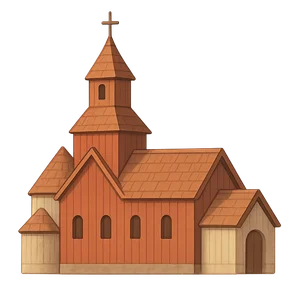
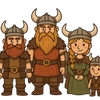
A new sound reached my shores around the year 982 CE. It was not the call of a seabird or the groan of an iceberg, but the rhythmic splash of oars from longships cutting through my frigid waters. A Norse explorer named Erik the Red, a man with a fiery beard and an even fierier spirit, had been exiled from Iceland. He sailed west and found my sheltered fjords, where green grass flourished in the brief summer warmth. He named me 'Greenland,' a clever name designed to entice others to follow him from their crowded homeland. And they came. For nearly 500 years, Norse settlers dotted my southern coasts with farms, raising cattle and sheep. They built churches from stone and turf, their bells ringing out across the quiet landscape. I remember the day of the last wedding recorded at their Hvalsey Church on September 14th, 1408. It was a moment of celebration, but a chill was setting into the air. My climate was slowly growing colder, making farming impossible. The sea ice grew thicker, isolating them from Europe. Their settlements slowly, quietly faded away, leaving only stone ruins as a testament to their time with me.
Just as the Norse story was ending, another was beginning. Around the 13th century, new families arrived, traveling from the west. These were the Thule people, the direct ancestors of today’s Inuit. They were masters of the Arctic in a way I had never seen before. They didn't fight my ice; they danced with it. I watched in awe as they glided across my waters in sleek, skin-covered boats they called kayaks, so silent and swift they could hunt seals without a ripple. On land, they commanded teams of powerful sled dogs, their paws pounding across my frozen expanses, connecting communities across vast distances. They built ingenious winter homes and understood the patterns of the sea and the animals better than anyone before them. They didn't try to change me; they adapted to me. Their culture took deep root in my soil, a bond of resilience and respect that has lasted for centuries. They are the Kalaallit, and their enduring spirit is now my own.
Centuries passed in quiet rhythm until 1721, when tall ships from Denmark-Norway appeared on the horizon. This began a new era, connecting my remote shores to the wider world of Europe. Trading posts were established, and new communities grew, blending old ways with new ideas. My relationship with Denmark evolved over the next two hundred years. Then, during the great turmoil of World War II, I played an unexpected role. With Denmark occupied, I became a strategic location for the Allies. Starting in 1941, the United States built airbases on my land, vital links for planes and supplies crossing the Atlantic. This period brought immense change, introducing new technologies and a greater awareness of the outside world. It also sparked a desire among my people to have a stronger voice in their own destiny. Their peaceful journey toward self-governance was a testament to their patience and strength. On May 1st, 1979, I proudly watched as they gained Home Rule. Another joyful celebration took place on June 21st, 2009, with the Self-Government Act, which granted them even more power to shape their own future.
Today, I am a land of contrasts. Vibrant towns with brightly colored houses are nestled in my ancient fjords, where fishing boats and icebergs share the same water. Here, ancient traditions like hunting and storytelling live alongside modern technology and global connections. But my role in the world has grown. Scientists from every corner of the globe come to drill deep into my ice sheet. They are reading my layers like pages in a history book, discovering the story of Earth's climate going back hundreds of thousands of years. As my ice melts at an accelerating pace, I send a crucial message to the world about our warming planet. I am a living monument to the power of nature, but also to the incredible resilience of the people who call me home. I hope my long story inspires you to listen closely to the Earth, to learn from the wisdom of the past, and to work together to protect our shared future.
Wow facts
About
The world's largest island, located between the Arctic and Atlantic Oceans, known for its vast ice sheet, unique Inuit culture, and significant role in climate science.
Take a Quiz
Question 1 of 5
Why did the explorer Erik the Red name the island 'Greenland' even though it is mostly covered in ice?
Explore next



Want to do even more?
Go beyond exploring. Unlock tools that turn every story into real learning.

Storypie Plus for families
Full stories, quizzes, and printables. Nights and car rides, sorted.
- Unlimited audio stories
- Create Mode: your child stars in the story
- Offline downloads
- Printable worksheets & coloring pages

Why Storypie for Schools
Students engaged. Prep in seconds. Evenings back to you.
- Worksheets & Quizzes
- Classroom Management
- Formative Assessment
- Custom Curriculum & Lesson Plans
- 27 Languages

Why Storypie for Homeschool
Curriculum done. They'll ask for more. Hours back in your day.
- Worksheet Generator
- First-Person Audio Stories
- Built-in Comprehension Quizzes
- Custom Curriculum & Lesson Plans
- Print & Go Activities