English

Harappa
Harappa is a major archaeological site in Punjab, Pakistan…
Reads at Grades 6–8 Listens at Grades 4–8
Print & create
Answer keys·No prep·Free with an account
28 worksheets · answer keys · full story · quiz · Ages 10-12 · CEFR B2
Plus adds 208,000+ more stories in 27 languages, audio for every one, and printables for all of them.
Just want Harappa?
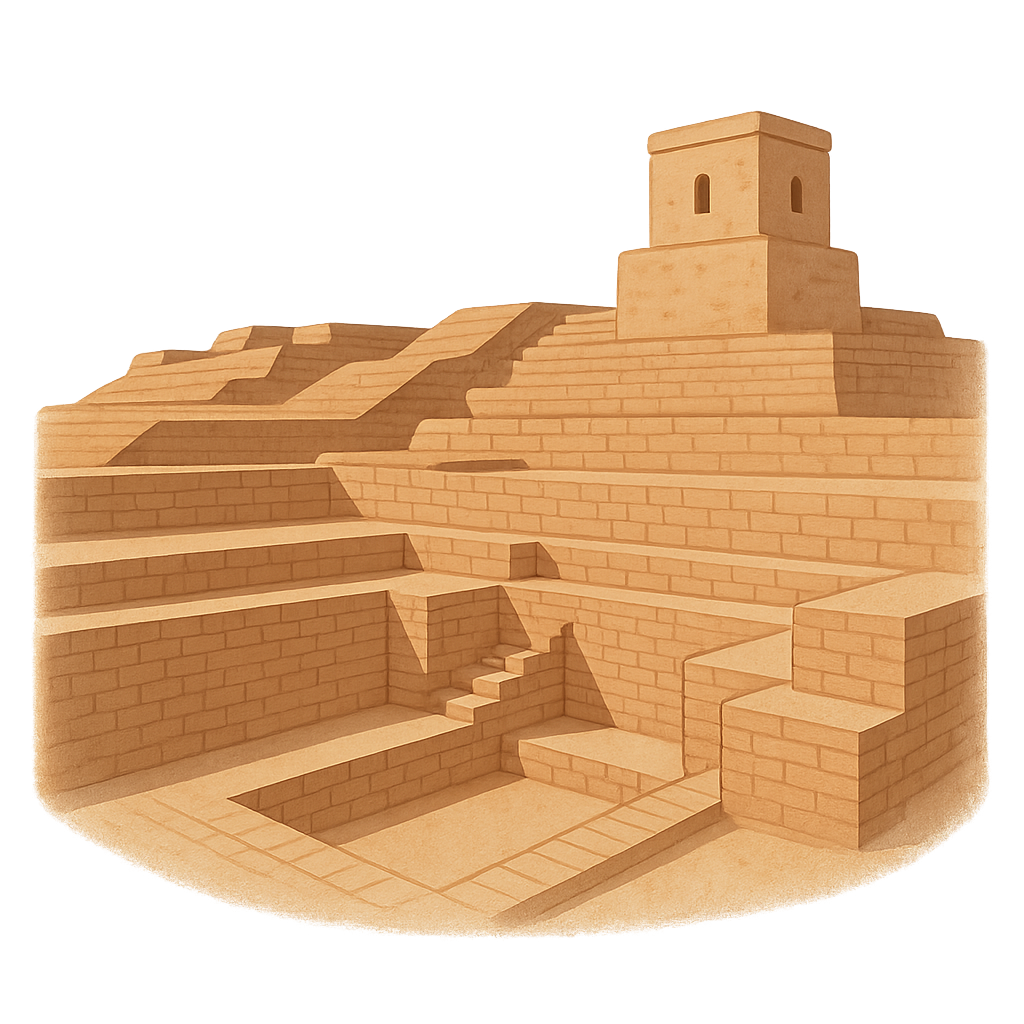
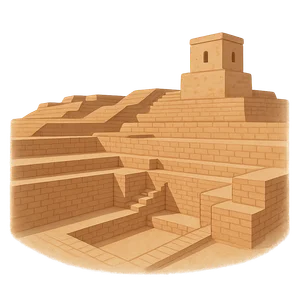
For millennia, I slept beneath the sun-baked earth of what is now Pakistan, a hidden world dreaming of its past. Above me, the seasons changed and empires rose and fell, but I remained undisturbed. The only hint of my existence was the faint warmth of the sun filtering through the soil, touching the tops of my buried walls. I am a city built of uniform, fire-baked bricks, laid out in a perfect grid of streets and alleys, a masterpiece of order waiting to be found. My silence held the echoes of a bustling civilization, a mystery that lay dormant for ages. I am Harappa, a city born thousands of years ago, around the year 2600 BCE, as one of the great hearts of the Indus Valley Civilization.
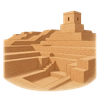
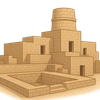
My creators were brilliant engineers and planners. Long before many other great cities of the world were imagined, I was built with incredible care and foresight. I wasn't a chaotic jumble of buildings; I was a masterpiece of Bronze Age urban design. My layout was divided into two main areas. High on a mound stood my citadel, a place for important public gatherings and ceremonies, home to massive structures like the Great Granary. This enormous building was used to store grain, a sign of how organized and prepared my people were for the future. Below the citadel stretched the lower town, where thousands of my citizens lived in neat brick houses. Their lives were made healthier and easier by my advanced engineering. My streets were as straight as arrows, crossing each other at perfect right angles, making it easy to navigate. Most impressively, I had a complex sanitation system with covered drains running alongside the streets, a feature of public health that wouldn't become common in other parts of the world for thousands of years. The fact that I was built from millions of standardized, fire-baked bricks shows that my builders were masters of cooperation and planning.
The City of Bricks and Secrets: My Story as Harappa
For millennia, I slept beneath the sun-baked earth of what is now Pakistan, a hidden world dreaming of its past. Above me, the seasons changed and empires rose and fell, but I remained undisturbed. The only hint of my existence was the faint warmth of the sun filtering through the soil, touching the tops of my buried walls. I am a city built of uniform, fire-baked bricks, laid out in a perfect grid of streets and alleys, a masterpiece of order waiting to be found. My silence held the echoes of a bustling civilization, a mystery that lay dormant for ages. I am Harappa, a city born thousands of years ago, around the year 2600 BCE, as one of the great hearts of the Indus Valley Civilization.
My creators were brilliant engineers and planners. Long before many other great cities of the world were imagined, I was built with incredible care and foresight. I wasn't a chaotic jumble of buildings; I was a masterpiece of Bronze Age urban design. My layout was divided into two main areas. High on a mound stood my citadel, a place for important public gatherings and ceremonies, home to massive structures like the Great Granary. This enormous building was used to store grain, a sign of how organized and prepared my people were for the future. Below the citadel stretched the lower town, where thousands of my citizens lived in neat brick houses. Their lives were made healthier and easier by my advanced engineering. My streets were as straight as arrows, crossing each other at perfect right angles, making it easy to navigate. Most impressively, I had a complex sanitation system with covered drains running alongside the streets, a feature of public health that wouldn't become common in other parts of the world for thousands of years. The fact that I was built from millions of standardized, fire-baked bricks shows that my builders were masters of cooperation and planning.
My streets were once filled with the sounds of life from a clever and creative people. My inhabitants were skilled artisans, busy traders, and hardworking farmers who cultivated the fertile plains around me. The objects they left behind tell the story of their artistry and daily lives. They crafted beautiful jewelry from polished carnelian beads, shaped intricate pottery on their wheels, and made charming terracotta toys, like miniature carts pulled by tiny oxen, for their children to play with. But my most famous and mysterious artifacts are my stone seals. These small, square stones were carved with incredible detail, showing powerful animals like bulls with lowered heads, majestic elephants, and a mysterious creature that looks like a unicorn. Above these animals are symbols from a unique system of writing, now called the Indus Script. This script is one of the world's great unsolved puzzles; no one today can read what my people wrote. These seals were not just for decoration; they were used in trade. Around 2300 BCE, some of my seals traveled all the way to Mesopotamia, proving that my people were part of a vast network that connected ancient cultures across thousands of miles.
Even the most vibrant life eventually fades. My golden age lasted for centuries, but starting around 1900 BCE, a slow change began. My busy streets grew quiet. My workshops fell silent. One by one, my families began to move away, and the pulse of my city weakened. Why did they leave? The answer is another one of my mysteries. It wasn't a sudden disaster or a great war that ended my story. Instead, it was likely a combination of slow changes. Perhaps the mighty Indus River, the source of my civilization's life, gradually shifted its course, leaving my fields dry. Perhaps the climate changed, and the predictable rains that nourished the crops became unreliable. Or maybe the trade routes that brought wealth and goods were disrupted. Whatever the reason, my life ebbed away. Over centuries, the wind blew sand and soil over my empty buildings, gently tucking me into a deep and quiet sleep that would last for nearly four thousand years.
My long slumber was first disturbed in the 1820s, when a British traveler named Charles Masson noticed my high mounds of ancient brick, though he didn't understand what he had found. Later, in the 1850s, workers building a railway nearby unknowingly used millions of my precious, time-worn bricks to lay the track bed, carrying away pieces of my history. My true awakening began in the 1920s, when archaeologists like Rai Bahadur Daya Ram Sahni and later Sir John Marshall began systematic excavations. As they carefully dug into my mounds, they realized they had stumbled upon something extraordinary. The world was stunned by the announcement that I was part of a vast, highly advanced, and previously unknown ancient civilization. Today, I am a treasured archaeological site in Pakistan, a window into the deep past. I teach the world about a brilliant and peaceful culture that valued order, art, and innovation. The mystery of my script continues to challenge curious minds, and my ancient design still inspires architects, proving that even after millennia, a well-built idea can change the world.
Wow facts
About
Harappa is a major archaeological site in Punjab, Pakistan, that was one of the largest and most important cities of the ancient Indus Valley Civilization during the Bronze Age.
Take a Quiz
Question 1 of 5
What does Harappa's city design, with its grid-like streets and sanitation system, reveal about the people who built it?
Explore next



Want to do even more?
Go beyond exploring. Unlock tools that turn every story into real learning.

Storypie Plus for families
Full stories, quizzes, and printables. Nights and car rides, sorted.
- Unlimited audio stories
- Create Mode: your child stars in the story
- Offline downloads
- Printable worksheets & coloring pages

Why Storypie for Schools
Students engaged. Prep in seconds. Evenings back to you.
- Worksheets & Quizzes
- Classroom Management
- Formative Assessment
- Custom Curriculum & Lesson Plans
- 27 Languages

Why Storypie for Homeschool
Curriculum done. They'll ask for more. Hours back in your day.
- Worksheet Generator
- First-Person Audio Stories
- Built-in Comprehension Quizzes
- Custom Curriculum & Lesson Plans
- Print & Go Activities