English

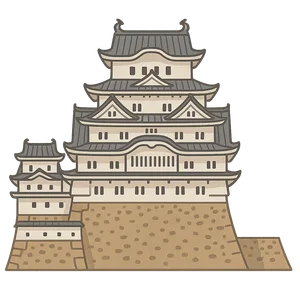
Himeji Castle
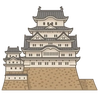
Himeji Castle is a magnificent hilltop Japanese castle complex located in Himeji, Japan.
Reads at Grades 6–8 Listens at Grades 4–8
Print & create
Answer keys·No prep·Free with an account
28 worksheets · answer keys · full story · quiz · Ages 10-12 · CEFR B2
Plus adds 208,000+ more stories in 27 languages, audio for every one, and printables for all of them.
Just want Himeji Castle?
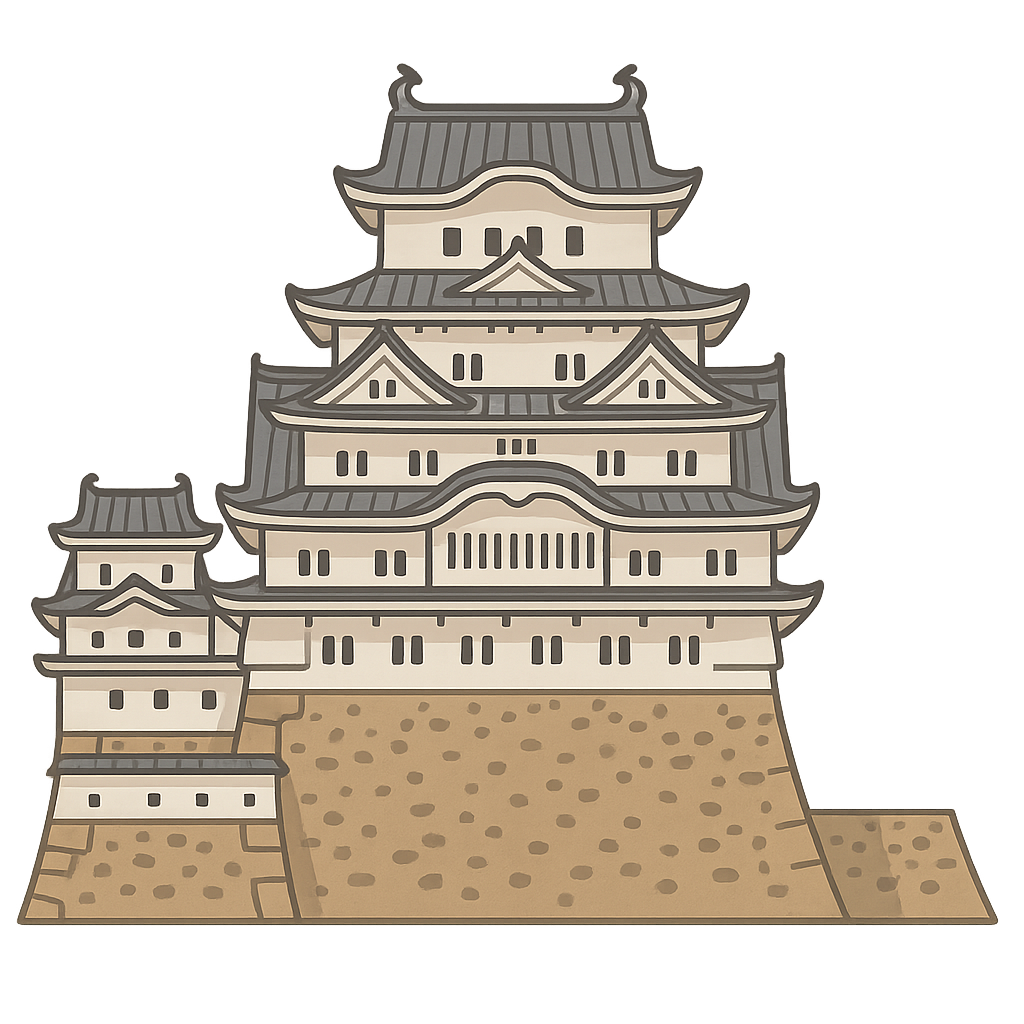
From my home on Himeyama Hill in Japan, I watch the seasons change. In the spring, cherry blossoms drift like soft pink clouds around my base. In winter, my roofs are sometimes dusted with snow. For centuries, I have stood here, my brilliant white plaster walls catching the sun and my many-tiered roofs curving gracefully toward the sky. They say my shape resembles a great bird about to take flight, which is why people long ago gave me a beautiful nickname: Shirasagi-jō, the White Heron Castle. While I love that name, the world knows me as Himeji Castle. I am more than just stone and wood. I am a guardian of history, a survivor of changing times, and a story written against the sky, waiting to be read by all who visit me.
My life did not begin with this grandeur. My first stones were laid in the year 1333, a time of conflict between powerful samurai clans. A lord named Akamatsu Norimura built a small fort right here on this hill. It was a strategic spot, perfect for keeping a watchful eye on the surrounding lands. Just a few years later, in 1346, his son Sadanori decided a simple fort was not enough. He tore down the old structure and rebuilt me into a proper castle. I was still much smaller than I am today, but my purpose was clear. I was a home for samurai, a symbol of their strength, and a silent protector for the people in the valleys below. My early years were spent in quiet vigilance, a sturdy stone anchor in a world of shifting loyalties and fierce ambition, always ready for a battle that might come at any moment.
The Story of the White Heron Castle
From my home on Himeyama Hill in Japan, I watch the seasons change. In the spring, cherry blossoms drift like soft pink clouds around my base. In winter, my roofs are sometimes dusted with snow. For centuries, I have stood here, my brilliant white plaster walls catching the sun and my many-tiered roofs curving gracefully toward the sky. They say my shape resembles a great bird about to take flight, which is why people long ago gave me a beautiful nickname: Shirasagi-jō, the White Heron Castle. While I love that name, the world knows me as Himeji Castle. I am more than just stone and wood. I am a guardian of history, a survivor of changing times, and a story written against the sky, waiting to be read by all who visit me.
My life did not begin with this grandeur. My first stones were laid in the year 1333, a time of conflict between powerful samurai clans. A lord named Akamatsu Norimura built a small fort right here on this hill. It was a strategic spot, perfect for keeping a watchful eye on the surrounding lands. Just a few years later, in 1346, his son Sadanori decided a simple fort was not enough. He tore down the old structure and rebuilt me into a proper castle. I was still much smaller than I am today, but my purpose was clear. I was a home for samurai, a symbol of their strength, and a silent protector for the people in the valleys below. My early years were spent in quiet vigilance, a sturdy stone anchor in a world of shifting loyalties and fierce ambition, always ready for a battle that might come at any moment.
My greatest change, the one that gave me the breathtaking form you see today, began centuries later. In 1581, a powerful and ambitious leader named Toyotomi Hideyoshi took control of me. He understood my strategic importance and gave me a significant upgrade: a three-story main tower, or keep, that made me far more imposing than before. But my true glory was yet to come. After the turn of the century, a new lord arrived. His name was Ikeda Terumasa, and he was the son-in-law of the most powerful man in Japan, the shogun Tokugawa Ieyasu. Between 1601 and 1609, Lord Ikeda poured immense resources and genius into my reconstruction. For nine years, thousands of workers shaped me into a magnificent fortress complex. They built my soaring, five-story main keep, the Daitenshu, and connected it to three smaller towers with covered corridors. They coated my walls in a special white plaster that was not only beautiful but also fire-resistant. But I was not just made to be admired. I was designed to be unconquerable. My pathways were built like a maze, spiraling up the hill with dead ends and confusing turns to trap any invading army. My walls were filled with hidden openings: triangular and rectangular portholes called sama for archers and gunmen, and stone-dropping windows called ishi-otoshi-mado, ready to rain destruction on anyone foolish enough to approach. I was the perfect blend of elegance and deadly defense.
After my grand transformation was complete, a long era of peace settled over Japan, known as the Edo Period. For more than 250 years, no enemy army ever marched on my gates. My winding paths never confused an invader, and my clever defenses were never put to the test. I remained a silent, beautiful guardian, serving not as a war machine, but as the administrative center for the region and a powerful symbol of the lord's authority. But this peace brought a new kind of danger. When the age of the samurai ended with the Meiji Restoration in 1868, Japan began to modernize rapidly. Old castles like me were seen as relics of a feudal past, expensive to maintain and without a modern purpose. In 1871, I was sold at auction and scheduled to be demolished so the land could be redeveloped. My story was nearly over. But a Japanese army colonel, Nakamura Shigeto, was horrified by the thought of losing such a cultural treasure. He pleaded with the government, and his passionate efforts saved me from destruction. My life was spared, but my role changed once again. For a time, I became a military barracks, my elegant halls filled with soldiers instead of samurai lords.
I have survived not only neglect but also the fury of modern warfare. During World War II, the city of Himeji was heavily bombed by Allied forces in 1945. The city around me was turned to ash and rubble. One night, a firebomb landed directly on the roof of my main tower. It should have been the end of me, but by some miracle, the bomb failed to explode. While the city burned, I stood tall and untouched, a white silhouette against a fiery sky. After the war, the people of Japan knew they had something precious in me. A massive restoration project began in 1956 and took eight years to complete, finishing in 1964. Craftsmen carefully repaired my walls, tiles, and timbers, ensuring my story would continue. Their hard work was recognized by the entire world when, on December 11th, 1993, I was named one of Japan’s very first UNESCO World Heritage Sites. I am no longer a fortress for war. I am a treasure for the world, a testament to brilliant craftsmanship and incredible resilience. I now open my gates to people from every corner of the globe, sharing the quiet beauty of peace and the enduring power of human creativity.
Wow facts
About
Himeji Castle is a magnificent hilltop Japanese castle complex located in Himeji, Japan. Known as 'White Egret Castle' for its brilliant white exterior, it is considered the finest surviving example of prototypical Japanese castle architecture.
Take a Quiz
Question 1 of 5
Retell the story of how Himeji Castle was built and changed, mentioning the key people involved in its development.
Explore next





Want to do even more?
Go beyond exploring. Unlock tools that turn every story into real learning.

Storypie Plus for families
Full stories, quizzes, and printables. Nights and car rides, sorted.
- Unlimited audio stories
- Create Mode: your child stars in the story
- Offline downloads
- Printable worksheets & coloring pages

Why Storypie for Schools
Students engaged. Prep in seconds. Evenings back to you.
- Worksheets & Quizzes
- Classroom Management
- Formative Assessment
- Custom Curriculum & Lesson Plans
- 27 Languages

Why Storypie for Homeschool
Curriculum done. They'll ask for more. Hours back in your day.
- Worksheet Generator
- First-Person Audio Stories
- Built-in Comprehension Quizzes
- Custom Curriculum & Lesson Plans
- Print & Go Activities