English

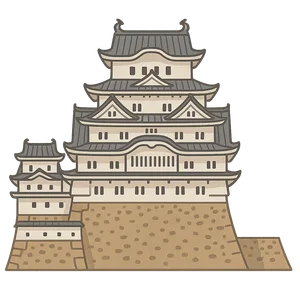
Himeji Castle
Himeji Castle is a magnificent hilltop Japanese castle complex located in Himeji, Japan.
Reads at Grades 3–5 Listens at Grades 1–5
Print & create
Answer keys·No prep·Free with an account
28 worksheets · answer keys · full story · quiz · Ages 8-10 · CEFR B1
Plus adds 208,000+ more stories in 27 languages, audio for every one, and printables for all of them.
Just want Himeji Castle?
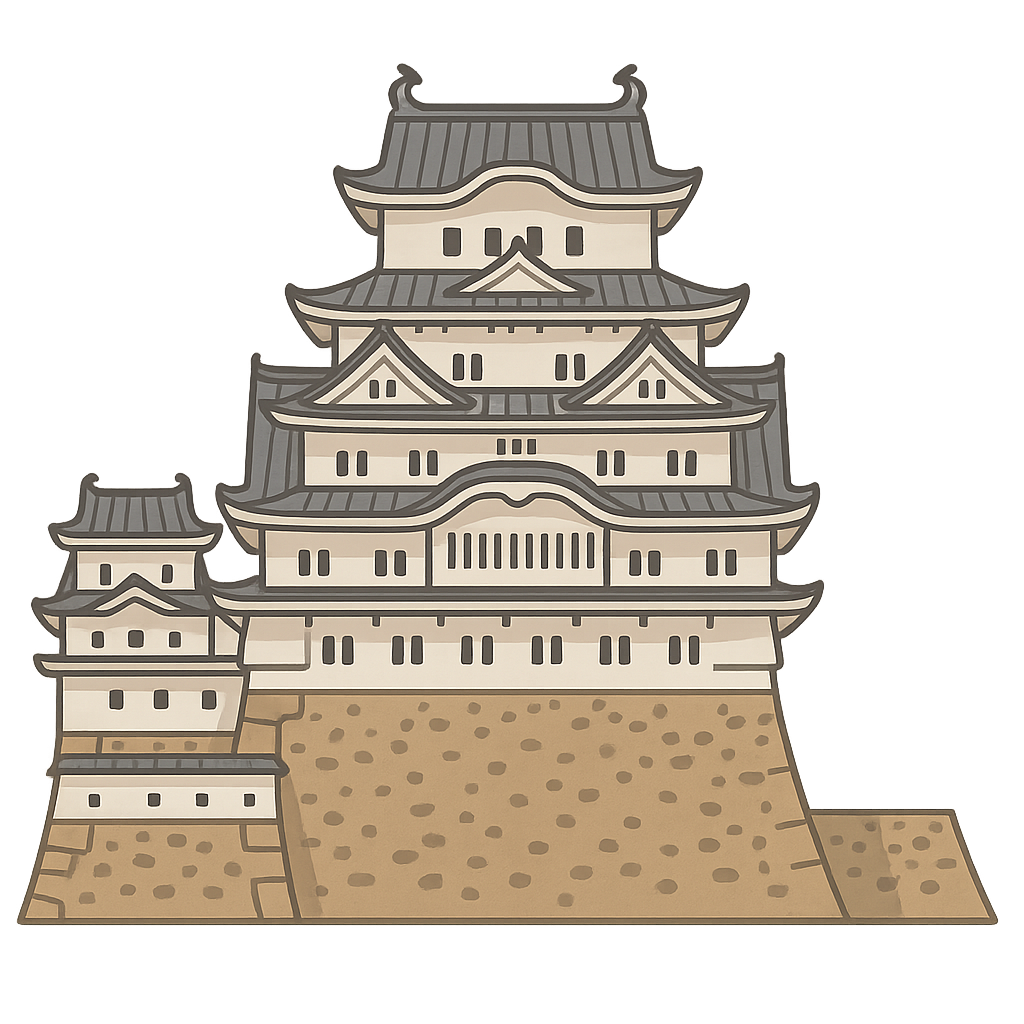
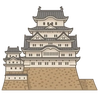
If you stand in the modern city of Himeji in Japan and look up at the hill in its heart, you will see me. My bright white walls rise in graceful curves, and my many roofs tier upward toward the sky. To many, I look like a great white bird about to take flight, a beautiful egret spreading its wings. From my highest point, I can see the bustling city, the green mountains, and the sparkling sea far away. For centuries, I have watched over this land. I am Himeji Castle, but my friends call me Shirasagi-jō, the White Egret Castle, and this is my story.
My first stones were laid in a time of samurai and shoguns, long before the city around me looked as it does today. My story began in the year 1333, when a samurai lord named Akamatsu Norimura decided to build a small fort right on this hill. It was a good strategic spot, but it was not yet the grand castle I would become. A few years later, in 1346, his son, Akamatsu Sadanori, took down the simple fort and built a proper castle in its place. Those were my true beginnings, the first foundation of the strong and beautiful structure I am now. I was born from a family’s desire to protect their home.
As the years passed, Japan entered an era of great battles between powerful warlords, and I found myself in the hands of one of the most famous leaders of all, Toyotomi Hideyoshi. He was a brilliant and ambitious man who saw my potential. In 1581, he took control of me and decided I needed to be much stronger to serve as a key fortress in his plans to unite the country. His builders went to work, adding a three-story main tower, which is called a keep. This new keep became my heart, making me a much more formidable and important castle. I felt prouder and taller, a symbol of Hideyoshi's power, watching over the lands for this great leader as he changed the course of Japanese history.
The White Egret Castle
If you stand in the modern city of Himeji in Japan and look up at the hill in its heart, you will see me. My bright white walls rise in graceful curves, and my many roofs tier upward toward the sky. To many, I look like a great white bird about to take flight, a beautiful egret spreading its wings. From my highest point, I can see the bustling city, the green mountains, and the sparkling sea far away. For centuries, I have watched over this land. I am Himeji Castle, but my friends call me Shirasagi-jō, the White Egret Castle, and this is my story.
My first stones were laid in a time of samurai and shoguns, long before the city around me looked as it does today. My story began in the year 1333, when a samurai lord named Akamatsu Norimura decided to build a small fort right on this hill. It was a good strategic spot, but it was not yet the grand castle I would become. A few years later, in 1346, his son, Akamatsu Sadanori, took down the simple fort and built a proper castle in its place. Those were my true beginnings, the first foundation of the strong and beautiful structure I am now. I was born from a family’s desire to protect their home.
As the years passed, Japan entered an era of great battles between powerful warlords, and I found myself in the hands of one of the most famous leaders of all, Toyotomi Hideyoshi. He was a brilliant and ambitious man who saw my potential. In 1581, he took control of me and decided I needed to be much stronger to serve as a key fortress in his plans to unite the country. His builders went to work, adding a three-story main tower, which is called a keep. This new keep became my heart, making me a much more formidable and important castle. I felt prouder and taller, a symbol of Hideyoshi's power, watching over the lands for this great leader as he changed the course of Japanese history.
My most glorious transformation, however, was still to come. After a period of conflict, a new lord named Ikeda Terumasa was granted my lands. He had a grand vision for me. From 1601 to 1609, he began a massive expansion project that took nine years to complete. His master builders created the stunning five-story main keep that visitors admire today, connecting it to smaller towers with a series of passages and courtyards. To protect my wooden structure from fire and to create my famous look, they covered my walls in a brilliant white, fire-resistant plaster. This is what makes me shine so brightly in the sunlight. But I am not just beautiful. Ikeda Terumasa made me a clever fortress. He designed my pathways to be a confusing, maze-like puzzle to trick any invading army. The paths twist and turn, leading to dead ends, all while defenders could watch from hidden windows and archer slots. I was made to be a masterpiece of both beauty and defense.
My strength was tested many times, but not always by armies of samurai. I have stood through centuries of peace and moments of great turmoil. During World War II, in 1945, bombs fell on the city of Himeji all around me. One bomb even landed directly on my roof, but in what felt like a miracle, it did not explode. The city was damaged, but I was spared. Fifty years later, in 1995, the ground shook violently during the Great Hanshin earthquake. Many modern buildings crumbled, but my ancient wooden joints and massive stone base held strong. I stood tall, proving the genius of my builders from long ago and becoming a symbol of hope and resilience for the people of Japan.
Today, the clashing of swords has faded into history, replaced by the happy sounds of visitors from all over the world. In 1993, I was given a great honor. I was named a UNESCO World Heritage Site, recognized as a treasure belonging to all of humanity. People now walk my winding paths not as invaders, but as friends, eager to learn my stories and admire my beauty. I am no longer just a fortress built for war. I am a bridge to the past, a symbol of the incredible artistry of Japanese culture, and a lasting reminder that strength and beauty can endure through time to inspire peace and wonder in everyone who sees me. I am the White Egret, still watching proudly from my hill.
Wow facts
About
Himeji Castle is a magnificent hilltop Japanese castle complex located in Himeji, Japan. Known as 'White Egret Castle' for its brilliant white exterior, it is considered the finest surviving example of prototypical Japanese castle architecture.
Take a Quiz
Question 1 of 5
In the story, the castle says it has 'confusing, maze-like paths.' What does 'maze-like' mean?
Explore next





Want to do even more?
Go beyond exploring. Unlock tools that turn every story into real learning.

Storypie Plus for families
Full stories, quizzes, and printables. Nights and car rides, sorted.
- Unlimited audio stories
- Create Mode: your child stars in the story
- Offline downloads
- Printable worksheets & coloring pages

Why Storypie for Schools
Students engaged. Prep in seconds. Evenings back to you.
- Worksheets & Quizzes
- Classroom Management
- Formative Assessment
- Custom Curriculum & Lesson Plans
- 27 Languages

Why Storypie for Homeschool
Curriculum done. They'll ask for more. Hours back in your day.
- Worksheet Generator
- First-Person Audio Stories
- Built-in Comprehension Quizzes
- Custom Curriculum & Lesson Plans
- Print & Go Activities