English

Indus Valley Civilization
One of the world's earliest urban civilizations…
Reads at Grades 6–8 Listens at Grades 4–8
Print & create
Answer keys·No prep·Free with an account
28 worksheets · answer keys · full story · quiz · Ages 10-12 · CEFR B2
Plus adds 102,000+ more stories in 27 languages, audio for every one, and printables for all of them.
Just want Indus Valley Civilization?
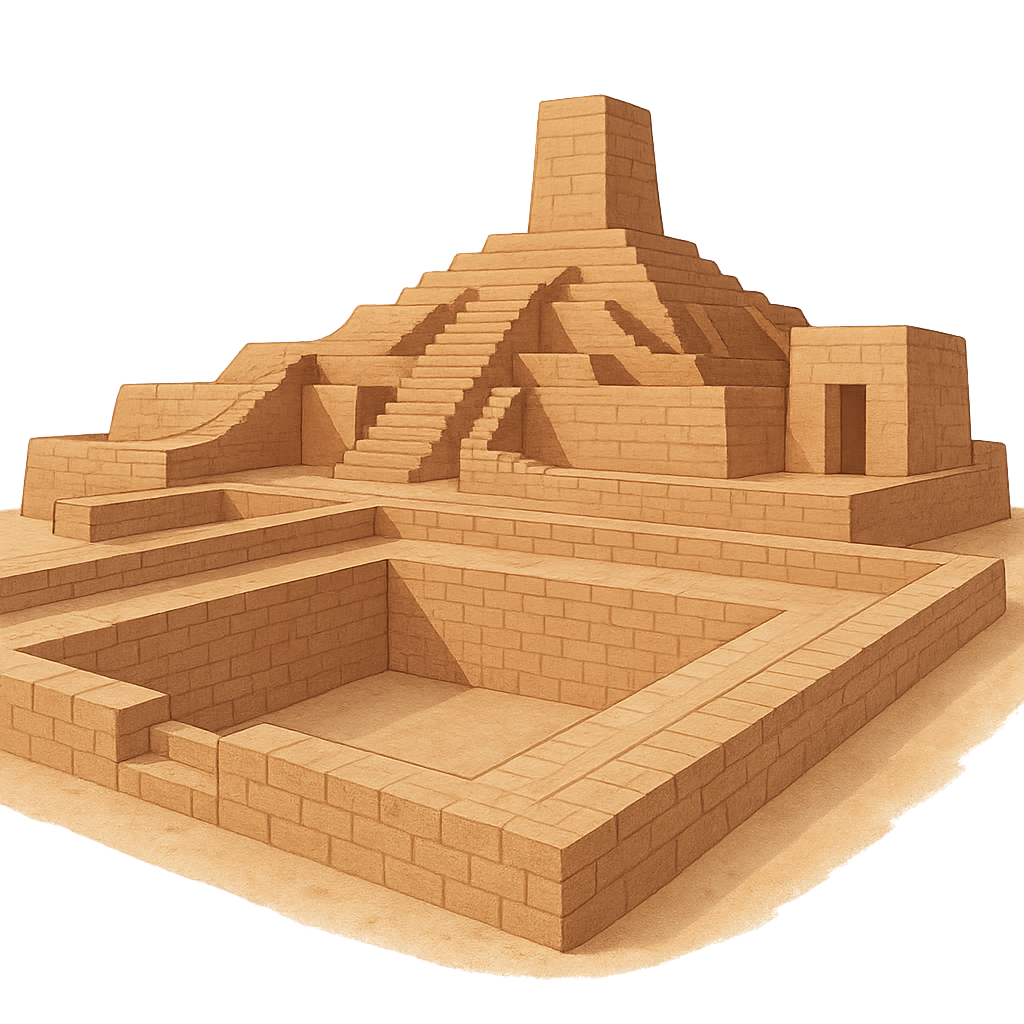
I am a memory buried under mounds of earth, a story waiting by a great river. I am cities built with bricks the color of the sun, laid out in neat, straight lines like a giant puzzle. For thousands of years, I slept, my secrets safe. People walked above me, never knowing that a whole world of clever builders, talented artists, and peaceful traders was just beneath their feet, a civilization as grand as ancient Egypt or Mesopotamia. My voice is the constant, quiet whisper of the Indus River, which gave my people life and watched over me as I faded into legend. It was my cradle and my guardian. Before I was a name in a history book, I was a thriving world of innovation and order. I am the Indus Valley Civilization.
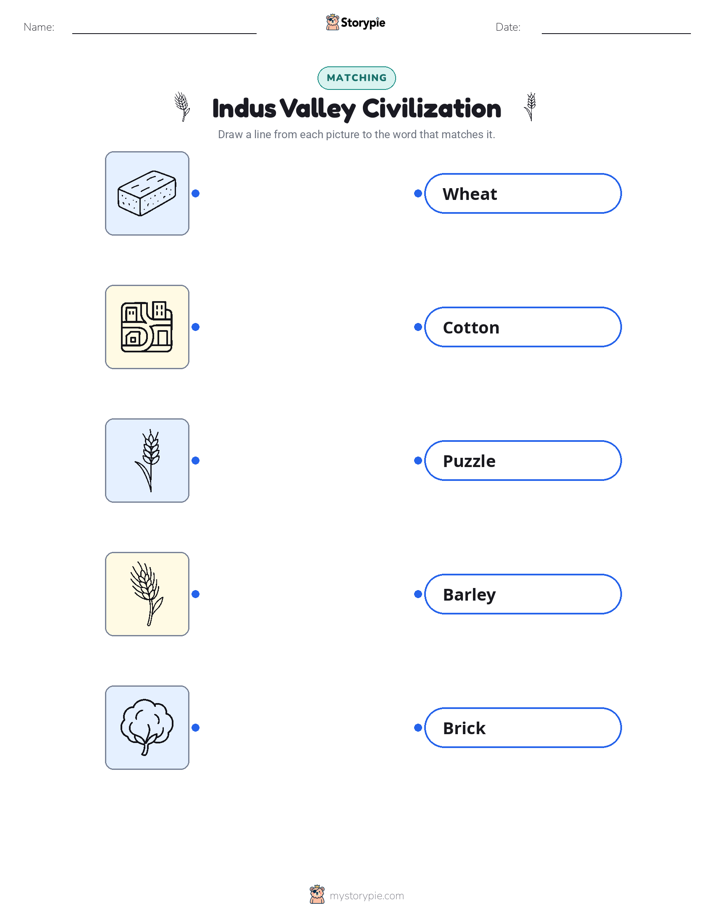
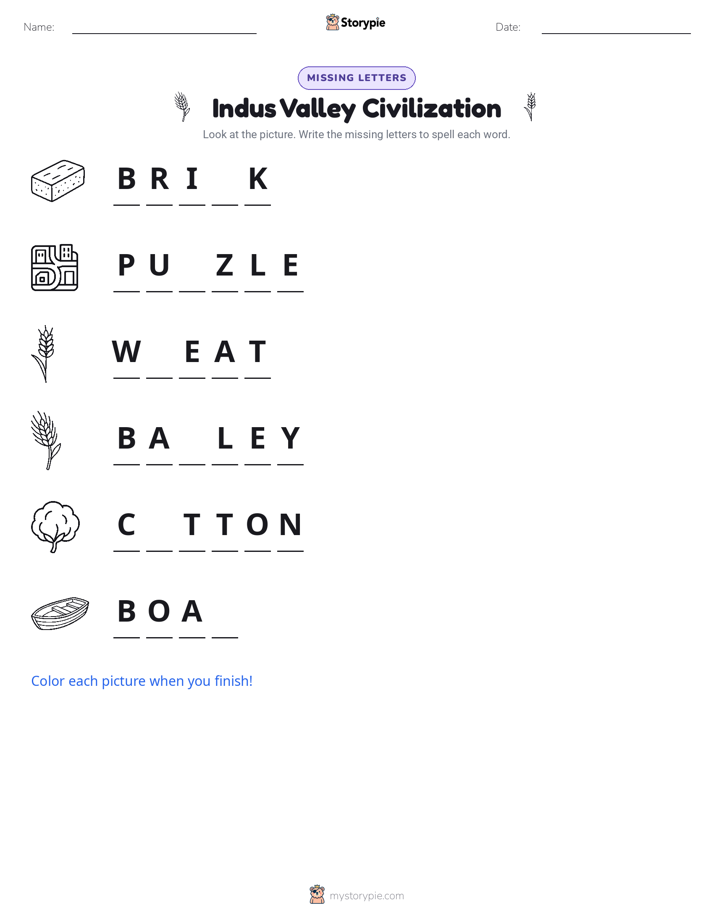
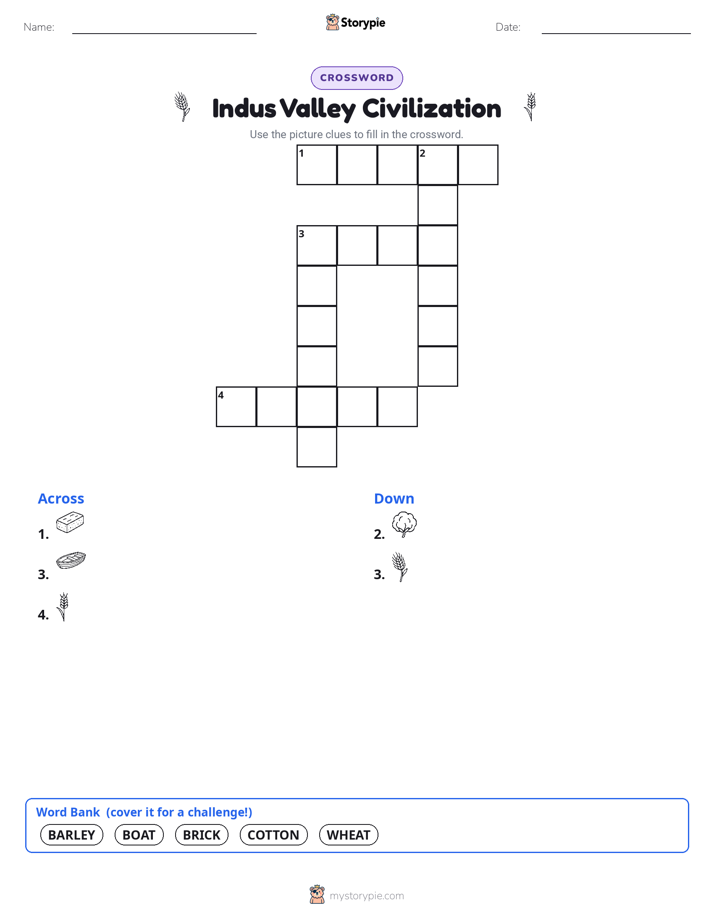
My story begins a very long time ago, in a period that scholars call the Early Harappan phase, which started around 3300 BCE. The people who created me found a perfect home in the fertile plains of the Indus River Valley, in what is now modern-day Pakistan and northwest India. The river was my lifeblood, providing rich soil and plentiful water for their crops and serving as a wide highway for their boats. They were brilliant farmers who learned to grow wheat, barley, and cotton, which they would one day trade across the ancient world. They were smart, organized, and worked together, and soon their small farming villages grew into bustling towns. This was my childhood, a time of growth and new ideas that lasted for hundreds of years. The foundations they laid during this era, from their pottery techniques to their early trade networks, set the stage for the great, organized cities I would soon build.
The Whispering Bricks of the Indus
I am a memory buried under mounds of earth, a story waiting by a great river. I am cities built with bricks the color of the sun, laid out in neat, straight lines like a giant puzzle. For thousands of years, I slept, my secrets safe. People walked above me, never knowing that a whole world of clever builders, talented artists, and peaceful traders was just beneath their feet, a civilization as grand as ancient Egypt or Mesopotamia. My voice is the constant, quiet whisper of the Indus River, which gave my people life and watched over me as I faded into legend. It was my cradle and my guardian. Before I was a name in a history book, I was a thriving world of innovation and order. I am the Indus Valley Civilization.
My story begins a very long time ago, in a period that scholars call the Early Harappan phase, which started around 3300 BCE. The people who created me found a perfect home in the fertile plains of the Indus River Valley, in what is now modern-day Pakistan and northwest India. The river was my lifeblood, providing rich soil and plentiful water for their crops and serving as a wide highway for their boats. They were brilliant farmers who learned to grow wheat, barley, and cotton, which they would one day trade across the ancient world. They were smart, organized, and worked together, and soon their small farming villages grew into bustling towns. This was my childhood, a time of growth and new ideas that lasted for hundreds of years. The foundations they laid during this era, from their pottery techniques to their early trade networks, set the stage for the great, organized cities I would soon build.
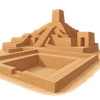
By 2600 BCE, I was in my prime. This was my Mature Harappan period, a time of incredible achievement when I was home to some of the most advanced cities in the ancient world. My two most famous cities were Harappa and Mohenjo-Daro, both marvels of planning and engineering. Imagine walking through streets laid out in a perfect grid, a level of organization unheard of for that time. My houses were built from uniform, baked bricks, and many were surprisingly modern, with their own private bathrooms that connected to a city-wide drainage system. I was very proud of my water systems. I had the world’s first known urban sanitation systems, with covered drains running along the main streets to carry away waste water. At Mohenjo-Daro, I built a magnificent structure called the Great Bath. It was a huge, beautiful pool, meticulously constructed and waterproofed with natural tar. It was a masterpiece of engineering, and historians believe it was likely used for special ceremonies or religious rituals, a place for my community to come together.
My people were peaceful and highly creative. When archaeologists look for me, they find very few weapons, suggesting I was a society that valued cooperation over conflict. But they have discovered countless treasures that tell the story of my people’s skill and artistry. My artisans crafted beautiful, distinctive pottery decorated with geometric patterns and animal designs. They made shiny bead necklaces from carnelian and agate, and cast remarkable bronze statues, like the famous ‘Dancing Girl’ from Mohenjo-Daro. My most mysterious creations are my small stone seals. Thousands have been found, each carved with incredible detail. They show animals like unicorns, bulls, and elephants, alongside a special script of symbols. No one today knows how to read my script—it’s a secret I still keep! My people traded far and wide, sending cotton textiles and crafts all the way to Mesopotamia. And life wasn't all work; children played with clay toys, including little carts, whistles shaped like birds, and monkeys that could slide down a string.
After centuries of flourishing, things began to change. Around 1900 BCE, a slow transformation began, and my great cities started to empty. It was not a sudden, violent ending, but a gradual fading, like a light slowly dimming. Why did this happen? That is another of my great mysteries. There are many theories, but no one is certain. Perhaps the great Indus River, my source of life, changed its course, leaving my cities and farms dry. Maybe the climate shifted over many decades, making it harder to grow crops and sustain large populations. Whatever the cause, my people didn't disappear entirely. They adapted, moving away from the large urban centers into smaller villages. Their way of life transformed, and my grand brick cities slowly crumbled, eventually covered by layers of dust and time. I fell into a deep sleep for thousands of years, my story forgotten.
For nearly 4,000 years, I was just a legend, a series of mysterious mounds in the landscape. Then, in the 1920s CE, archaeologists began to dig, and I started to wake up. An Indian archaeologist named R.D. Banerji was excavating a Buddhist stupa in 1922 when he found the ruins of Mohenjo-Daro beneath it. Around the same time, another team led by Sir John Marshall was excavating Harappa. On September 20th, 1924, they officially announced my discovery to the world! It was like I had woken up from the longest dream. The world was astonished. They uncovered my perfectly planned streets, my clever drains, and my beautiful, mysterious seals. Today, my most important sites are protected as a UNESCO World Heritage site, and people from all over the globe visit to learn my story. I show them that even thousands of years ago, people could build incredible, organized, and peaceful societies. My secrets are still being uncovered, reminding everyone that the past is not gone—it’s just waiting to be rediscovered.
Wow facts
About
One of the world's earliest urban civilizations, the Indus Valley Civilization flourished in what is now Pakistan and northwest India. It was known for its highly advanced and well-planned cities, such as Mohenjo-daro and Harappa, and its mysterious, undeciphered script.
Take a Quiz
Question 1 of 5
In your own words, retell the story of the Indus Valley Civilization's decline and rediscovery.
Explore next



Want to do even more?
Go beyond exploring. Unlock tools that turn every story into real learning.

Storypie Plus for families
Full stories, quizzes, and printables. Nights and car rides, sorted.
- Unlimited audio stories
- Create Mode: your child stars in the story
- Offline downloads
- Printable worksheets & coloring pages

Why Storypie for Schools
Students engaged. Prep in seconds. Evenings back to you.
- Worksheets & Quizzes
- Classroom Management
- Formative Assessment
- Custom Curriculum & Lesson Plans
- 27 Languages

Why Storypie for Homeschool
Curriculum done. They'll ask for more. Hours back in your day.
- Worksheet Generator
- First-Person Audio Stories
- Built-in Comprehension Quizzes
- Custom Curriculum & Lesson Plans
- Print & Go Activities