English

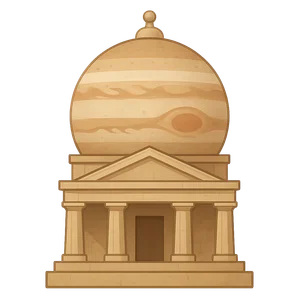
Jupiter
Jupiter is the fifth planet from the Sun and the largest in the Solar System.
Reads at Grades 3–5 Listens at Grades 1–5
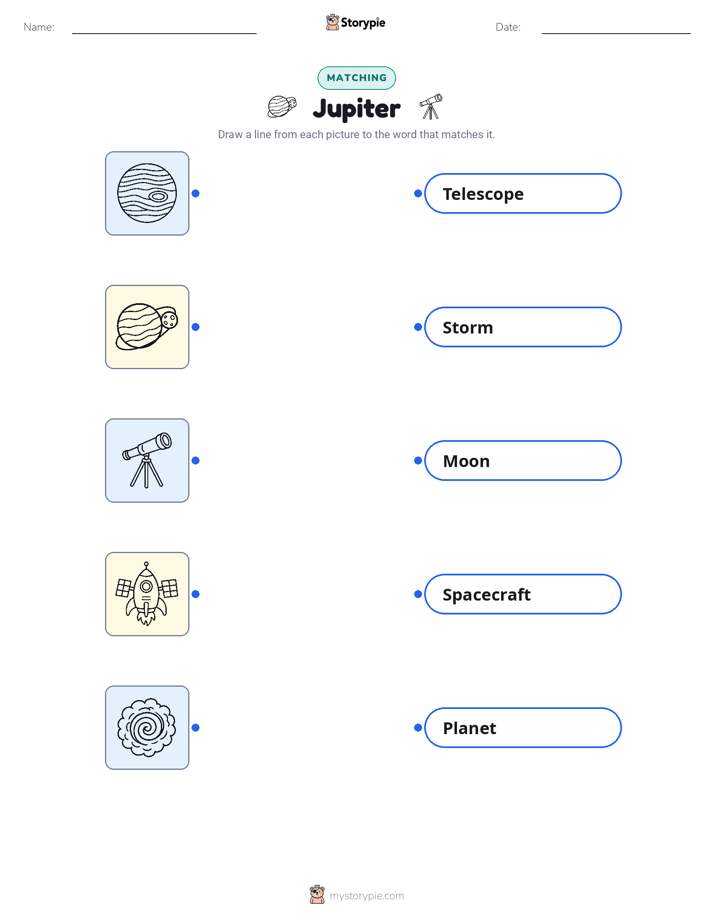
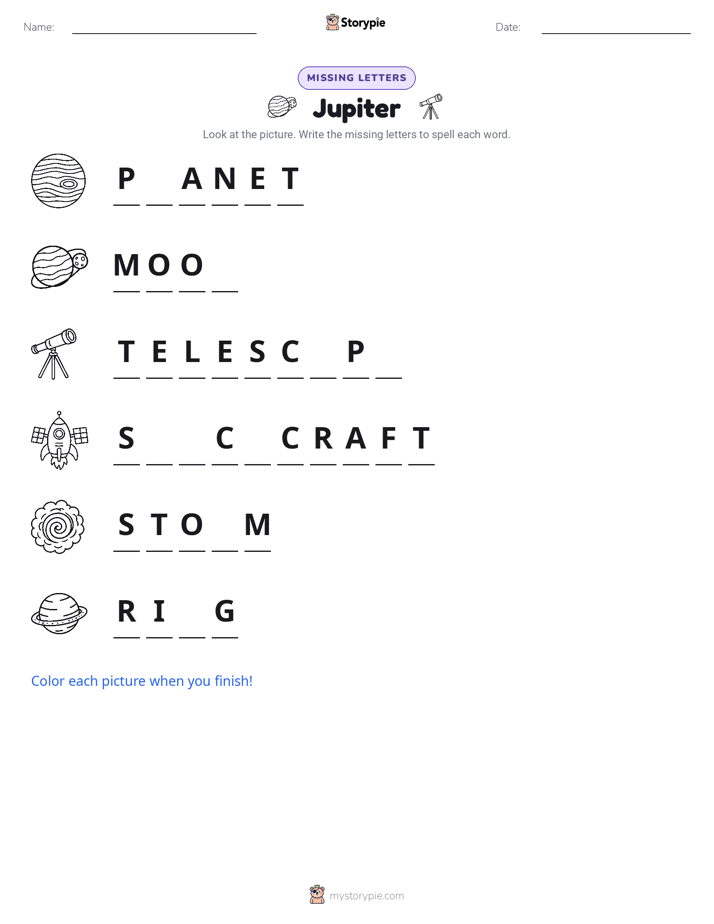
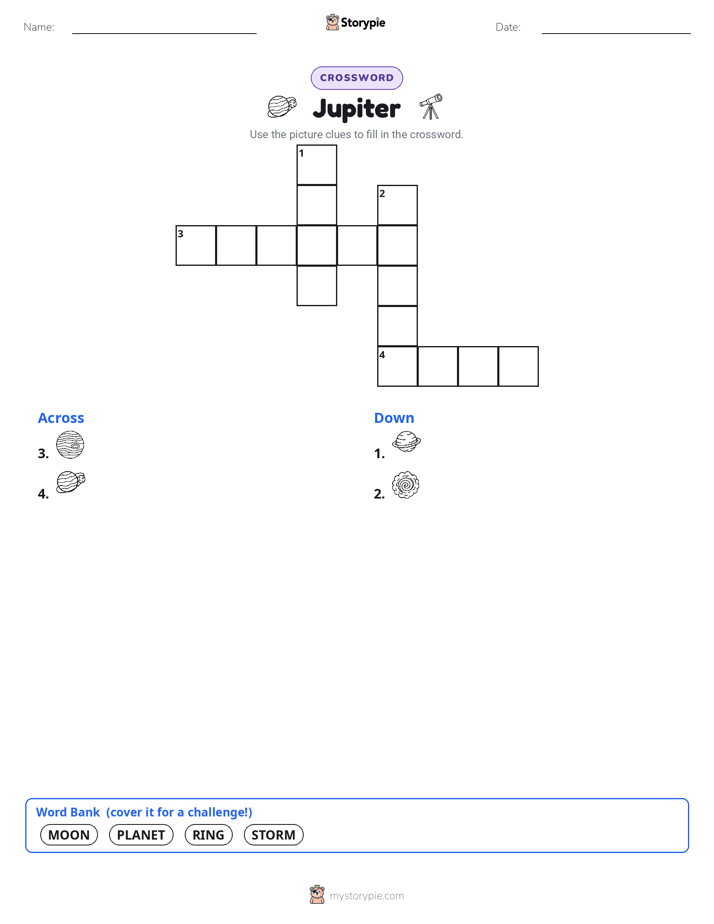
Print & create
Answer keys·No prep·Free with an account
28 worksheets · answer keys · full story · quiz · Ages 8-10 · CEFR B1
Plus adds 279,000+ more stories in 27 languages, audio for every one, and printables for all of them.
Just want Jupiter?
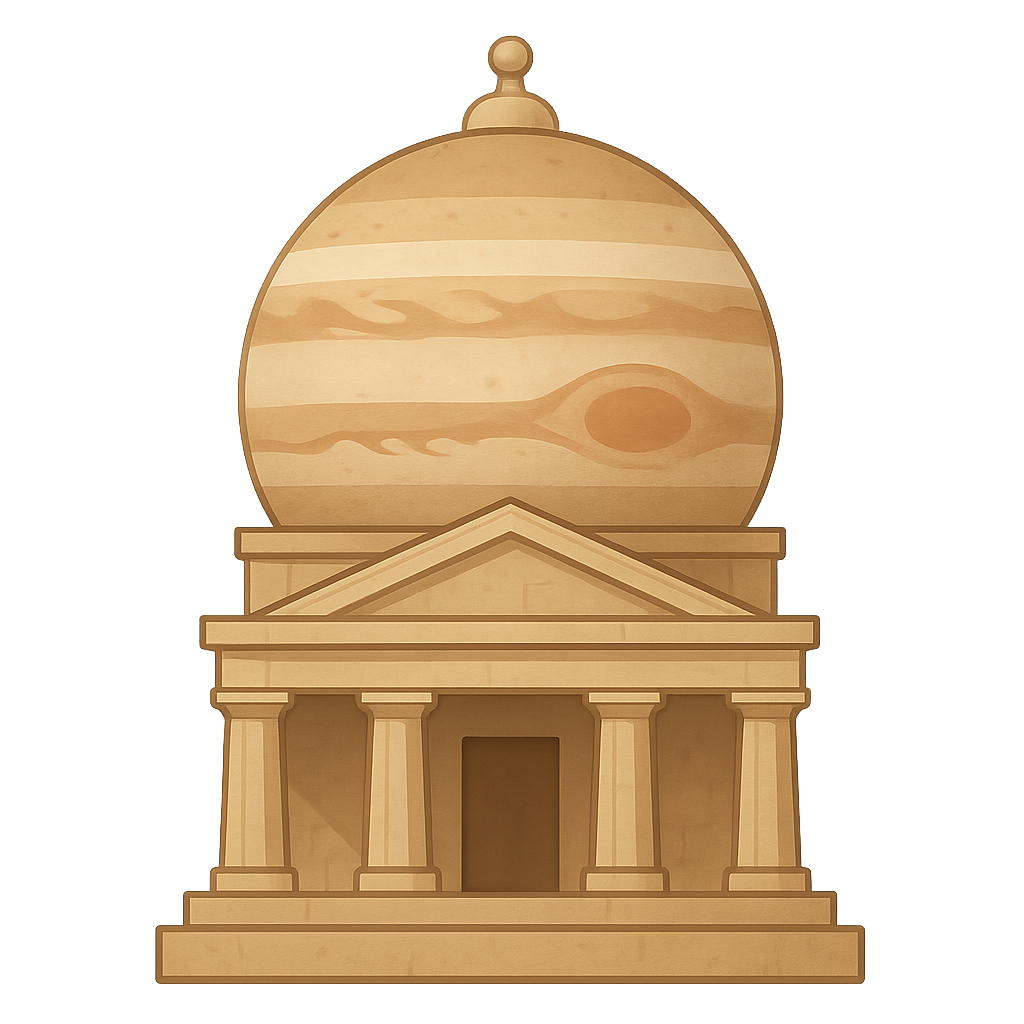
Imagine a giant in space, so big that all the other planets in our solar system could fit inside me. I am a spinning ball of swirling clouds, painted in stripes of cream, caramel, and bright orange. On my side, I have a great, sleepy red eye that is actually a storm bigger than your entire world, a storm that has been raging for hundreds of years. I am the king of the planets, a gassy giant quietly ruling my corner of the solar system. I am Jupiter. My story began a very, very long time ago, around 4.5 billion years in the past. When our sun was just a baby star, it was surrounded by a spinning disc of dust and gas. From that cosmic cloud, I was born, gathering more and more material until I became the largest planet of all. For billions of years, I danced my slow dance around the sun, with only my many moons for company, waiting patiently for someone far away to finally notice my light.
For thousands of years, people on your planet Earth looked up at the night sky and saw me as a bright, wandering star. They didn't know I was a giant world with storms and moons. Ancient astronomers, like the Babylonians, carefully tracked my path across the heavens as early as the 7th century BCE, thinking I was a special star with great power. But then, one cold winter night, everything changed. On January 7th, 1610, a brilliant man in Italy named Galileo Galilei pointed a new invention, called a telescope, toward me. He must have gasped when he looked through the lens. He didn't just see a bright dot; he saw a small disc. And near me, he saw four tiny points of light he had never seen before. Over the next few nights, he watched them move. They weren't stars. They were dancing around me. He had discovered my four biggest moons: Io, Europa, Ganymede, and Callisto. This amazing discovery was a turning point for humans. It proved that not everything in the universe revolved around the Earth, opening up a whole new way of understanding the cosmos.
The Swirling Giant's Story
Imagine a giant in space, so big that all the other planets in our solar system could fit inside me. I am a spinning ball of swirling clouds, painted in stripes of cream, caramel, and bright orange. On my side, I have a great, sleepy red eye that is actually a storm bigger than your entire world, a storm that has been raging for hundreds of years. I am the king of the planets, a gassy giant quietly ruling my corner of the solar system. I am Jupiter. My story began a very, very long time ago, around 4.5 billion years in the past. When our sun was just a baby star, it was surrounded by a spinning disc of dust and gas. From that cosmic cloud, I was born, gathering more and more material until I became the largest planet of all. For billions of years, I danced my slow dance around the sun, with only my many moons for company, waiting patiently for someone far away to finally notice my light.
For thousands of years, people on your planet Earth looked up at the night sky and saw me as a bright, wandering star. They didn't know I was a giant world with storms and moons. Ancient astronomers, like the Babylonians, carefully tracked my path across the heavens as early as the 7th century BCE, thinking I was a special star with great power. But then, one cold winter night, everything changed. On January 7th, 1610, a brilliant man in Italy named Galileo Galilei pointed a new invention, called a telescope, toward me. He must have gasped when he looked through the lens. He didn't just see a bright dot; he saw a small disc. And near me, he saw four tiny points of light he had never seen before. Over the next few nights, he watched them move. They weren't stars. They were dancing around me. He had discovered my four biggest moons: Io, Europa, Ganymede, and Callisto. This amazing discovery was a turning point for humans. It proved that not everything in the universe revolved around the Earth, opening up a whole new way of understanding the cosmos.
After Galileo's discovery, humans watched me from afar for centuries, their telescopes getting better and better. But they wanted to see me up close. So, they sent robotic explorers on long journeys through space to come and say hello. The first to reach me was a brave little spacecraft named Pioneer 10. It flew right past me on December 3rd, 1973, snapping the very first close-up pictures of my stormy atmosphere. Humans finally saw my colorful cloud bands in detail. A few years later, in 1979, the twin spacecraft Voyager 1 and Voyager 2 zipped by. They were incredible detectives. They discovered my faint, dusty rings, which are much harder to see than my brother Saturn's, and they saw something astonishing on my moon Io: active volcanoes erupting into space. Then came the most dedicated visitor of all. A spacecraft named Galileo arrived on December 7th, 1995. It didn't just fly by; it became the first spacecraft to orbit me, circling me again and again for nearly eight years, studying my weather, my moons, and my powerful magnetic field.
Even after all these visits, I still hold many secrets. My most famous feature, the Great Red Spot, is a mystery that scientists are still trying to solve. How can a storm last for centuries? To find out more, humans sent another robotic explorer, a clever spacecraft named Juno. It arrived on July 4th, 2016, and its mission is unlike any other. Juno swoops daringly close to my cloud tops, flying right over my north and south poles. It maps my powerful magnetic fields and uses its special instruments to try and peek deep beneath my clouds, hoping to understand what my core is made of. I love having these visitors, as they help you learn more about our solar system family. Looking back, I see I have been a beacon of wonder in your night sky, and now, a destination for your boldest explorers. I still have so much more to share, and I will be waiting right here for the next generation to look up and ask, 'What else can we discover?'
Wow facts
About
Jupiter is the fifth planet from the Sun and the largest in the Solar System. It is a gas giant known for its Great Red Spot, powerful storms, and four large Galilean moons.
Take a Quiz
Question 1 of 5
Why was Galileo Galilei's discovery of Jupiter's moons so important for science?
Explore next

Want to do even more?
Go beyond exploring. Unlock tools that turn every story into real learning.

Storypie Plus for families
Full stories, quizzes, and printables. Nights and car rides, sorted.
- Unlimited audio stories
- Create Mode: your child stars in the story
- Offline downloads
- Printable worksheets & coloring pages

Why Storypie for Schools
Students engaged. Prep in seconds. Evenings back to you.
- Worksheets & Quizzes
- Classroom Management
- Formative Assessment
- Custom Curriculum & Lesson Plans
- 27 Languages

Why Storypie for Homeschool
Curriculum done. They'll ask for more. Hours back in your day.
- Worksheet Generator
- First-Person Audio Stories
- Built-in Comprehension Quizzes
- Custom Curriculum & Lesson Plans
- Print & Go Activities