English

Monet's garden at Giverny
The famous flower and water garden in Giverny, France, created by Impressionist painter Claude Monet…
Reads at Grades 6–8 Listens at Grades 4–8
Print & create
Answer keys·No prep·Free with an account
28 worksheets · answer keys · full story · quiz · Ages 10-12 · CEFR B2
Plus adds 208,000+ more stories in 27 languages, audio for every one, and printables for all of them.
Just want Monet's garden at Giverny?
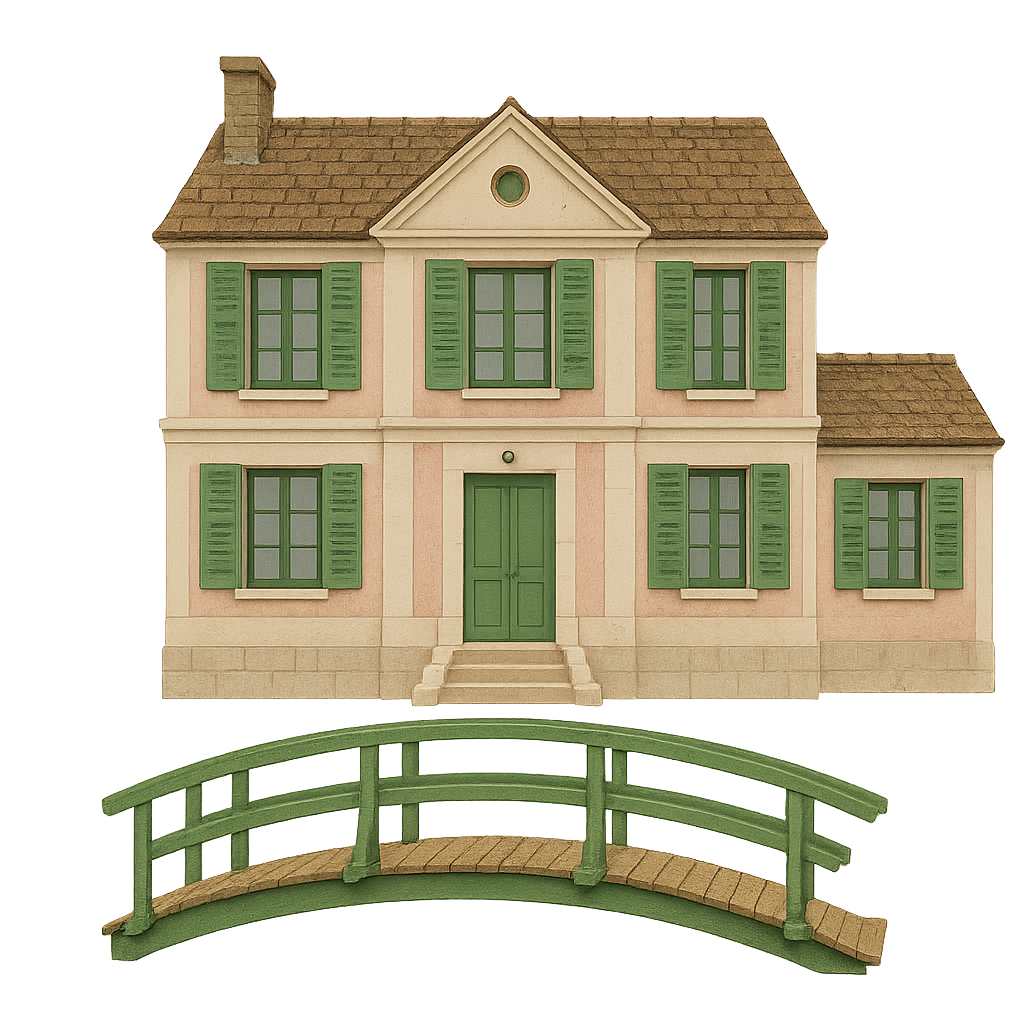
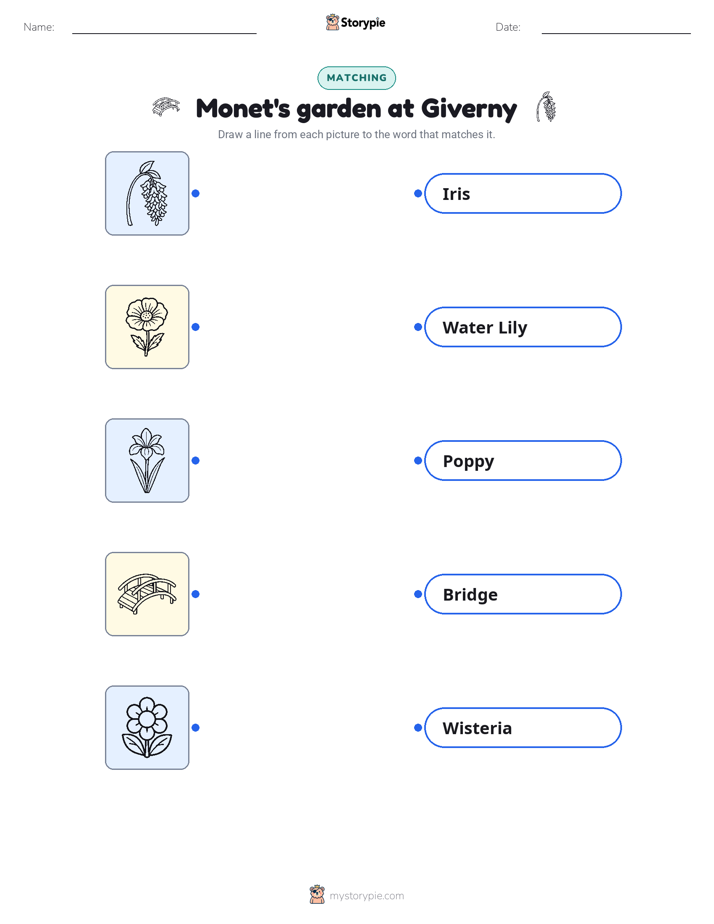
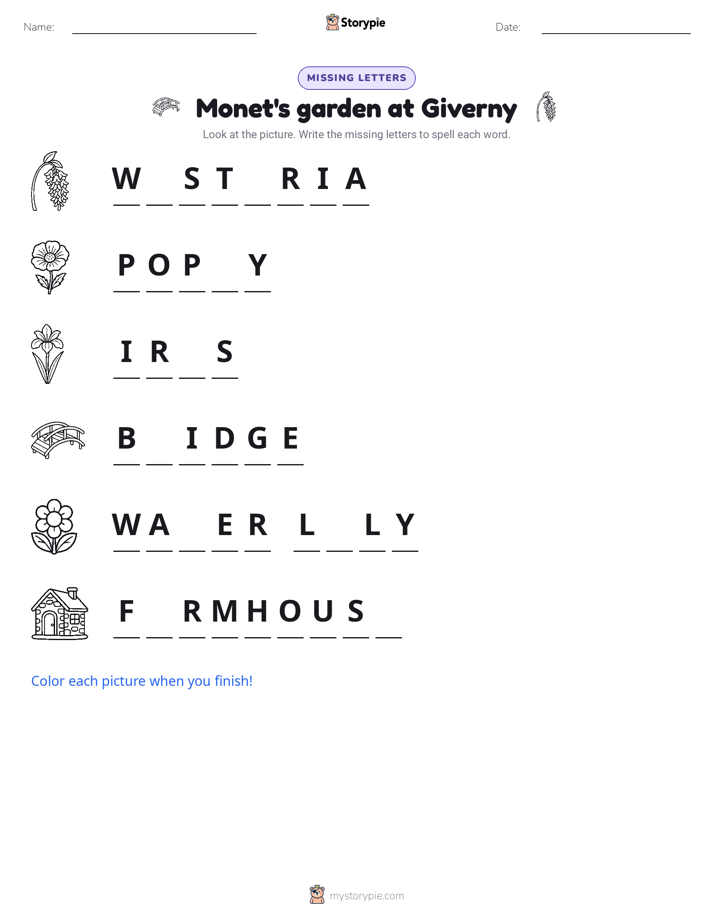
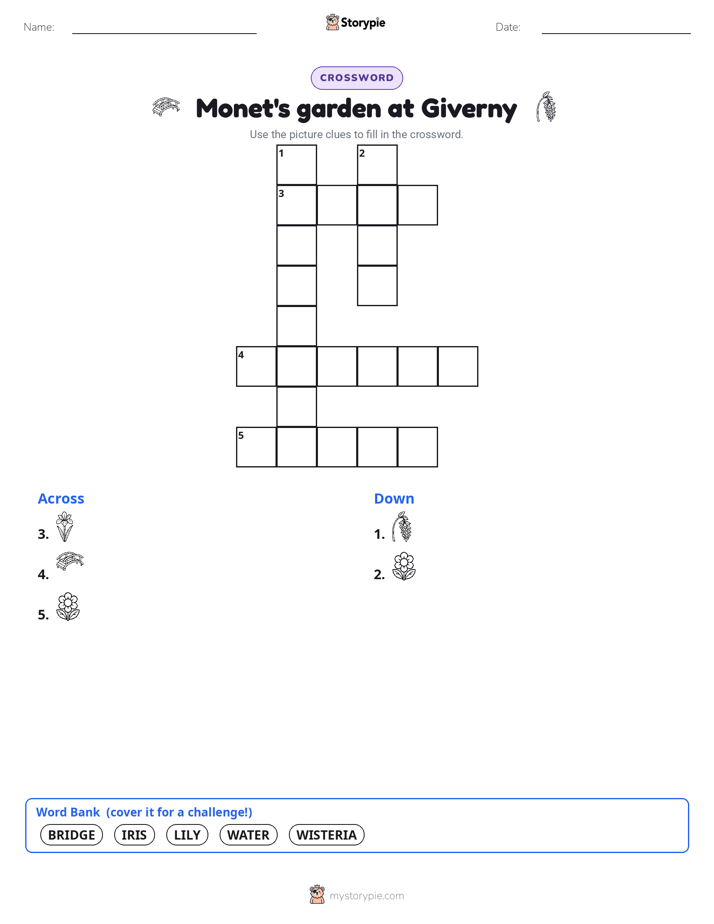
Breathe in. Can you smell the sweet perfume of wisteria hanging from my arches? Can you hear the gentle buzz of bees dancing among the poppies and irises? If you look closely, you can see a green, arching bridge, like something from a storybook, perfectly reflected in the still water below. The surface of my pond shimmers, dotted with floating flowers that catch the light, turning from pink to white to yellow as the sun moves across the sky. To be here is to step inside a living painting, a world made not just of soil and petals, but of color and light. I am not just any piece of land. I am a dream, carefully crafted in the countryside of Normandy, France. A painter with a revolutionary eye for beauty imagined me, and for over a century, I have shared his vision with the world. I am Claude Monet's garden at Giverny.
My story did not begin with such vibrant colors. For a long time, I was a simple farmhouse property, practical and plain, with an orchard of apple trees and a neat vegetable patch. My purpose was to provide food, not inspiration. But everything changed on April 29th, 1883. That was the day a man with a flowing beard and observant, kind eyes first saw me from his train window. His name was Claude Monet, an artist who saw the world differently. He didn't see just an orchard; he saw a canvas waiting for color. He rented the house and land, and immediately began to change me. In November of 1890, he finally had enough money to buy me outright, and my real transformation began. He uprooted the old trees that blocked the sunlight and tore out the confining hedges. In their place, he planted a spectacular flower garden called the Clos Normand. He didn't arrange my flowers by type, but by color, creating bold blocks of red tulips, lines of blue irises, and waves of orange nasturtiums. He treated me like his paintbox, and I became his first masterpiece made of earth and sun.
The Painter's Garden at Giverny
Breathe in. Can you smell the sweet perfume of wisteria hanging from my arches? Can you hear the gentle buzz of bees dancing among the poppies and irises? If you look closely, you can see a green, arching bridge, like something from a storybook, perfectly reflected in the still water below. The surface of my pond shimmers, dotted with floating flowers that catch the light, turning from pink to white to yellow as the sun moves across the sky. To be here is to step inside a living painting, a world made not just of soil and petals, but of color and light. I am not just any piece of land. I am a dream, carefully crafted in the countryside of Normandy, France. A painter with a revolutionary eye for beauty imagined me, and for over a century, I have shared his vision with the world. I am Claude Monet's garden at Giverny.
My story did not begin with such vibrant colors. For a long time, I was a simple farmhouse property, practical and plain, with an orchard of apple trees and a neat vegetable patch. My purpose was to provide food, not inspiration. But everything changed on April 29th, 1883. That was the day a man with a flowing beard and observant, kind eyes first saw me from his train window. His name was Claude Monet, an artist who saw the world differently. He didn't see just an orchard; he saw a canvas waiting for color. He rented the house and land, and immediately began to change me. In November of 1890, he finally had enough money to buy me outright, and my real transformation began. He uprooted the old trees that blocked the sunlight and tore out the confining hedges. In their place, he planted a spectacular flower garden called the Clos Normand. He didn't arrange my flowers by type, but by color, creating bold blocks of red tulips, lines of blue irises, and waves of orange nasturtiums. He treated me like his paintbox, and I became his first masterpiece made of earth and sun.
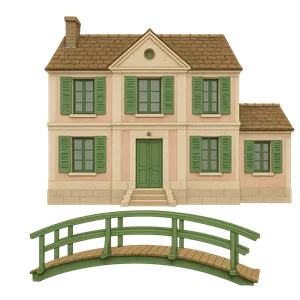
But the painter’s vision was grander still. In 1893, he purchased a piece of marshy land across the road and a small railway line. He had a radical idea: he wanted to create a water garden, something entirely different from the flower-filled Clos Normand. His plan was ambitious and faced resistance. To create his pond, he needed to divert water from the nearby Ru river, a project that required special permission from the local government. Some of his neighbors worried it would harm their crops, but Monet, with his determined vision, eventually won them over. Once the pond was dug, he began to shape a world of tranquility and reflection. He planted weeping willows to grace the banks and bamboo to create a sense of the exotic. Most importantly, he filled the water with Nymphéas—water lilies—from Egypt and South America. The final touch was a wooden footbridge, which he had painted a particular shade of green. Its arching shape was inspired by the Japanese prints he passionately collected, creating a perfect harmony between Eastern aesthetics and the French countryside. He would later enlarge the pond twice more, always seeking a more perfect reflection of water and sky.
As the water lilies bloomed and the willows grew, I became more than just a garden. I became his greatest muse. Starting around 1899, Monet turned his full artistic attention to my water garden. For the last three decades of his life, I was his singular obsession. He would wake before dawn and sit by my pond for hours, studying the way the morning mist softened the light and how the passing clouds changed the color of the water. He didn't just paint the lilies; he painted the air, the light, the reflections, and the feeling of being suspended between water and sky. To capture the immense scale of his vision, he built a huge, new studio on the property. There, he worked on enormous canvases, some over six feet tall, creating immersive paintings that made viewers feel as if they were standing on my banks. This series of paintings, the Water Lilies, consumed him entirely, even as his eyesight began to fail. He continued to paint me until the very end, passing away on December 5th, 1926. I was his final, great project, a world he had created and then captured forever on canvas.
After my creator was gone, I fell into a long, quiet sleep. The years passed, and without his constant care, I became overgrown and forgotten. My paths disappeared beneath weeds, and the pond grew murky. It seemed the painter’s dream might vanish forever. But a vision as strong as Monet’s does not fade so easily. In the 1970s, a massive restoration project began, funded by generous people from around the world who loved his art. Gardeners studied his paintings and letters to bring me back to life, exactly as he had designed me. In 1980, I opened my gates to the public. Today, I am more than just a beautiful place. I am a living work of art, a bridge to the past that allows hundreds of thousands of visitors each year to see the world through Claude Monet's eyes. I am a testament to a creative spirit, a place that continues to inspire artists, gardeners, and dreamers to find the beauty that surrounds them.
Wow facts
About
The famous flower and water garden in Giverny, France, created by Impressionist painter Claude Monet, which was a significant subject in his later works, especially the 'Water Lilies' series, but not the sole focus during the last 30 years of his life. Monet lived in Giverny for 43 years after creating the garden.
Take a Quiz
Question 1 of 5
In your own words, describe the two main parts of the garden at Giverny and how they were different.
Explore next






Want to do even more?
Go beyond exploring. Unlock tools that turn every story into real learning.

Storypie Plus for families
Full stories, quizzes, and printables. Nights and car rides, sorted.
- Unlimited audio stories
- Create Mode: your child stars in the story
- Offline downloads
- Printable worksheets & coloring pages

Why Storypie for Schools
Students engaged. Prep in seconds. Evenings back to you.
- Worksheets & Quizzes
- Classroom Management
- Formative Assessment
- Custom Curriculum & Lesson Plans
- 27 Languages

Why Storypie for Homeschool
Curriculum done. They'll ask for more. Hours back in your day.
- Worksheet Generator
- First-Person Audio Stories
- Built-in Comprehension Quizzes
- Custom Curriculum & Lesson Plans
- Print & Go Activities