English

Monet's garden at Giverny
The famous flower and water garden in Giverny, France, created by Impressionist painter Claude Monet…
Reads at Grades 3–5 Listens at Grades 1–5
Print & create
Answer keys·No prep·Free with an account
28 worksheets · answer keys · full story · quiz · Ages 8-10 · CEFR B1
Plus adds 208,000+ more stories in 27 languages, audio for every one, and printables for all of them.
Just want Monet's garden at Giverny?
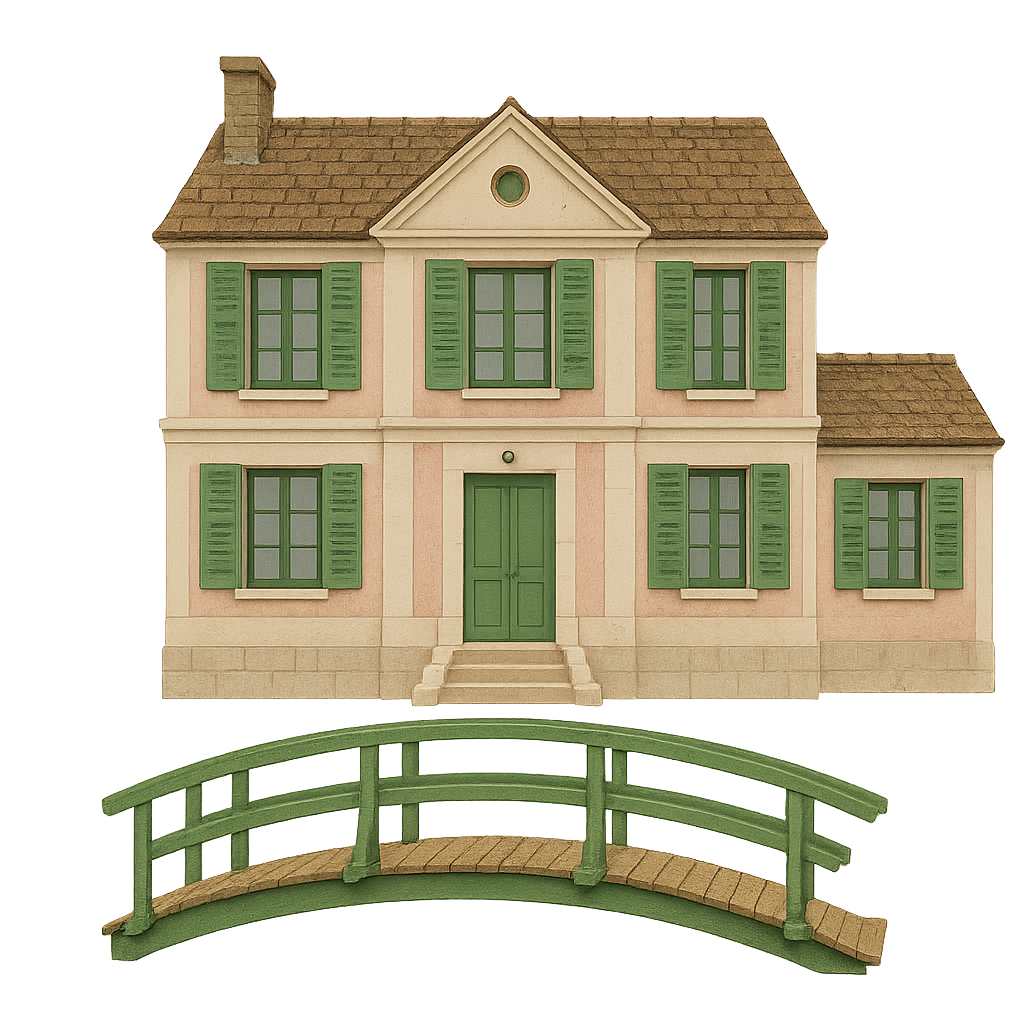
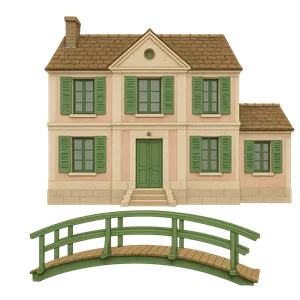
I am a place of buzzing bees and rustling leaves, where colors explode like fireworks in a green sky. A gentle, curved bridge, painted the color of fresh spring leaves, arches over my cool pond. On the water, flowers like floating cups of pink, white, and yellow drift lazily in the sun. Dragonflies with see-through wings zip over the surface, and the air smells sweet with the scent of roses and damp earth. I am not just a garden; I am a painter's dream, a living work of art that changes with every season and every flicker of sunlight. My story is forever tied to a man who saw the world not just in shapes, but in light and color. He didn't just want to look at beautiful things; he wanted to create them and live inside them. I am Claude Monet's garden in Giverny, France, and he was the artist who brought me to life.
My story began with a glance from a train window. In April of 1883, a great painter named Claude Monet was traveling through the French countryside when he saw a lovely pink house with gray shutters here in the village of Giverny. He knew instantly that he had found his home and his inspiration. At first, the land around the house was an ordinary orchard full of apple trees and surrounded by high stone walls. But Monet had a vision. He was an artist who painted with flowers and light, and he wanted to create a masterpiece he could walk through. He began to transform the land in front of the house, which he called the Clos Normand. He had the apple trees removed, except for two, and designed the garden with a passion for color and symmetry. He planted nasturtiums, roses, poppies, and tulips in straight beds, creating what he called 'rivers of color'. He wanted to feel like he was walking through one of his own paintings every time he stepped outside his door.
The Painter's Living Dream
I am a place of buzzing bees and rustling leaves, where colors explode like fireworks in a green sky. A gentle, curved bridge, painted the color of fresh spring leaves, arches over my cool pond. On the water, flowers like floating cups of pink, white, and yellow drift lazily in the sun. Dragonflies with see-through wings zip over the surface, and the air smells sweet with the scent of roses and damp earth. I am not just a garden; I am a painter's dream, a living work of art that changes with every season and every flicker of sunlight. My story is forever tied to a man who saw the world not just in shapes, but in light and color. He didn't just want to look at beautiful things; he wanted to create them and live inside them. I am Claude Monet's garden in Giverny, France, and he was the artist who brought me to life.
My story began with a glance from a train window. In April of 1883, a great painter named Claude Monet was traveling through the French countryside when he saw a lovely pink house with gray shutters here in the village of Giverny. He knew instantly that he had found his home and his inspiration. At first, the land around the house was an ordinary orchard full of apple trees and surrounded by high stone walls. But Monet had a vision. He was an artist who painted with flowers and light, and he wanted to create a masterpiece he could walk through. He began to transform the land in front of the house, which he called the Clos Normand. He had the apple trees removed, except for two, and designed the garden with a passion for color and symmetry. He planted nasturtiums, roses, poppies, and tulips in straight beds, creating what he called 'rivers of color'. He wanted to feel like he was walking through one of his own paintings every time he stepped outside his door.
Ten years later, in 1893, Monet’s dream grew even bigger. He bought a piece of land across the road that had a small stream running through it. This was where his most famous idea sparked to life. He applied for permission from the village to divert water from the stream to create a beautiful pond. This would become my most famous part: the Water Garden. He wanted to create a peaceful, magical place that felt different from the bright, bold colors of the Clos Normand. He planted weeping willows to droop gracefully over my edges and bamboo to rustle in the wind, creating a sense of calm. Most importantly, he filled my pond with beautiful water lilies, which he called Nymphéas. To complete his vision, he built a wooden bridge over the pond, painting it a bright green. He was inspired by the Japanese art he loved to collect, and the bridge became the heart of his new water world. Every day, he would come out to see me, watching how the sunlight danced on the water and changed the colors of the flowers from morning to night.
For the last thirty years of his life, until he passed away on December 5th, 1926, Monet painted me hundreds of times. He would sit for hours, obsessed with capturing the reflections of the clouds in my pond and the delicate petals of my water lilies. His paintings of me became some of the most famous works of art in the world. After he was gone, I became quiet and a little wild. The paths became overgrown, and the pond filled with silt. But people who loved his art couldn't let his vision fade. Starting in the 1970s, a team of dedicated people worked hard to bring me back to my former glory, using his paintings as their guide. On June 1st, 1980, my gates were opened for the whole world to see. Today, I welcome hundreds of thousands of visitors from everywhere who come to walk across my Japanese bridge and see the living painting that inspired one of the world's greatest artists. I am a place of peace and beauty, a reminder that art can be found everywhere in nature if you just know how to look.
Wow facts
About
The famous flower and water garden in Giverny, France, created by Impressionist painter Claude Monet, which was a significant subject in his later works, especially the 'Water Lilies' series, but not the sole focus during the last 30 years of his life. Monet lived in Giverny for 43 years after creating the garden.
Take a Quiz
Question 1 of 5
In the story, the garden says Monet planted flowers to create 'rivers of color.' What does this phrase mean?
Explore next





Want to do even more?
Go beyond exploring. Unlock tools that turn every story into real learning.

Storypie Plus for families
Full stories, quizzes, and printables. Nights and car rides, sorted.
- Unlimited audio stories
- Create Mode: your child stars in the story
- Offline downloads
- Printable worksheets & coloring pages

Why Storypie for Schools
Students engaged. Prep in seconds. Evenings back to you.
- Worksheets & Quizzes
- Classroom Management
- Formative Assessment
- Custom Curriculum & Lesson Plans
- 27 Languages

Why Storypie for Homeschool
Curriculum done. They'll ask for more. Hours back in your day.
- Worksheet Generator
- First-Person Audio Stories
- Built-in Comprehension Quizzes
- Custom Curriculum & Lesson Plans
- Print & Go Activities