English

Fight-or-Flight Response
The fight-or-flight response is an automatic physiological reaction that occurs in response to a perceived…
Reads at Grades 6–8 Listens at Grades 4–8
Print & create
Answer keys·No prep·Free with an account
28 worksheets · answer keys · full story · quiz · Ages 10-12 · CEFR B2
Plus adds 244,000+ more stories in 27 languages, audio for every one, and printables for all of them.
Just want Fight-or-Flight Response?
Hello, I'm Your Built-In Alarm System
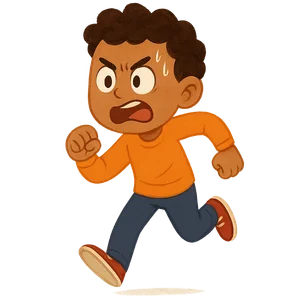
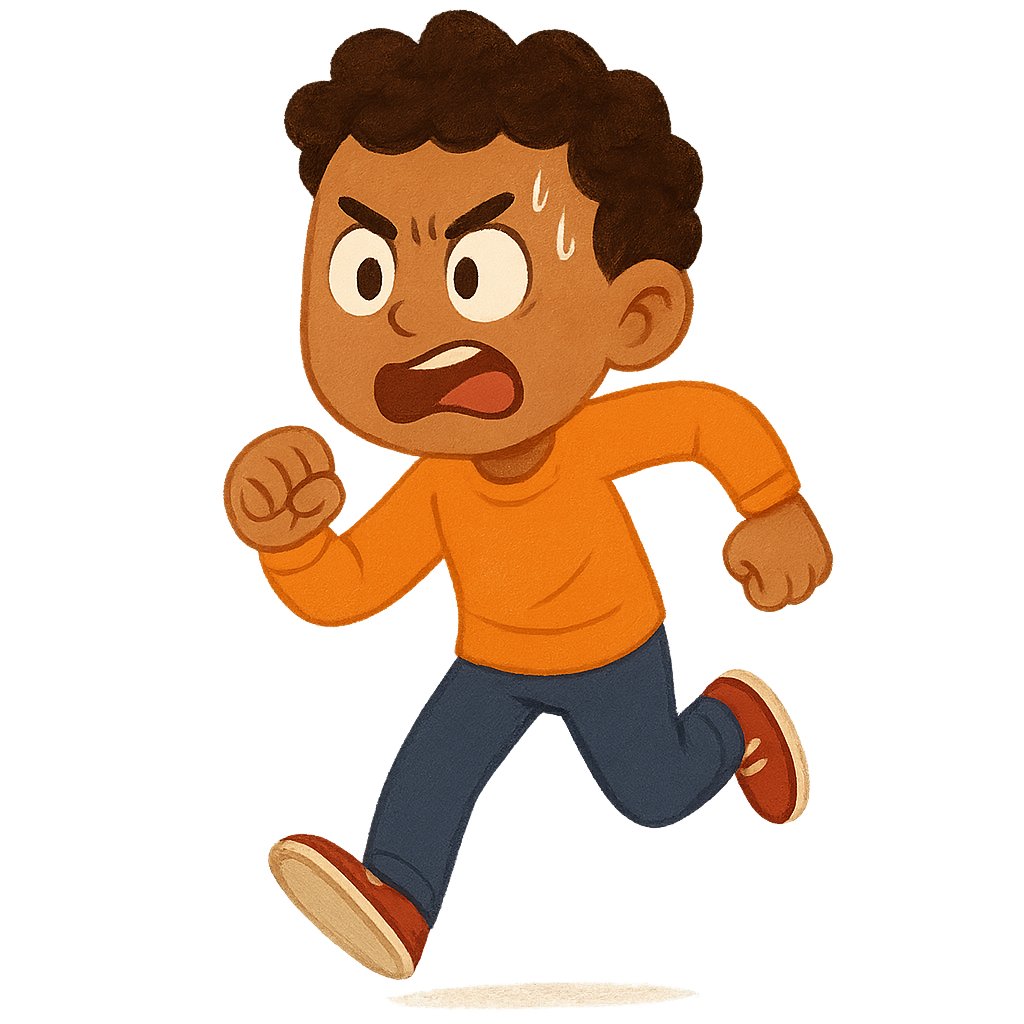
I'd like to introduce myself. My name is the Fight-or-Flight Response, a term first described by a physiologist named Walter Bradford Cannon in the early 20th century. You can think of me as your body's super-fast, automatic alarm system. I have been a part of human biology for a very, very long time, and my primary job is to keep you safe from harm. Whenever your brain perceives danger—whether it is a real physical threat like a loud, sudden crash or a social one like the feeling of being in a tricky situation—I jump into action. My entire purpose is to prepare your body to either face the challenge head-on, which is the 'fight' part, or to get away from it as quickly as possible, the 'flight' part.
What It Feels Like When I'm Working
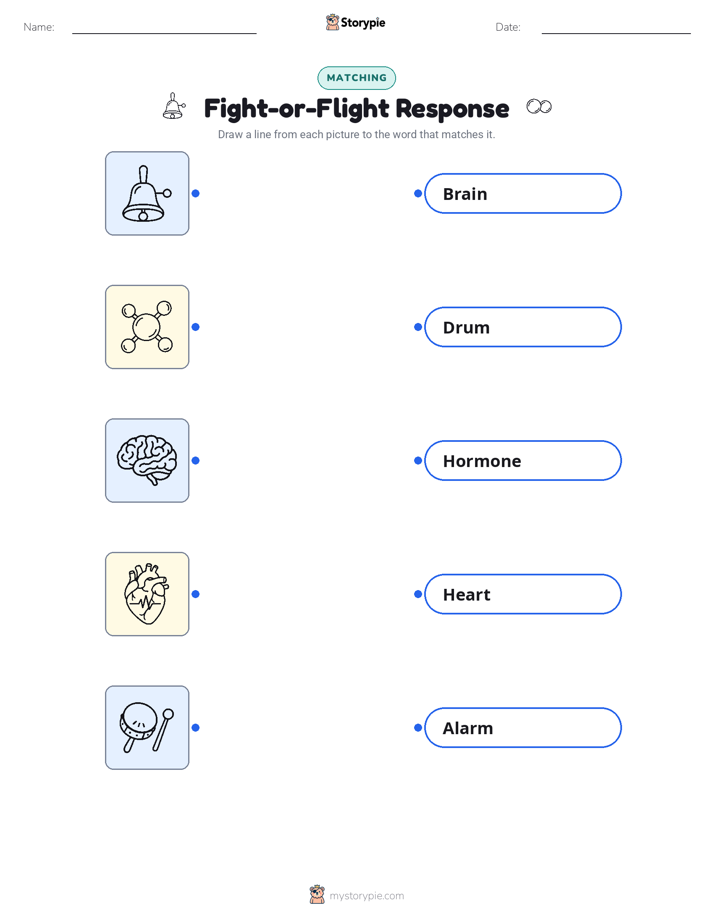
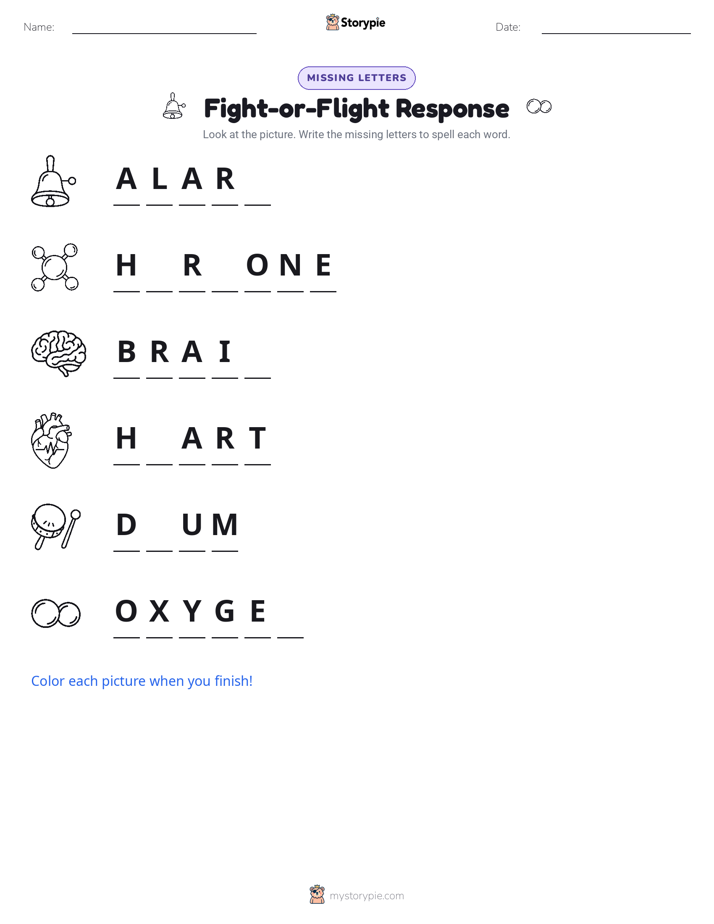
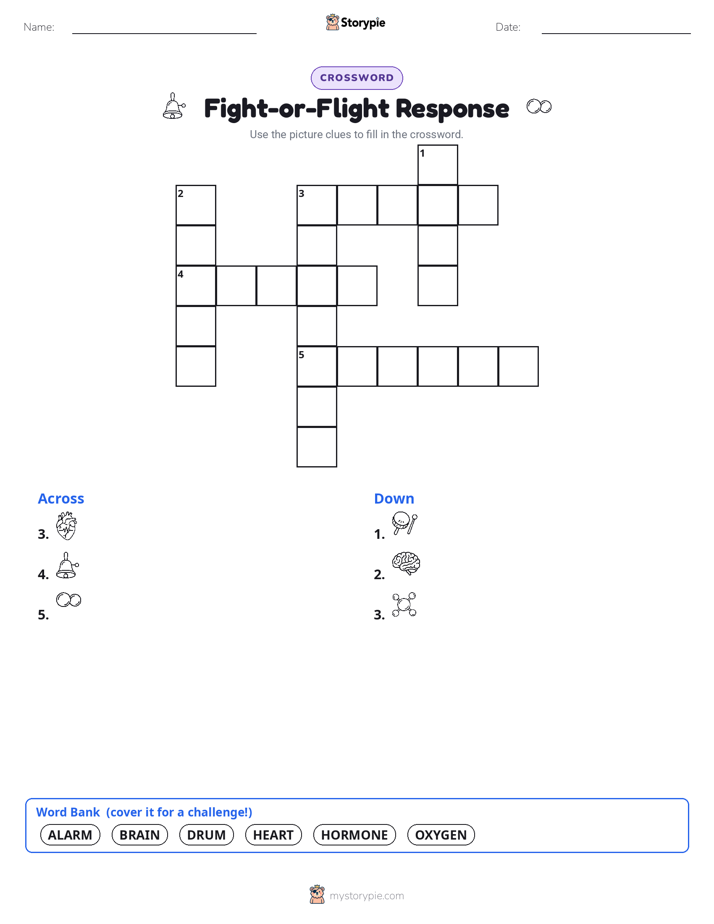
When I get the signal from your brain that something is wrong, I don't waste any time. I immediately trigger the release of a powerful hormone called adrenaline, which sends a rush of energy all through your body. This causes several noticeable changes. You might feel your heart start beating much faster, like a drum pounding in your chest. Your breathing might become quick and shallow as your body tries to take in more oxygen. Your muscles may feel tense and ready to move at a moment's notice. It can feel a little weird, or even scary, but all of these physical changes are just me getting you ready for action. For example, if you're about to give a presentation in class and you feel your palms get sweaty and your stomach feels fluttery, that's me trying to help you focus and have the energy to do a great job.
I Am Your Fight-or-Flight Response
Hello, I'm Your Built-In Alarm System
I'd like to introduce myself. My name is the Fight-or-Flight Response, a term first described by a physiologist named Walter Bradford Cannon in the early 20th century. You can think of me as your body's super-fast, automatic alarm system. I have been a part of human biology for a very, very long time, and my primary job is to keep you safe from harm. Whenever your brain perceives danger—whether it is a real physical threat like a loud, sudden crash or a social one like the feeling of being in a tricky situation—I jump into action. My entire purpose is to prepare your body to either face the challenge head-on, which is the 'fight' part, or to get away from it as quickly as possible, the 'flight' part.
What It Feels Like When I'm Working
When I get the signal from your brain that something is wrong, I don't waste any time. I immediately trigger the release of a powerful hormone called adrenaline, which sends a rush of energy all through your body. This causes several noticeable changes. You might feel your heart start beating much faster, like a drum pounding in your chest. Your breathing might become quick and shallow as your body tries to take in more oxygen. Your muscles may feel tense and ready to move at a moment's notice. It can feel a little weird, or even scary, but all of these physical changes are just me getting you ready for action. For example, if you're about to give a presentation in class and you feel your palms get sweaty and your stomach feels fluttery, that's me trying to help you focus and have the energy to do a great job.
Modern-Day 'Dangers'
My system is ancient, designed during a time when human dangers were immediate and physical, like escaping a saber-toothed tiger. My programming is built for that kind of world. But these days, I get triggered by modern challenges that are not life-threatening but still feel intensely stressful to your brain. Things like studying for a big test you feel unprepared for, having an argument with your best friend, or even just watching a particularly scary scene in a movie can set me off. Because my reaction is designed for major physical threats, sometimes I overreact, making a relatively small problem feel like a huge emergency. That is why understanding me is so important; it helps you recognize why your body is reacting so strongly and that the feeling, while powerful, is just a response and not always a reflection of the actual danger.
Learning to Work Together
You cannot simply turn me off—and you would not want to, since my fundamental purpose is to protect you. However, you can learn to work with me and manage my intensity. When you feel me kicking in, simple actions can send a message to your brain that says, 'Thanks for the alert, but I've got this.' Taking a few slow, deep breaths is one of the most effective ways to signal that the danger has passed or is under control. Talking about your feelings with someone you trust or just taking a short break from the stressful situation also helps calm things down. By doing this, you are not getting rid of me; you are just turning down the volume so you can think more clearly and decide the best way to handle the situation.
Wow facts
About
The fight-or-flight response is an automatic physiological reaction that occurs in response to a perceived harmful event, attack, or threat to survival.
Take a Quiz
Question 1 of 5
In your own words, describe what the Fight-or-Flight Response does when activated by a modern-day stressor like a test.
Explore next






Want to do even more?
Go beyond exploring. Unlock tools that turn every story into real learning.

Storypie Plus for families
Full stories, quizzes, and printables. Nights and car rides, sorted.
- Unlimited audio stories
- Create Mode: your child stars in the story
- Offline downloads
- Printable worksheets & coloring pages

Why Storypie for Schools
Students engaged. Prep in seconds. Evenings back to you.
- Worksheets & Quizzes
- Classroom Management
- Formative Assessment
- Custom Curriculum & Lesson Plans
- 27 Languages

Why Storypie for Homeschool
Curriculum done. They'll ask for more. Hours back in your day.
- Worksheet Generator
- First-Person Audio Stories
- Built-in Comprehension Quizzes
- Custom Curriculum & Lesson Plans
- Print & Go Activities