
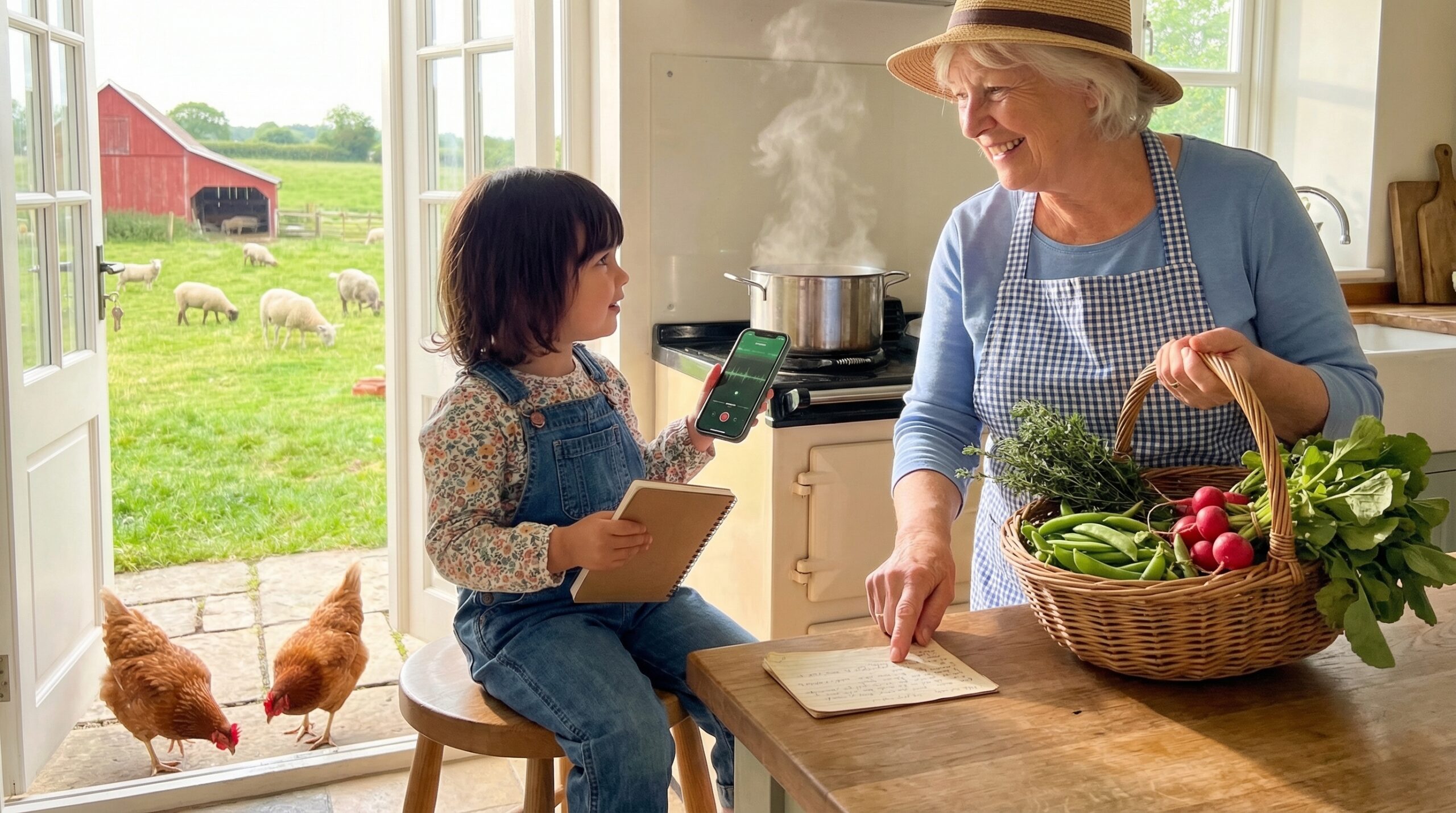
Agriculture for families starts at the kitchen table and in small garden pots. This spring guide helps parents explore farms, seasonal foods, and family food stories. Also, Storypie turns those memories into cozy audio keepsakes.
Agriculture for families: Getting started at home
Learning about agriculture can feel like a tiny adventure. First, ask a grandparent about a favorite recipe. Then ask where the peas or potatoes came from. Short interviews keep memories bright. They also teach children about food and place.
Try the Storypie app to record a grandparent chat and save the story. For a gentle nudge, visit the Storypie app page to get started: Try the Storypie app.
How food grows: simple, wonder-filled steps
Seeds rest, then they wake and sprout. After that, leaves grow and flowers open. Pollinators visit and fruits follow. Soil, water, and sunlight help every step. Soil is alive and full of tiny helpers like worms and fungi.
Healthy soil holds water and feeds roots. Meanwhile bees and butterflies do invisible work. About one third of crops rely on pollinators to some degree. In fact, agricultural activities account for roughly 70% of global freshwater withdrawals, emphasizing the importance of sustainable practices. For families, these facts make food feel closer and more magical.
Types of farming and why seasonality matters
Farms come in many sizes. Some farms feed one family. Others sell to markets. Organic farms avoid synthetic pesticides. Regenerative farms aim to restore soil and biodiversity. Urban gardens fit on balconies and teach kids how food begins in small spaces.
Seasonality keeps food honest and tasty. In spring try peas, lettuce, spinach, radishes, early strawberries, and asparagus. Eating local gives fresher flavor and a clearer link to the seasons. In 2023, the United States planted 90.7 million acres of corn, which shows the scale of domestic food production.
- Visit a farmers market to meet growers.
- Join a CSA to receive weekly produce boxes.
- Grow a pot of radishes or peas to see plants sprout fast.
Modern farms, limits, and small sustainable actions
Modern farms use tractors and precision tools with GPS. Robots and drones monitor crops. Technology can reduce waste when used thoughtfully. Still, agriculture faces big limits like water, land, and climate change. In fact, greenhouse-gas emissions from agrifood systems rose by 10% between 2000 and 2022, highlighting the environmental impact of agriculture.
Simple practices help protect soil and water. Rotate crops, plant cover crops, and add trees along fields in agroforestry systems. These actions protect soil and boost biodiversity.
A tiny project to try with children
Grandparent food origins interview. Keep it short and warm. Ask: Who grew or bought the ingredients? Which items came from a garden? What did you plant each spring when you were young? Check permission first and supervise any recording device.
Plant peas or radishes in pots together. You can use a clear plastic cup as a mini greenhouse. Visit a local farm or market to ask how crops are grown and when they are in season. Wear sensible shoes and check for allergies.
Turn a recorded family recipe into a keepsake. Add a note about where each ingredient came from. That is both a tiny triumph and a grand story about food and place.
Read or listen to a story about Agriculture now: Read or listen to a story about Agriculture now: For 3-5 year olds, For 6-8 year olds, For 8-10 year olds, and For 10-12 year olds.
Finally, keep stories short and joyful. Record them with Storypie and share memories across the family. Small steps in spring lead to large, lasting stories.