
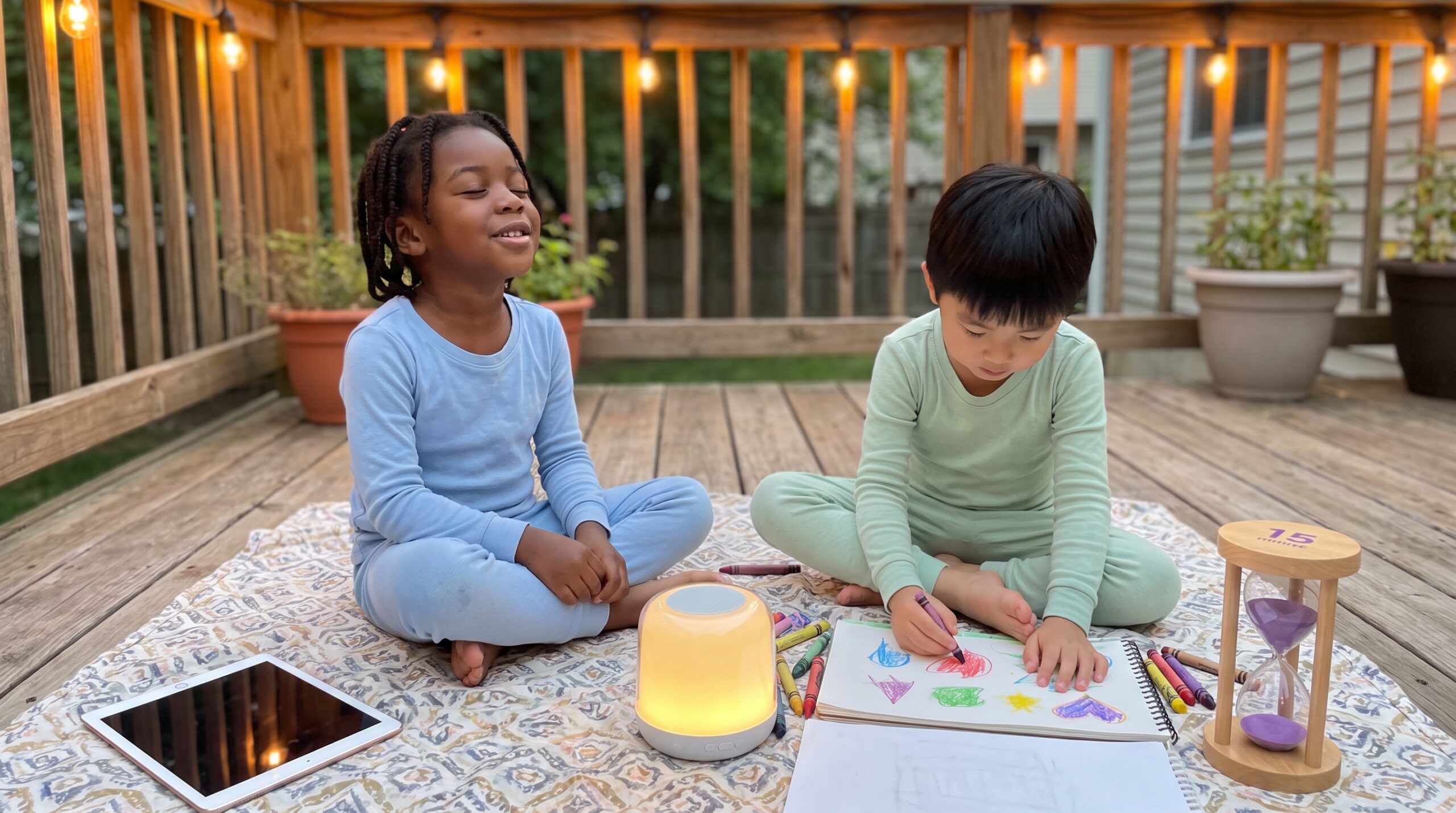
Audio-first bedtime routines feel simple for a reason. They are careful design, not magic. A calm voice asks the brain to make pictures. Screens, by contrast, shout and demand attention.
Audio-first bedtime routines and cognitive load
Working memory is small. Children keep words, images, and feelings in the same little space. Bright screens add noise. Rapid cuts and flashing frames force the brain to process sight and sound at once. As a result, cognitive load multiplies and leaves less room for imagination. In fact, a 2024 study found that viewers reported significantly higher cognitive load when watching subtitled videos without sound, with mean Effort scores of 4.84 (sound OFF) compared to 3.07 (sound ON) on a 1–7 scale (p < .001).
Audio-only stories remove visual clutter. They lower extraneous load so language can live inside the listener. In that quiet space, children build their own scenes. Additionally, this internal cinema stays flexible and personal. A 2024 EEG study showed that audio characteristics can reliably estimate cognitive load, reinforcing the importance of audio-first strategies.
Listening, brain activity, and imagination
Hearing a story lights up language areas in the brain. Often, it also activates visual imagery networks. Therefore, children sketch scenes in their heads. This mental work helps vocabulary to stick. It also deepens sentence structure and primes later reading. Interestingly, research indicates that comprehension remains largely unaffected even at twice the natural speaking rate, especially when visual information accompanies audio, as shown in a 2024 experiment on playback speed and comprehension.
Also, audio encourages sustained attention. Focused audio supports longer listening than quick-cut visual clips. As a result, comprehension and memory get a real boost. For many children, repeated listening deepens narrative sense over time.
Why calm audio helps sleep
Audio can soothe the nervous system. Gentle narration, steady pacing, and low volume reduce arousal. Pediatric guidance warns that bright screens can disrupt sleep cycles. So replace the blue glow with a calm voice and melatonin gets a better chance to work.
Short sessions of about 15 to 20 minutes often work best. They are long enough to settle the body and short enough to keep routine rhythm. For example, a small nightly audio ritual can become a cozy cue for sleep.
Design-friendly tips for families
Keep it short and predictable. Routine is the secret sauce. Choose calm content and avoid sudden loud sounds. Co-listen when you can to share the moment and clarify new words.
- 15 to 20 minute wind-downs work well.
- Pick delightfully calm stories, not high drama.
- Place the device out of reach to keep the ritual calm.
Audio-first is a helpful default, not a strict rule. Some children need visual or tactile supports. Adapt the approach to your child. Above all, aim for predictability and calm.
Practical next steps
Try a short audio ritual tonight. Warm light and a cushion help. Play a 15 minute story and watch imagination bloom. If you want a friendly place to start, visit the Storypie home page. Or try a calming selection on the Storypie get app. Notably, a 2024 report from Edison Research revealed that 47% of the U.S. population aged 12 and older had listened to a podcast in the past month, highlighting the growing popularity of audio formats.
Design is about return. When a child chooses audio, the method is working. Audio-first bedtime routines free space for wonder, and make bedtime cozy and creatively bright.