At Storypie we choose audio-first cognitive load and imagination for kids. We put voice and sound first. This simple shift reduces visual clutter and invites big mental pictures. Parents and teachers notice calmer evenings and brighter play.
How audio lowers cognitive load
Children have limited working memory. Visual noise adds extra strain and weakens focus. Audio-only removes competing images. As a result, kids keep more mental space for meaning and feeling. Also, a single clear voice helps the brain follow a story.
Dual Coding Theory explains this in simple terms. Spoken words create verbal and imaginal traces. In plain terms, listening asks children to picture the scene themselves. Therefore audio trains imagination without extra visual input.
What science and practice show
Neuroscience finds vivid language lights visual brain areas even without pictures. A 2024 fMRI study found that emotion categories are encoded bilaterally in the auditory cortex, showing that audio-only experiences can evoke strong emotional engagement. This indicates that audio-first approaches enhance imagination. Additionally, repeated spoken language helps vocabulary and sentence rhythm. So children learn words and how stories fit together. This supports later reading and classroom attention.
Imagination, attention, and language
Audio invites participation. A calm narrator sets a scene, and the child fills in the rest. This builds imagination like gentle exercise builds muscles. Short, evocative cues help young minds bloom. For example, a soft voice describing a lamp can become a whole imagined campfire.
Listening also trains sustained attention and sequential thinking. These skills help with following instructions and solving tasks. Older children enjoy longer audio that teases subtle ideas. Match length and language to the child’s age for best results.
Practical bedtime and everyday benefits
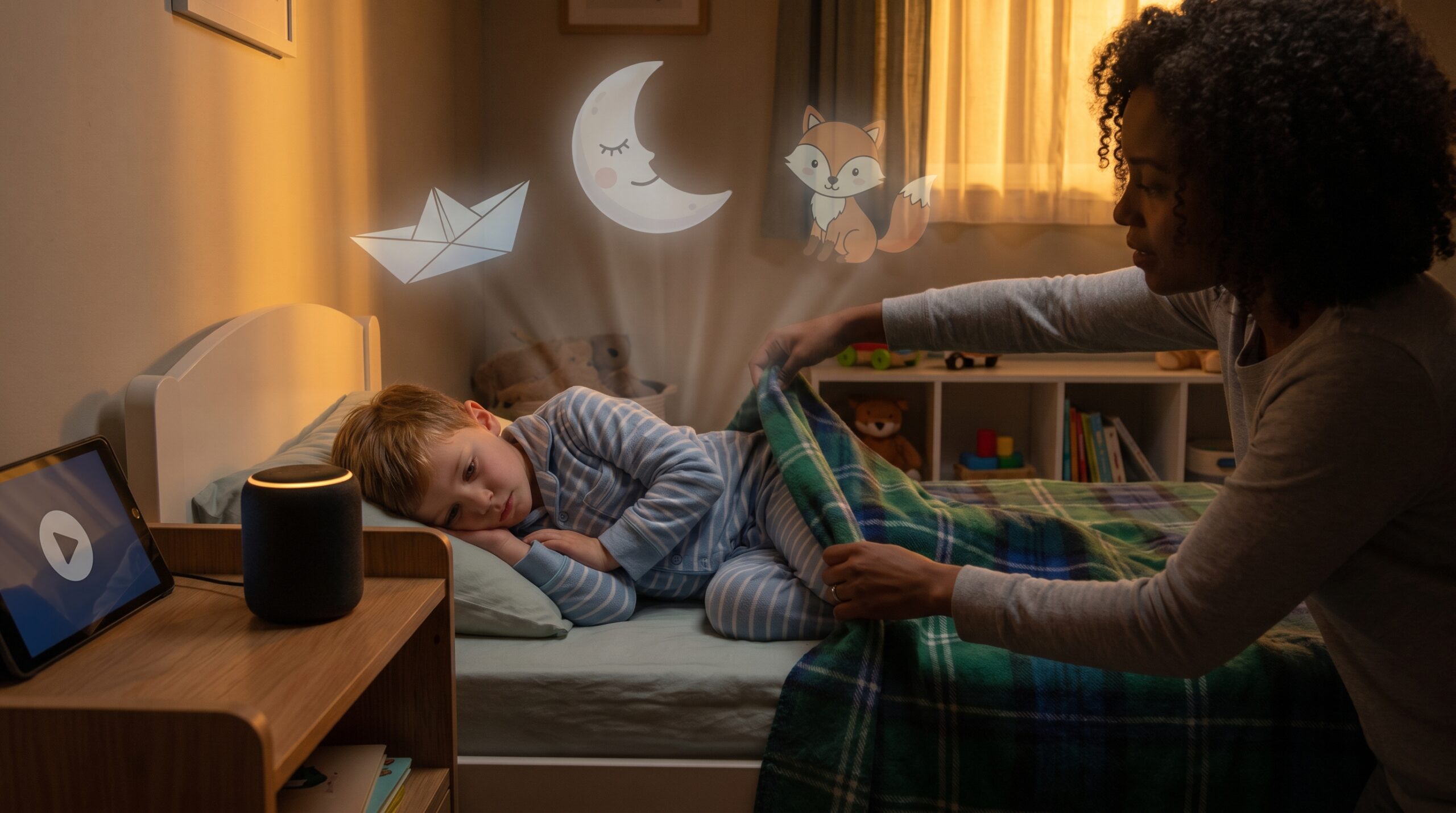
Audio reduces blue light and screen glow that can delay sleep. Dim the lamp and play a 10 to 15 minute Storypie story before bed. Keep volume low and effects gentle. A short, predictable routine signals the brain it is time to slow down.
Audio also fits real life. It works in cars, on walks, and under cozy blankets. It is hands-free and portable. Because of this, audio makes homes calmer and moments sweeter.
Accessibility and quality matter
Audio supports children with visual impairment, dyslexia, or those learning to read. Clear narration and steady pacing lower cognitive load. Avoid overly complex or fast audio. Otherwise it can confuse and tire the listener.
- Keep stories short for preschoolers.
- Use repetition and gentle cues for younger listeners.
- Offer longer plots and subtle language to older kids.
At Storypie we believe audio-first cognitive load and imagination create quiet, screen-free magic. Try a short Storypie story tonight and notice the small changes. For a gentle start, explore the Storypie app.