Audio-first stories cognitive load is the simple reason to try listening with kids tonight. When we remove competing visuals, we free mental space. As a result, children imagine more, follow plots more easily, and calm more quickly. A 2024 mixed-methods study found that viewers reported significantly higher cognitive load when sound was turned off while watching subtitled videos, with mean Effort scores of 3.07 (sound ON) vs. 4.84 (sound OFF) on a 1–7 scale (p < .001) according to Storypie, highlighting the importance of audio in reducing cognitive load.
How audio-first stories cognitive load reduces visual clutter
Bright screens and fast images crowd working memory. Cognitive load theory splits load into intrinsic, germane, and extraneous parts. Audio-first choices cut extraneous load by removing unnecessary visuals. Therefore, children devote more mental energy to plot, character, and feeling. A 2024 study demonstrated that cognitive load can impair brain functioning during auditory and linguistic stimuli processing, further emphasizing the importance of managing cognitive load to enhance engagement with audio content, as reported by Storypie.
Why the brain loves listening
Listening triggers internal imagery. In fact, neuroimaging shows listeners recruit visual and sensory brain areas while they imagine scenes. Also, dual coding explains that sometimes less visual input makes verbal input prompt stronger internal pictures. So audio is active imagining, not empty time. However, it’s important to be cautious; a 2024 experimental study found that participants learning from audio-only material at 2x playback speed performed ~12% worse on comprehension than those studying at 1x-speed with audio-visual content, indicating audio-only content’s vulnerability to cognitive overload.
Benefits for language, calm, and play
Audio-first stories cognitive load supports vocabulary, narrative understanding, and listening skills. For young readers, hearing expressive narration models prosody, rhythm, and natural phrasing. Compared with many screen-based options, audio often lowers physical arousal. Thus audio helps wind down at bedtime. This growing preference for audio formats is reflected in industry data showing a 45.7% revenue increase in the Spanish-language audiobook sector in 2023, according to Nature, which illustrates the increasing popularity of audio formats that rely on imagination and auditory processing.
Families find audio inclusive. For example, audio works well for kids who find reading hard. Moreover, it helps multilingual homes share stories without juggling books or devices. It is practical and welcoming.
A tiny family moment
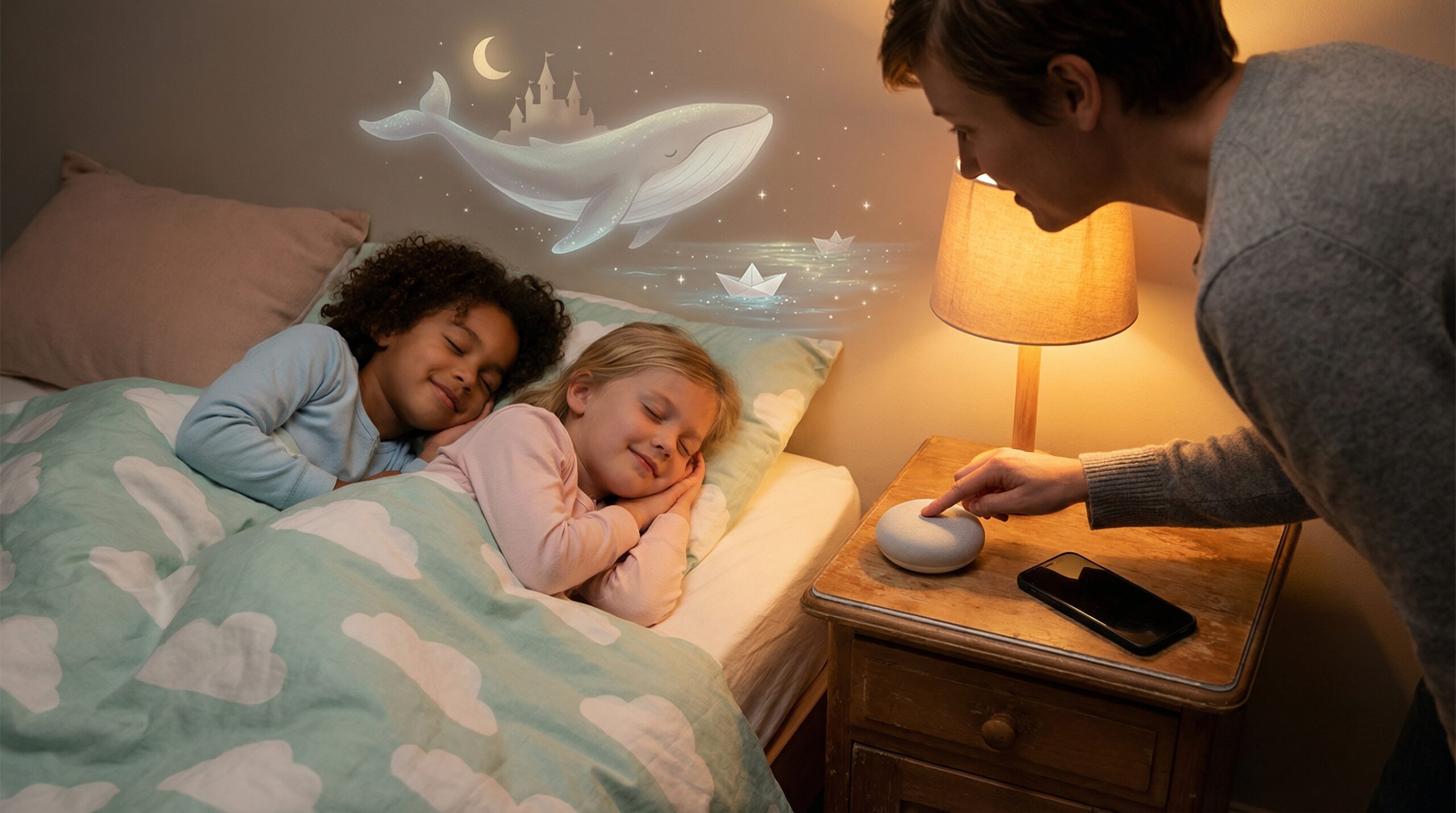
At bedtime, Mia used to scroll for cartoons. Tonight, her parent swapped one 10 to 15 minute screen session for a short audio tale. Lights dimmed, a warm voice spoke, and Mia built a sock dragon. She described colors and smells she imagined. Afterward she whispered, “Again?” The house felt softly enchanted.
Simple tips and a quick note on quality
Swap a single short screen session for an audio story to reduce arousal. Choose clear, well-paced narration with age-appropriate language. For toddlers, pair audio with gentle gestures or a shared cuddle. For older kids, try purely audio for longer plots.
Good audio keeps load low. Clear diction, expressive pacing, and suitable length help children follow and imagine. Rapid, dense narration can overwhelm working memory, so pick stories that breathe. A 2024 meta-analysis of 28 primary studies reported a small overall positive effect of video input on listening performance (Hedges’ g = 0.297), suggesting that while audio can be effective, the addition of visuals can enhance performance, relevant to cognitive-load tradeoffs.
Ready to try a playful swap tonight? Try Storypie bedtime stories for short, well-produced audio tales. Visit Storypie bedtime stories to explore audio-first options for your family.