Storypie here: Spring mornings hold small quiet windows. Boredom in children is not the enemy. It gives young minds room to invent and wander, sometimes delightfully so.
Boredom in Children: a simple reality
Boredom in children happens when they feel under-stimulated or when tasks feel meaningless. Often they fidget, flit between toys, or say, “I am bored.” Researchers have linked boredom to mind-wandering and the brain’s default mode network. As a result, brief boredom can nudge creative thinking. In fact, a 2025 meta-analysis involving 6,570 participants found that boredom is generally associated with lower arousal levels, with a mean effect size of r = -0.13, highlighting its psychological impact on creativity.
Why boredom shows up
It appears for clear reasons. Low stimulation can trigger it. Trouble focusing can too. Or a task may simply lack meaning. For example, a repetitive chore might feel pointless to a child. Research shows that boredom proneness, rumination, and mental well-being can account for 34% of the variance in resilience, emphasizing the importance of addressing boredom in a child’s development.
How it looks at each age
Toddlers may show fussiness or repeat a single action. Preschoolers might announce boredom or try many small tasks. School-age kids often reach for screens. Teens can seem listless or chase louder thrills. Notably, a 2023 meta-analysis found a medium-to-large positive association (r = 0.342) between boredom and problematic digital media use, which is a growing concern for parents.
What short and long boredom mean
Short bouts can be healthy. Studies show brief boredom can boost creativity. However, chronic boredom-proneness links to disengagement and risky choices. In a nationally representative analysis of U.S. secondary-school students, researchers reported a historical increase in self-reported boredom, rising by 1.14% per year from 2010 to 2017, highlighting a concerning trend in student engagement.
Practical approach: schedule quiet windows
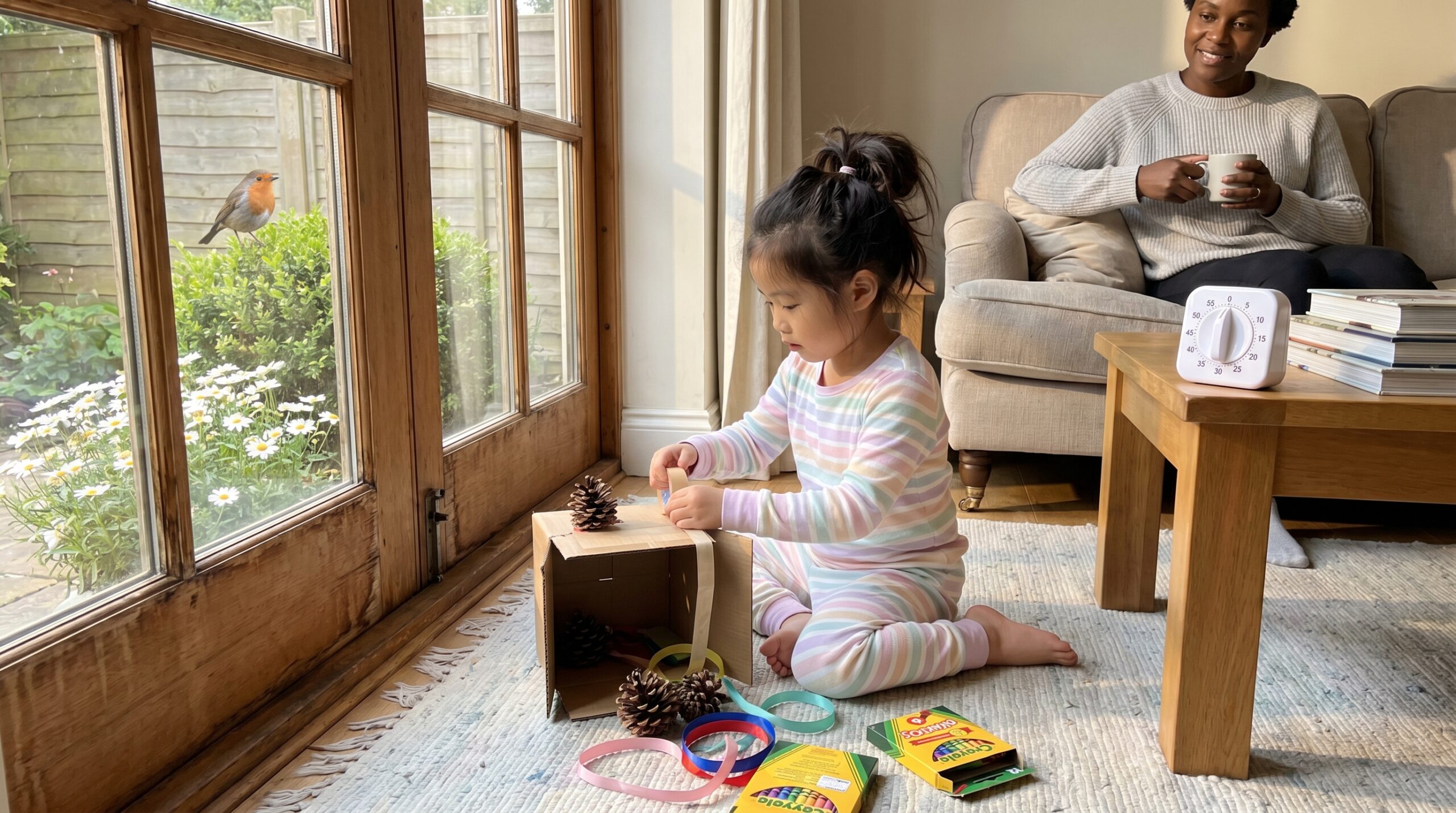
Start small and grow. Try 5 to 10 minutes for toddlers. Give preschoolers 10 minutes. Allow longer unscheduled blocks for older children. Also, model calm tolerance instead of rescuing them with a device.
Open-ended materials to try
- Paper and crayons
- Cardboard and fabric scraps
- Safe scissors, glue, string, tape
- Containers and a basket of found objects
Age-tailored tips
Toddlers need one or two choices and nearby supervision. Preschoolers like a gentle prompt such as, “What could you make with this?” School-age children thrive with a sketchbook or loose parts. Teens benefit from permission to be bored and unscheduled time. Notably, a 2024 review reported that roughly 26%–59% of university students say they feel bored in classrooms, indicating a significant prevalence of boredom in educational settings that can also be reflected in younger students.
A short script that helps
When your child says “I m bored,” try this: “Great. Let s try 10 minutes of quiet and see what you make. If you re stuck after that, I can offer one idea.” You might be surprised, delighted, or even delightfully baffled by their inventions.
Screens, limits, and when to seek help
Easy digital entertainment reduces practice with boredom tolerance. So limit automatic screen rescue. Balance structured time with unscheduled time. Seek help if boredom is extreme, persistent, or tied to sleep or mood changes.
Read or listen to a story about Boredom now: For 3-5 year olds, For 6-8 year olds, For 8-10 year olds, and For 10-12 year olds. For a general overview visit Read or listen to a story about Boredom now.
Try this tiny change and watch creativity grow. For more ideas and gentle story prompts, visit Storypie.