
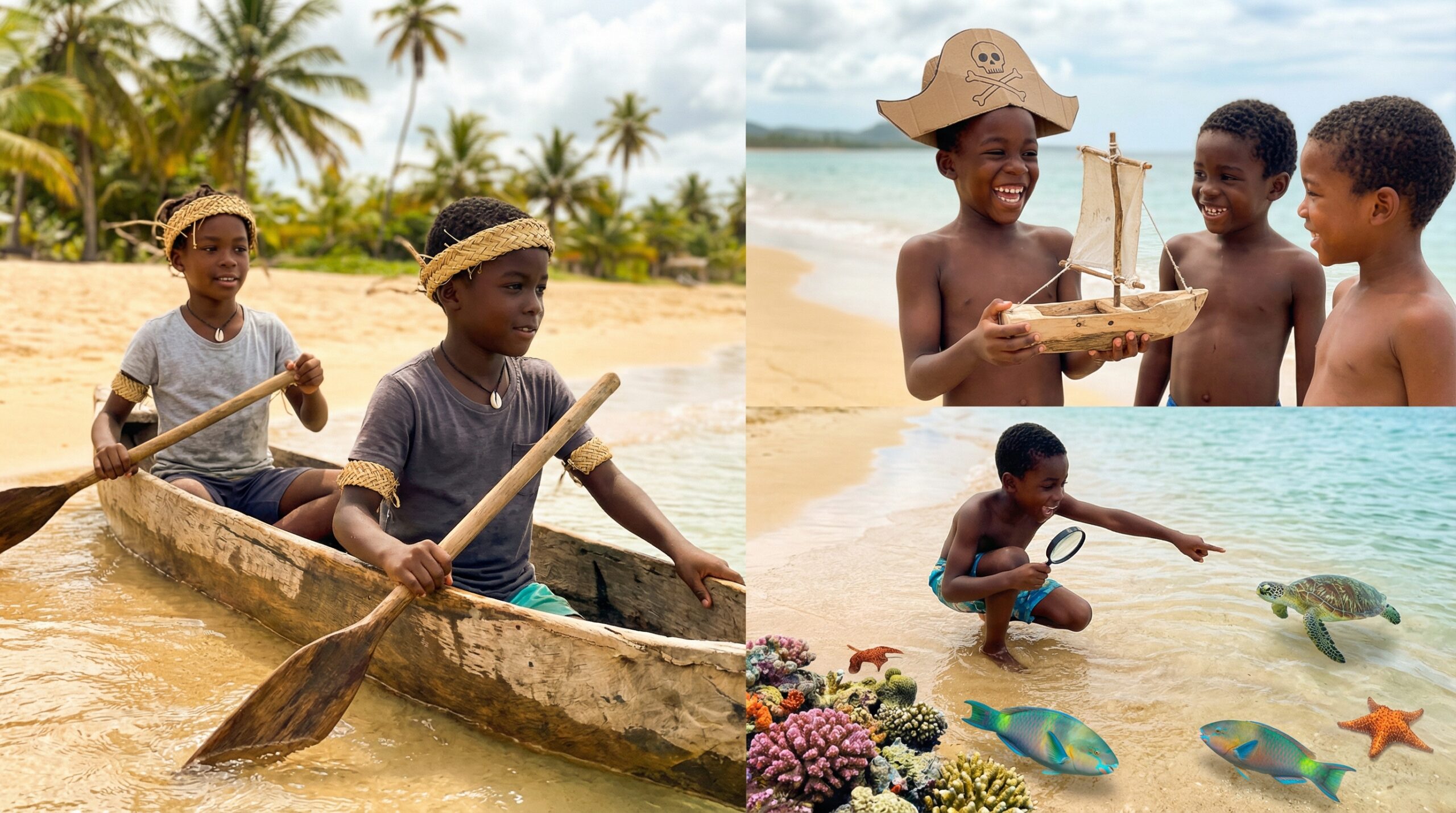
Caribbean Sea for kids: a bright, warm place
Caribbean Sea for kids begins as a simple idea: warm blue water, alive with life. It sits southeast of the Gulf of Mexico and east of Central America. To the south, it meets the north coast of South America. Islands arc across its edge, from the Greater Antilles to the Lesser Antilles. The sea covers about 2.75 million square kilometres (approximately 1,063,000 square miles), and it feels big and friendly.
Caribbean Sea for kids: quick facts
First, the deepest point is the Cayman Trough. It reaches roughly 7,686 metres. Next, many basins average two to two and a half thousand metres. Also, the Caribbean Current flows west. It feeds into the Gulf through the Yucatán Channel. Finally, ships may cross to the Pacific via the Panama Canal.
Islands, currents, and depth
Islands here come in different kinds. Some islands are fragments of continental shelf, like the Bahamas. Many are volcanic, born where plates meet. Others are coral islands and atolls, built by tiny animals over long time. The sea links to the Atlantic Ocean through gaps in the Antilles. For that reason, currents, weather, and life mix across wide distances.
Sun, storms, and seasons
This is a tropical sea, so surface temperatures sit between the mid 20s and near 30 degrees Celsius. Official hurricane season runs June 1 to November 30. Moreover, August to October are often the busiest months. Therefore, local weather warnings matter. Hurricanes reshape coasts and reefs, and they change island lives.
Underwater neighborhoods
Coral reefs look like living cities. Tiny polyps build them, and they support many species. For example, the Mesoamerican Barrier Reef stretches about 1,000 kilometres. It is the world second largest barrier reef. Also, mangroves and seagrass beds act as nurseries. Look for parrotfish, angelfish, snapper, sea turtles, dolphins, and manatees. However, the invasive lionfish can harm reef life. In fact, coral reefs in the Caribbean region total 24,230 km², representing about 9.7% of the world’s coral reef extent.
People, history, and care
First, Taíno and Carib peoples lived across these islands for generations. Then, in 1492 Columbus arrived and new histories began. Colonization and the Atlantic slave trade changed languages, food, music, and lives. Later, privateers and pirates used the sea. Places such as Port Royal and Nassau became famous hubs. Today the past is complex, so tell stories honestly and age appropriately.
Today and caring for the sea
The Caribbean Sea supports tourism, fishing, and shipping. It also supports many coastal communities. Each year, about 12 million people visit the Caribbean, including approximately 8 million cruise ship tourists. Yet it faces threats: coral bleaching, overfishing, pollution, invasive species, sea level rise, and storm damage. Mean Caribbean sea-level rise was 3.40 ± 0.3 mm/year for 1993–2019, and accelerated to 6.15 ± 0.5 mm/year for 2004–2019, approximately 67% faster than the contemporaneous global mean. Fortunately, nations set up marine protected areas and run reef restoration projects. Small actions add up and help these seas heal.
A tiny learning ritual
Gather three simple things for a child to explore the Caribbean Sea. Try a hero picture book, a shell, and a simple map. Then add a small basket with a bookmark and a pencil. Play together this afternoon to spark curiosity about nature and history. For a gentle listen or read-along, visit Storypie.
Read or listen to a story about Caribbean Sea now: For 3-5 year olds, For 6-8 year olds, For 8-10 year olds, and For 10-12 year olds.
Safety note
Teach children to respect coral and sea life. Do not touch turtles or corals. Also, check rip currents and weather before any swim. Visit a museum or aquarium for safe, close-up learning. Storypie helps families listen and learn together.