Comparing sizes and weights helps children notice everyday differences. It builds counting skills and real-world thinking. For instance, the blue whale, the largest animal on Earth, can weigh up to 200 tonnes and measure 24–28 meters in length in the Northern Hemisphere, providing a striking example of what we mean by ‘big’ in the context of weights and measures, according to the Norwegian Polar Institute.
What the words mean
Big and small usually describe size or volume. Meanwhile, long and short tell us about length or height. Heavy and light relate to mass and gravity. These ideas connect, yet they differ. For example, a big box can be light. Instead, a tiny pebble can feel heavy. That surprise points to density. Density means how much matter fits into a space. To illustrate size, consider that newborn blue whale calves measure about 6 to 7 meters in length at birth, showcasing significant size differences even from the start.
A tiny history
People measured with body parts long ago. They used fingers, feet and forearms. Builders and traders then needed shared units. Later, Archimedes explained why some large things float and some small things sink. Finally, the metre and kilogram became modern standards. Short history, big wonder.
Tools children can use
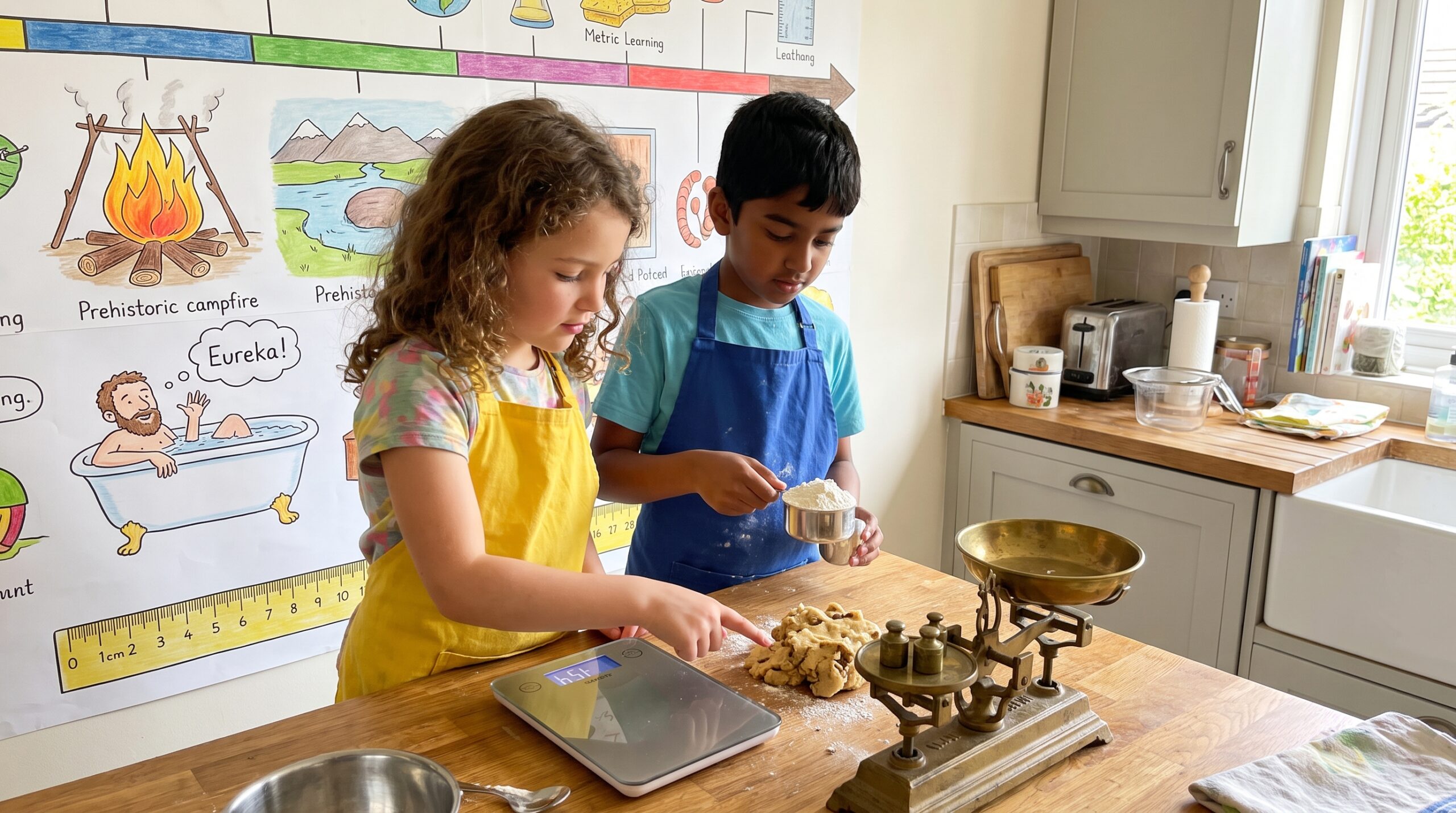
Let kids touch real tools. Try rulers and tape measures for length. Use measuring cups and spoons for volume. Bring in kitchen or balance scales for mass. These tools make ideas concrete and joyful.
Hands-on activities
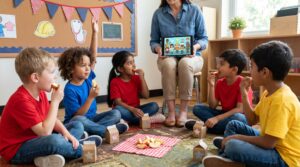
- Toddlers sort big and small toys. Put them in a treasure basket for warm, quiet play.
- Preschoolers order sticks by length. They can use hand spans as units.
- Early primary children use rulers, scales and measuring cups. Baking works beautifully. Children scoop, weigh and pour and then see quick results.
- Try a balance scale challenge. Also, test floating in a tub of water to explore density.
Common confusions
Big does not always mean heavy. Long is not the same as tall. Volume and mass are different ideas. Show these differences with two quick demos. Playful surprises help the lesson stick. For example, while the giraffe is the tallest living land animal, reaching up to 5.8 meters in height, it also has the longest neck of any land mammal—up to 2.4 meters long. This provides a clear reference for ‘long’ in the context of size, as noted in Wikipedia.
Three quick rules
- Use the same words every time.
- Let children hold the tools.
- Celebrate the best guess.
Safety and a tiny ritual
Supervise water play and heavy lifting. Use stable scales and safe household items. Keep the space calm and tidy.
Try a three-step ritual. Ask the question. Guess the size. Measure and cheer. A five minute measuring ritual builds curiosity and confidence.
Read or listen to a story about Comparing Sizes and Weights (Big/Small, Long/Short, Heavy/Light) now: For 3-5 year olds, For 6-8 year olds, For 8-10 year olds, and For 10-12 year olds.
Find small wins on Storypie and enjoy the surprises that measuring brings. Did you know a blue whale’s heart alone can weigh approximately 180 kilograms—the largest known in any animal? This gives a fascinating insight into the incredible mass of specific body parts, enhancing our understanding of weight and mass, as described in Wikipedia.