
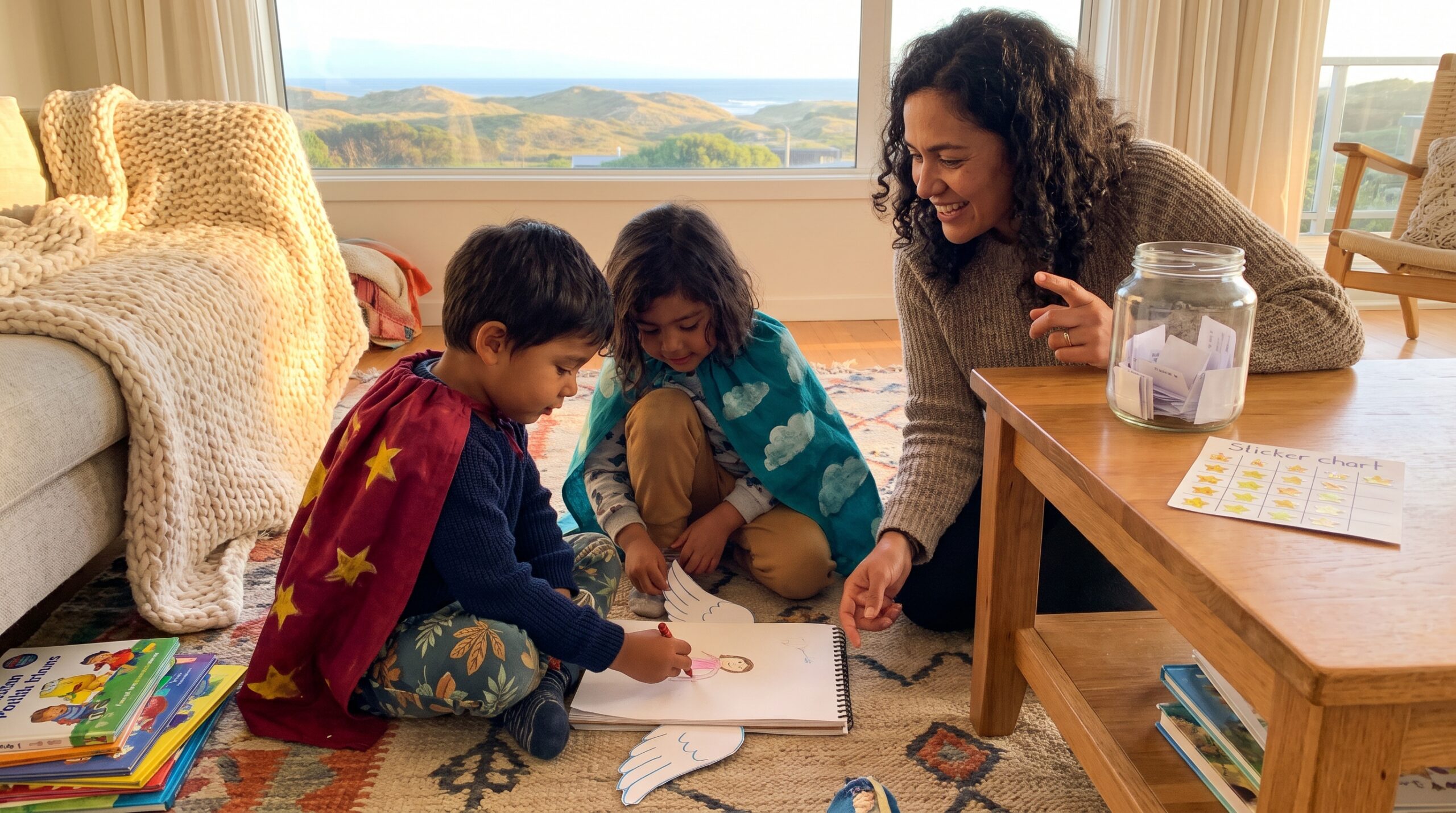
Create your own hero challenge starts with one small prompt. Ask for one superpower and one kind act. This Weekend imagination challenge creates playful invention and warm parent-child time.
Why this challenge matters
Imaginative play builds thinking, language, and problem solving skills. Also, it helps children rehearse kindness and feel capable. Research indicates that individuals who immerse themselves in fictional characters often use the same brain regions to think about these characters as they do when thinking about themselves, suggesting a deep psychological connection, which can enhance cognitive engagement during play (Science Daily). Over time, shared play makes lasting memories and fulfills emotional needs. In fact, people perceive these parasocial relationships as effective in providing companionship and emotional support, reinforcing the emotional benefits of imaginative play (Nature).
Getting started with the create your own hero challenge
Pick a cozy spot. Next, dim a lamp and pull a blanket over a rug. Then, choose a soft scrap for a cape. Keep supplies low-cost and visible. Offer choices instead of instructions. Let the child lead the play.
Age-friendly prompts
Preschool (3 to 5): Keep prompts concrete and brief.
- What color is your hero?
- What one thing can they do with their hands?
- How do they help friends when someone falls?
Early primary (6 to 9): Add fun detail.
- Draw one tool or gadget your hero loves.
- Name their favorite snack and one place they protect.
- What kind deed does your hero do every day?
Older kids (10 to 12): Design and motive matter.
- Choose a costume detail and a nickname.
- Write a short sentence: why do they help?
- Invent a team mission and one clever weakness.
Materials, time, and simple craft ideas
Quick (15 to 20 minutes): paper, crayons, and a doodle badge. Next, make a one-line name tag.
Standard (30 to 45 minutes): cardboard mask or simple cape. Then, photograph the hero for a keepsake.
Extended (60+ minutes): build a hero team or a small role-play scene. Also, use fabric scraps and leaves for props.
Developmental benefits
Cognitive growth comes from holding an imagined role. A 2026 longitudinal study found that toddlers (ages 2–3) with stronger pretend-play ability had significantly fewer emotional and behavioral difficulties at primary school age, reinforcing the long-term mental health benefits of imaginative play. Social-emotional skills grow when children choose kind acts. Language expands as kids talk about powers and actions. Above all, relaxed weekend time strengthens the family bond.
Safety and inclusion
Supervise small bits. Avoid hazardous glue and choking hazards for young children. Encourage diverse and non-stereotyped heroes. Include varied bodies, cultures, and abilities so every child can see themselves as a mini-hero.
Ways to extend the challenge
Turn drawings into hero cards. Next, laminate a mission or take a sparkly photo and make it a badge. For example, role-play: the hero hears a friend cry in the park. They use super-listen power to find the missing toy and share a cheer. Two minutes of play can feel like a full adventure.
Share or keep it private
If you share, use child-safe practices. For ideas and gentle prompts, visit Storypie. Also, explore the app page for cozy prompts at Storypie get app. Tip: ask for one superpower and one kind act to build confidence.
Finally, the true test is when a child returns to the game on their own. Little rituals, soft light, and a tiny cape make play feel delightful and impossible to forget.