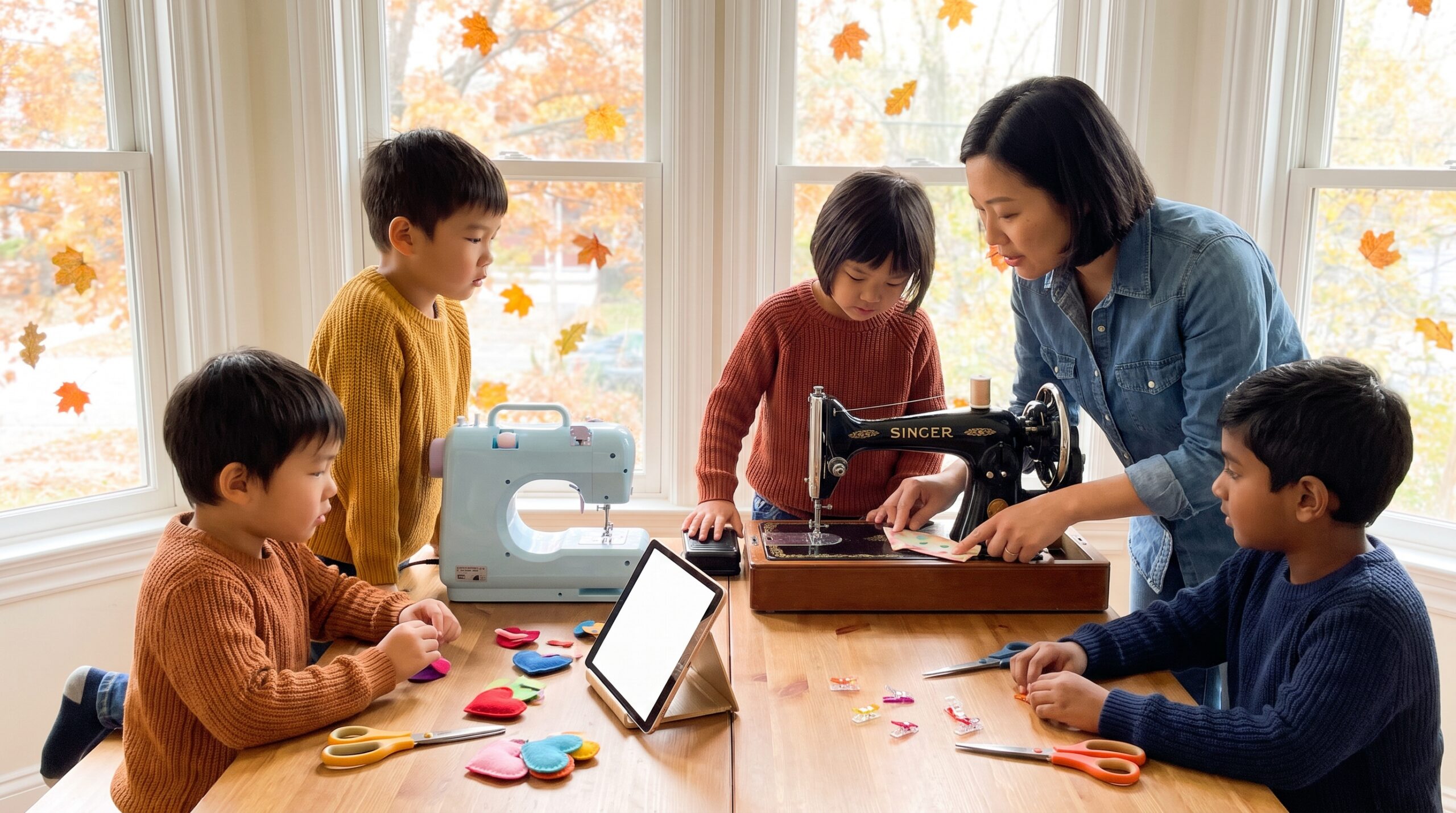
Think of a sewing machine for kids as a gentle first step into making and mending. It offers a small, bright workbench where curiosity meets craft. First, choose a simple machine, good light, and a calm ritual. Then add a tiny tray for pins, a scrap basket, and a brave-stitches sticker. These small details keep the space tidy and invite a child back again and again.
Read or listen to a story about Sewing Machine now: For 3-5 year olds, For 6-8 year olds, For 8-10 year olds, and For 10-12 year olds.
Sewing Machine for Kids: A Short History
Early inventors built the idea slowly. First, Thomas Saint patented a leather and canvas machine in 1790. Later, Barthelemy Thimonnier made early workshop machines in the 1830s. Then Elias Howe patented a useful lockstitch machine in 1846. Finally, Isaac Singer added a foot treadle that made machines practical in homes. Together, these inventions changed how people made and mended clothes.
How a Sewing Machine Works
Most home machines use a vertical needle that carries the upper thread. The needle meets a lower thread wound on a bobbin. A presser foot, feed dogs, shuttle, and needle all work in step. This teamwork forms the lockstitch, the common and sturdy stitch. Also, many machines offer zigzag and decorative stitches for finishing or trim.
Best Beginner Features
Pick a sewing machine for kids with a clear stitch selector. Also look for a slow speed option and a sturdy metal plate. A removable extension table helps with small projects. For safety, choose a finger guard and a simple foot pedal control. Interestingly, in 2024, approximately 21 million household sewing machines were produced worldwide, which indicates a slight decline of about 7.1% compared to the previous year. This trend may affect availability and pricing for aspiring young sewers.
First-Lesson Checklist
- Felt or scrap fabric, large needles, and thick thread for practice.
- Needle guard or presser-foot guide.
- Good light and a small mat to catch scraps.
- Adult supervision and one short project plan at a time.
Two Tiny Projects to Try
Start with short wins. First, sew a felt pouch about 6 by 8 inches. Fold, pin, and sew a straight stitch. Then add a button by hand. Second, make a bookmark from fabric scraps. Fold, topstitch, press, and trim. These projects build confidence quickly and feel delightful.
Care and Safety
Clear lint from the bobbin area and change needles often. Also oil the machine as the manual suggests. Always unplug before changing needles or cleaning. Supervise children closely and keep fingers well back from the needle. Start slow, and celebrate small wins.
Why a Sewing Machine for Kids Matters Today
Sewing teaches patience, repair, and creative thrift. It supports mending and upcycling, and it helps households reduce waste. Museums preserve early machines to remind us how a small technology changed daily life. A simple, calm practice makes sewing repeatable and lovely.
Finally, with a clear space, a few well chosen tools, and a child beside you, a sewing machine becomes more than a tool. It becomes a little classroom for craft and care. For a gentle next step, consider Storypie stories and activities, or get the app to explore more.
Get the Storypie app for storytime and curious craft ideas.