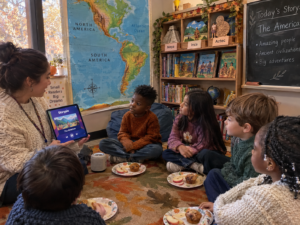
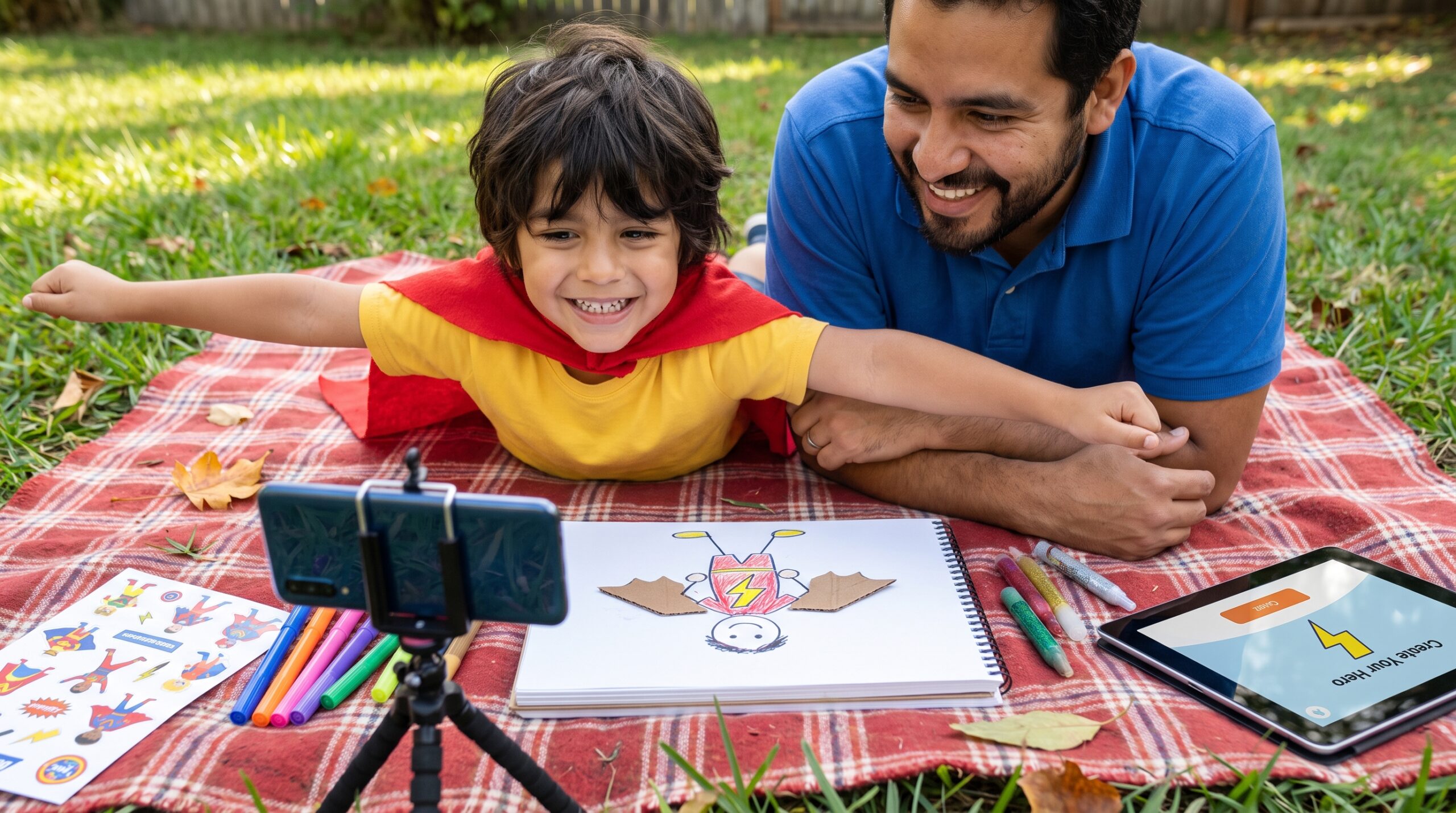
Try the create your own hero weekend challenge with your child this weekend. It is a short, low-prep activity that sparks imagination and warm memories. On a typical day at home, 68% of parents report that their children (ages 1–5) engage in make-believe or pretend play, a form of imaginative play that aligns perfectly with this challenge.
Create your own hero weekend challenge: Why it matters
This challenge works in small bursts. Children lean in and parents smile. Also, it builds vocabulary and gentle storytelling sense. A 2026 meta-analysis of 21,456 participants found a significant moderate-to-strong positive relationship between creative play and creativity development, emphasizing that the hero creation challenge is not just fun but also beneficial for creativity.
How the challenge looks
The core is simple. First, pick a power or trait. Next, craft or dress a hero. Then, share a single short scene or moment together. Each step takes minutes, not hours. Research shows that the strongest effect of creative play on creativity was among early childhood (ages 3–7), making this an ideal age for such imaginative activities.
What makes this challenge special
- Creativity: It remixes familiar ideas into new worlds.
- Connection: Shared play builds family bonding.
- Flexibility: You can do it in 15 minutes or one hour.
Materials and time
Low prep is the point. Use paper, crayons, markers, or recycled boxes. Also try stickers, clay, or a phone for an audio note. Time range: 15 to 60 minutes depending on age. Note that among children aged 6–7 years, 31% reported engaging in imaginary companion play, indicating that creating heroes can be a familiar and engaging activity for them.
Prompts to spark ideas
Here are quick prompts that often work. For example:
- The Everyday Helper: a hero who solves small, kind problems.
- The Animal Ally: a hero with an animal sidekick and one quirky habit.
- The Future Fixer: a hero who invents one useful gadget for tomorrow.
Adaptations and accessibility
The challenge adapts well. For children with limited fine motor control, try collage or large stickers. For nonverbal kids, use photos, gestures, or a short recorded description. For visually impaired children, emphasize tactile materials and descriptive audio. A study published in 2023 examined how 7- to 8-year-old children use imagination in digitally-mediated sociodramatic play, highlighting that imagination can thrive even in modern contexts.
Safety and sharing
Sharing is optional and should be safe. Use privacy settings, crop or blur faces, or photograph only artwork. Also review the Storypie community guidelines before posting. Find ready ideas in the Storypie prompts and, when ready, bring creations into the world with the Storypie app.
Try it this weekend
Pick a power. Sketch a hero. Share a photo or audio clip if you like. Above all, have fun and make a sunny memory together.