The djembe for kids is a small hand drum with a big history. Today the djembe for kids sits in classrooms, drum circles, and family rooms. It began in the Mandé area of West Africa during the Mali Empire, estimated to have originated around 1200 AD. Over centuries the drum traveled with people and songs. It is delightfully simple and deeply social.
Djembe for kids: origins and meaning
The djembe has a goblet shape that is easy to recognize. The word ‘djembe’ comes from the Bambara language, where ‘djé’ means ‘gather’ and ‘bé’ means ‘peace,’ highlighting its role in community and harmony. Traditional shells come from a single hardwood log. The head is often goat skin, and it is a goblet-shaped drum traditionally made from carved wood and goat skin, producing three basic sounds: bass, tone, and slap. Modern drums sometimes use synthetic heads and shells instead. Sizes vary. Concert djembes stand about 50 to 65 cm high. Children’s djembes are smaller and lighter. As a quick check, try the two-finger test. The rim should sit two fingers below a child’s sternum when seated. If it feels huge, choose a smaller drum.
How it sounds and how to play
The djembe makes three core tones. First, bass is deep and comes from the center. Next, tone is clear and comes from near the edge with fingers together. Then, slap is bright and sharp and comes from a looser hand near the rim. Play with bare hands, not sticks. Use wrist motion and finger shape to shape each sound. The djembe often plays alongside dunun bass drums that keep the pulse. In traditional ensembles, the djembe answers, decorates, and takes solos. Notably, in a 2022 scope review of membranophone use in music therapy with adult patients in São Paulo, Brazil, the djembe was the most used membranophone, being used exclusively in 3 out of 13 studies (23.1%). This showcases its versatility beyond traditional settings.
A short, safe activity for families
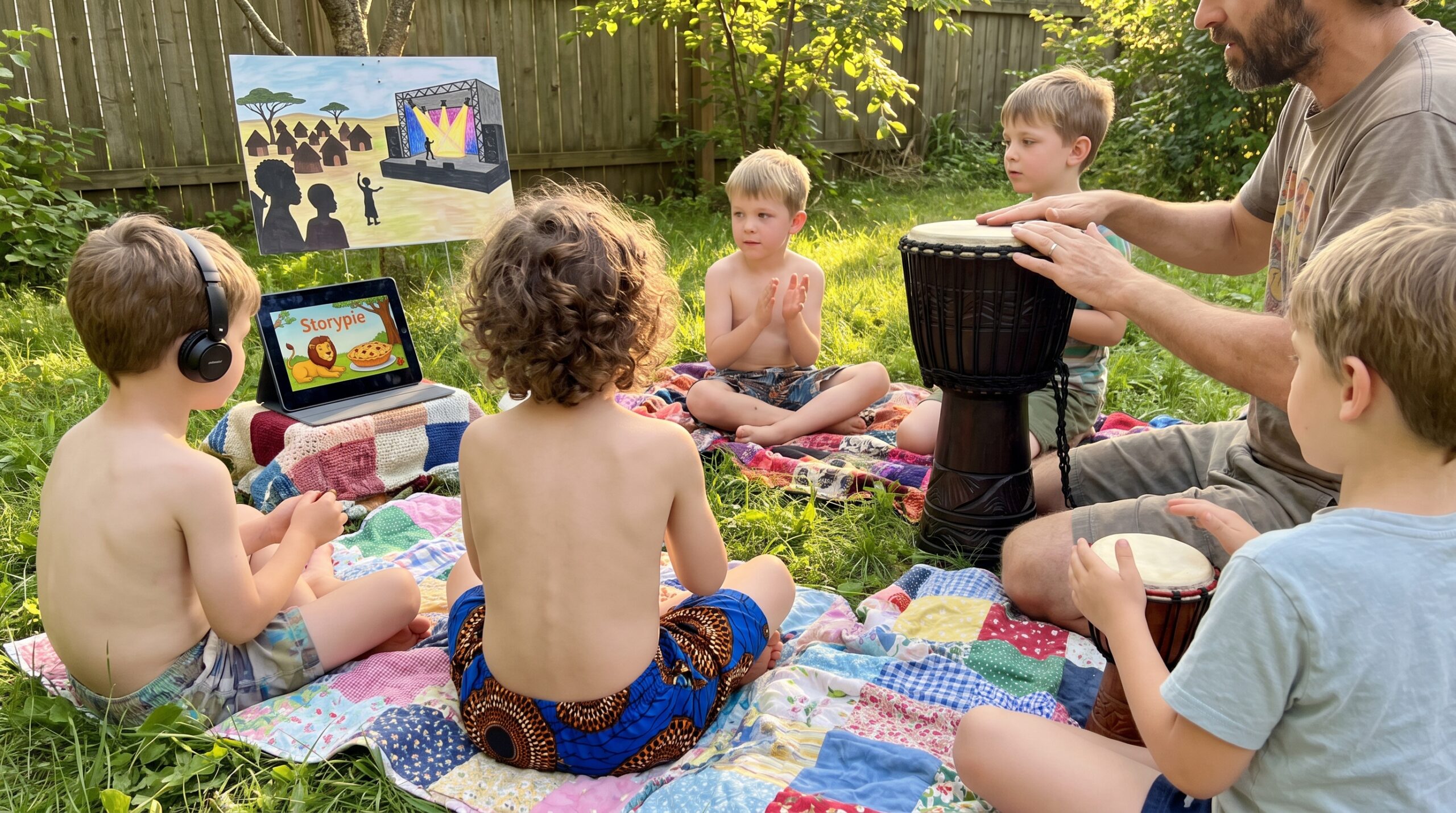
Here is a gentle, family-friendly activity you can try. First, a leader plays a simple two-beat pattern: bass then tone. Keep it slow. Next, children echo the two beats. Count quietly between patterns. Then add a second phrase: bass, tone, slap. Let them try once. Stop after three to five minutes.
- Safety tip: keep sessions short and cheerful.
- Use smaller drums for little hands.
- Protect hearing by keeping volume gentle and breaks frequent.
Care, safety, and buying tips
Natural skins react to humidity and heat. Avoid leaving a drum in direct sun or very damp basements. Tune ropes or mechanical hardware as needed. For families who travel, consider synthetic heads or fiberglass shells for stability. When shopping, use this quick checklist:
- Size fits the child.
- Try the bass and slap tones.
- Check head material and shell strength.
- Look for solid carving or a sturdy shell.
- Ask about warranty and durability.
Prices vary widely. Teaching models are affordable. Concert drums cost more.
Cultural note and respectful use
The djembe is more than an instrument. It belongs to communities and ceremonies. Teach children about its West African origins. Always credit traditions and teachers. When possible, learn from local drum circles or cultural centers. This shows respect and keeps the story true.
Modern life and joy
Since the mid 1900s the djembe has gone global. Today it appears in schools, therapy, concerts, and pop music. A 2014 study published in the Journal of Cardiovascular Medicine found that 40-minute djembe drumming sessions significantly decreased stress and anxiety levels in participants. It teaches listening, coordination, and community. For parents, a tiny drum can bring huge joy.
Read or listen to a story about Djembe now: For 3-5 year olds, For 3-5 year olds, For 6-8 year olds, For 8-10 year olds, and For 10-12 year olds.
Storypie presents a new summer listen told by a Djembe. Tip: five minutes of gentle call-and-response drumming after the story boosts listening and coordination. Go gently. Have fun. Let rhythm bring the family together.