DNA sequencing for kids starts with a friendly idea: DNA is a tiny instruction book. The book uses four letters: A, C, G and T. DNA sequencing reads those letters one by one.
What DNA sequencing means
Think of sequencing as reading the recipe of life. Scientists read the letters to learn what the instructions say. Today we can read tiny stretches or whole genomes, depending on the method. In fact, as of 2023, commercial laboratories can sequence an individual’s entire genome in a few hours for just over $500, a significant decrease from $100 million in the early 2000s, making it more accessible than ever (Federal Judicial Center).
Short timeline of DNA sequencing for kids
First, Watson and Crick described the double helix in 1953. Rosalind Franklin’s photos helped them see the shape. Then in 1977 Frederick Sanger made sequencing practical for small stretches of DNA.
Next came the Human Genome Project in 1990. It finished around 2003 and read a full human instruction book. It cost about three billion dollars and taught labs how to work together at scale. Today next generation sequencing and long-read machines make reading faster and cheaper. In fact, in 2023, next-generation sequencing (NGS) machines can sequence over 8 billion DNA base pairs in a single day, a substantial increase from conventional methods that could sequence about 2.1 million base pairs per day (Centers for Disease Control and Prevention).
Why long reads matter
Long reads can span thousands to millions of letters. They clear up tricky spots and reveal structure more clearly. Short reads cover many pieces fast, while Sanger reads small bits very precisely.
How sequencing works, simply
First, a sample gives DNA. Often a quick saliva swab does the job. Then labs copy many fragments and tag them so a machine can read bases. Computers line up the pieces against a reference and look for differences.
Types of sequencing at a glance
- Sanger sequencing: reads a few hundred letters very precisely.
- Short-read NGS: reads many pieces of 50 to 300 letters quickly and cheaply.
- Long-read methods: read thousands to millions of letters in one go for clearer structure.
Everyday uses of DNA sequencing
Today sequencing appears in many fields. Doctors use it to diagnose rare conditions and to profile cancers. Public health teams track viruses during outbreaks. Farmers use it to breed hardier crops. Conservationists study wildlife diversity. Consumer tests use targeted methods for ancestry or traits. Experts interpret most results. Not every change means disease. In 2023, the global DNA sequencing market was valued at $990.2 million and is projected to reach $2,863.8 million by 2030, growing at a compound annual growth rate (CAGR) of 16.5% from 2024 to 2030 (Grand View Research).
Quick glossary for telling kids
- Gene: a short instruction, like a recipe card.
- Genome: the whole book of instructions.
- Read: a single fragment the machine outputs.
- Coverage: how many times a spot is read.
- Variant: a letter that differs from the reference.
Privacy tips for parents
DNA is personal and family-linked. Ask the lab these short questions before you test a child:
- Who stores my child’s data?
- Is the data shared with partners?
- Can I delete results later?
Keep answers simple and keep consent in writing.
Hands-on ideas that make sequencing tangible
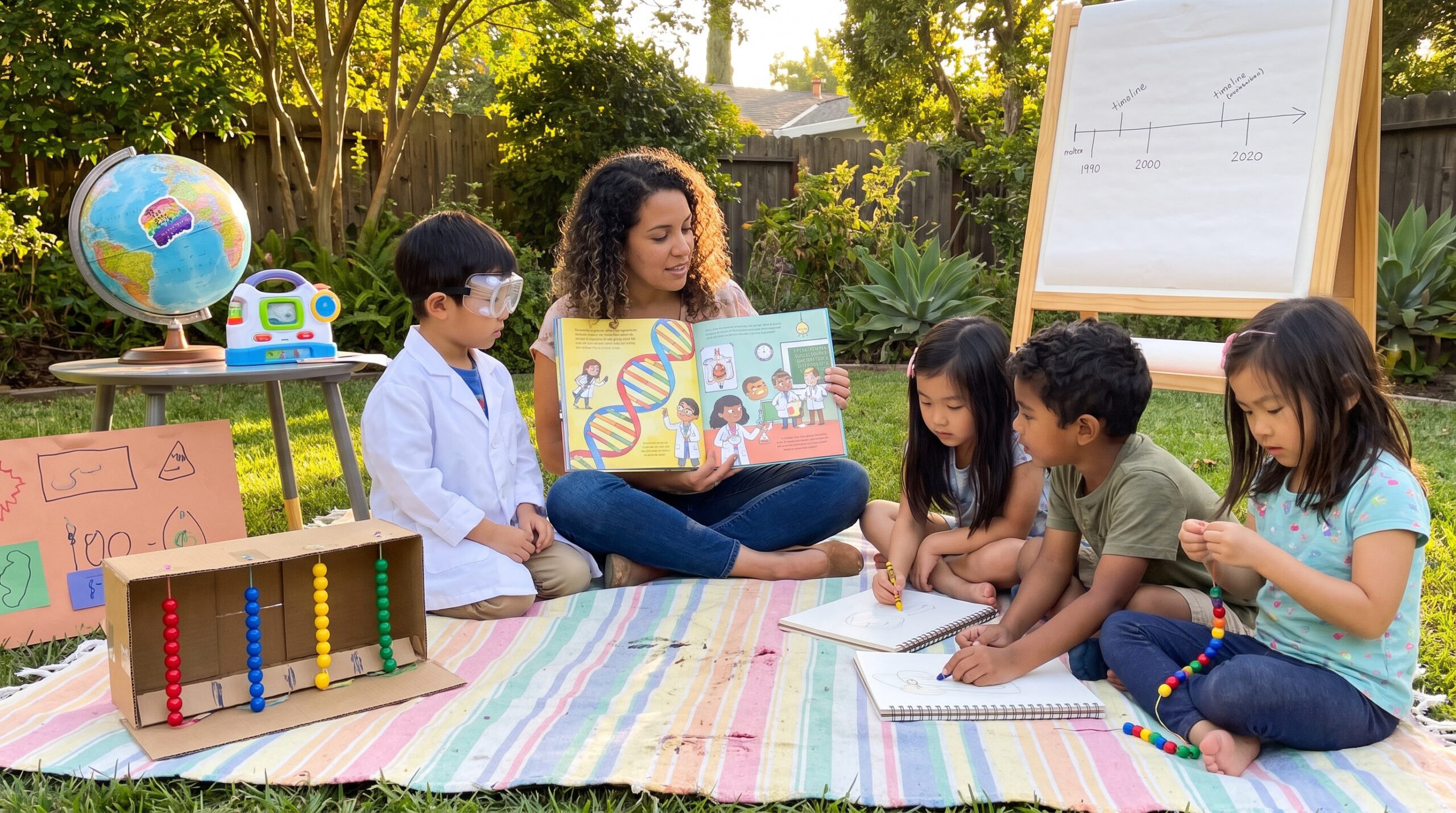
Try a few playful activities to bring the idea alive. Make a four-color bead necklace for A, C, G and T. Draw a friendly reader together. Build a paper strip with letter stickers. When a child draws the reader on their own, the idea has truly stuck.
Read or listen to a story about DNA Sequencing now: Read or listen to a story about DNA Sequencing now: For 3-5 year olds, For 6-8 year olds, For 8-10 year olds, and For 10-12 year olds.
Want to listen together? Visit the Storypie app home page for more stories and family-friendly learning: Storypie.