Ecosystems for kids are busy, shared homes right outside the door. Say the word aloud with a child: ecosystem. Plants, animals, fungi, microbes, sunlight, water, and soil all have jobs. Together they make a home team that keeps nature humming.
Read or listen to a story about Ecosystems now: For 3-5 year olds, For 6-8 year olds, For 8-10 year olds, and For 10-12 year olds.
Ecosystems for Kids: A Home Team
An ecosystem holds living and nonliving parts that interact. For example, sunlight fuels plants. Plants make food. Then animals use that food. Decomposers return nutrients to the soil. This keeps the system running, day after day. In fact, as of 2025, approximately 20% of global forests (about 813 million hectares) are located within legally established protected areas, emphasizing the importance of these regions in conserving forest ecosystems and biodiversity, according to the Food and Agriculture Organization of the United Nations.
Backyards often show these links in tiny, delightful ways. Look under a rock. Peek into leaf litter. You will find lives you might not expect. Each small place is a neighborhood of its own.
How Energy Moves
Sunlight is the main power. Plants act as producers and trap light. Herbivores then eat plants. Next come carnivores that eat other animals. Meanwhile decomposers, like fungi and bacteria, break what is left. Thus energy moves up short food chains rather than long, fragile ones.
For example, a backyard pond shows this plainly. Algae soak up sun. Tiny insects eat algae. Tadpoles eat insects. Herons eat tadpoles. Finally microbes return remains to the pond bottom. Each player matters in keeping the pond healthy.
Food Webs, Biodiversity, and Resilience
Food webs map who eats whom and why every role matters. Biodiversity means many kinds of species and many individuals. More variety makes an ecosystem resilient. If one species fades, others can often fill the gap. Research indicates that 219 out of 655 terrestrial ecosystem types assessed in temperate and tropical North America and the Caribbean (33%) are classified as threatened, highlighting the urgent need for conservation efforts, according to the Society for Conservation Biology.
Also nutrient cycles keep things moving. Water evaporates, forms clouds, falls as rain, and flows again. Carbon flows through plants, animals, soil, and air. Nitrogen needs special microbes to become plant food. These cycles repeat, again and again.
Common Local Ecosystems
Children meet many local ecosystems. Some common ones include backyard gardens, ponds, meadows, hedgerows, woodlands, and seashores. Each place has its own mix of species and tiny habitats. Even a single yard can hold several microhabitats.
Short, regular nature time trains observation and grows kindness to living things. Plus it makes science feel like tiny adventure with big wonder.
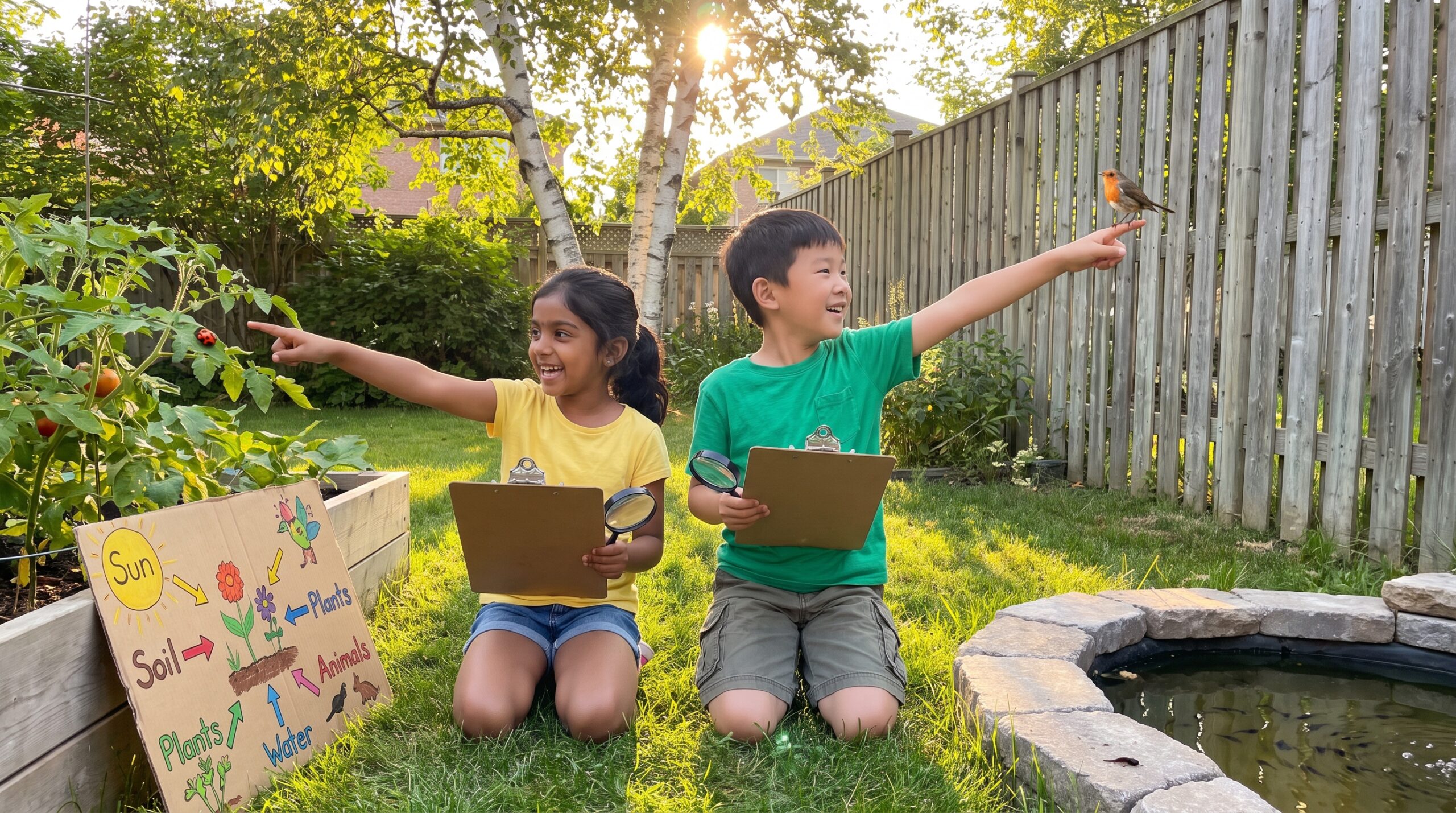
Quick Ten Minute Backyard Team Hunt
Try this playful, short search with kids. It is simple and fun.
- Materials: notebook, pencil, phone camera, or magnifying glass.
- Checklist: one plant, one insect, one bird sound, one sign of water, and one decomposer (worm or fungus).
- Rules: look, do not handle unknown animals, wash hands after exploring, and watch for ticks.
Variations work well. Younger children draw finds. Older kids tally sightings or compare two spots. Repeat visits across seasons reveal change and surprise.
Small Conservation Steps at Home
Tiny acts help ecosystems. Plant native flowers. Start a small compost pile. Reduce pesticides. Leave a log pile for bugs and small animals. These actions are simple, gentle, and powerful. In fact, between 2015 and 2025, the global annual rate of deforestation slowed to 10.9 million hectares per year, showing progress in slowing deforestation, reports the Food and Agriculture Organization.
Ask together: How are the things you found connected? What might happen if one player vanished? Those questions build curiosity and care.
Glossary
- Ecosystem: a place where living and nonliving parts interact.
- Producer: makes food from sunlight.
- Consumer: eats plants or other animals.
- Decomposer: returns nutrients to the soil.
- Biodiversity: many kinds of species and many individuals.
- Habitat, niche, succession: simple words for how places and roles change.
For more stories and age-appropriate reads, visit Storypie. Also, if you want the app, get the app to listen and explore more friendly tales.