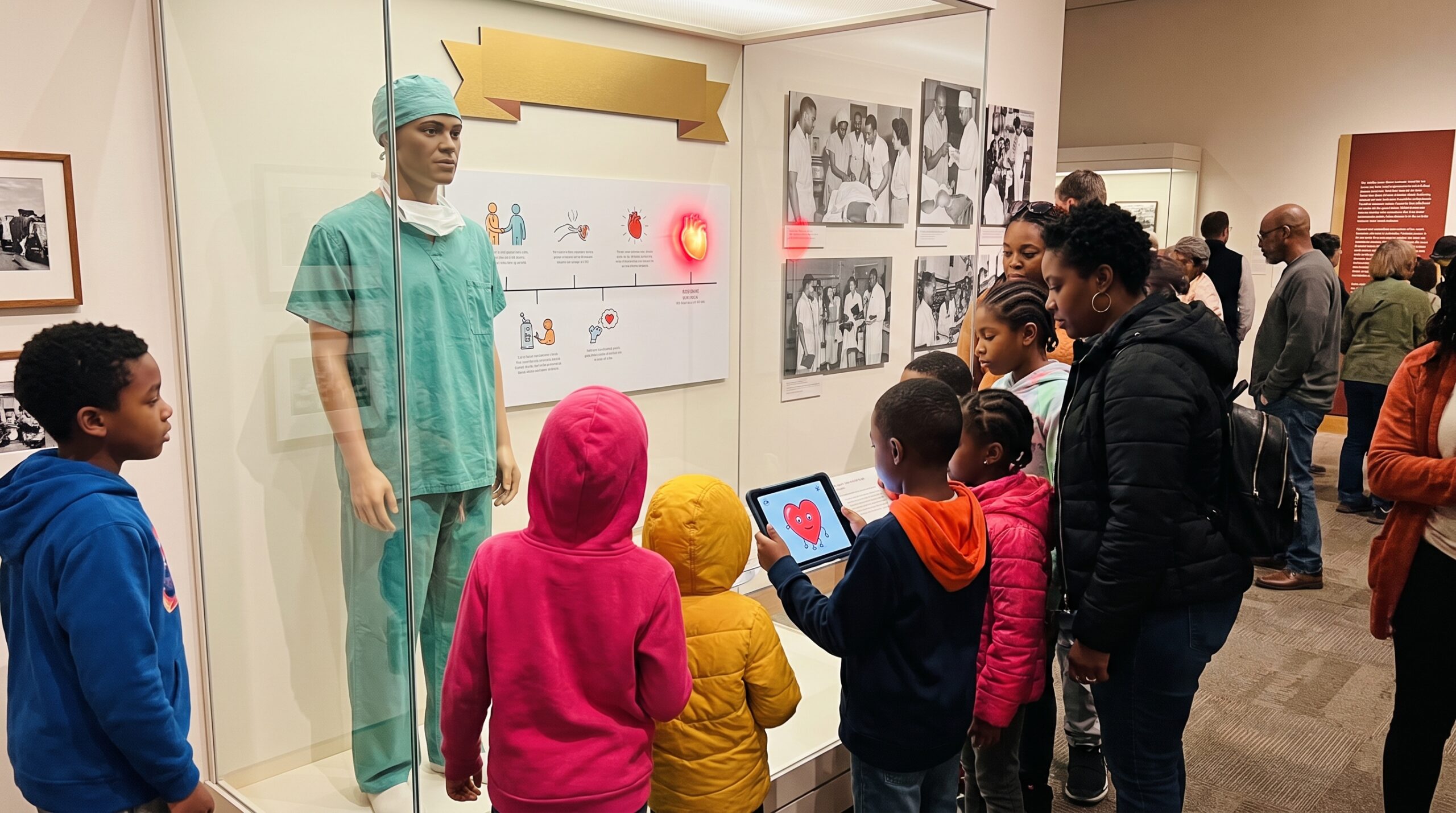
This summer I want to share a quiet, mighty moment: the first successful heart transplant 1967. Read it gently with a child tonight and ask what they wonder.
The first successful heart transplant 1967: the operation
On December 3, 1967, at Groote Schuur Hospital in Cape Town, surgeons placed one human heart into another person. Dr. Christiaan Barnard led a team of 30 physicians in this groundbreaking operation. It was an orthotopic transplant. That means they removed a very sick heart and sewed a healthy one into the same place. The recipient, Louis Washkansky, was 53 years old. The donor, Denise Darvall, was 25. She had been fatally injured in a road accident and was declared brain dead.
People who made it real
Dr. Christiaan Barnard was a curious surgeon who loved solving hard problems. He led a brave team and later became known around the world. Louis Washkansky was a father who wanted more time. He survived for 18 days post-transplant before succumbing to double pneumonia. He woke after the surgery and could speak and eat for a little while. Denise Darvall helped others even after she died. Her family later talked about donation with care and respect.
What happened next and why it mattered
The new heart worked at once. Because medicines to stop rejection were crude then, the result stayed fragile. Doctors gave drugs to quiet the body’s immune response. However, those medicines raised the risk of infection. Washkansky died of pneumonia 18 days later, on December 21, 1967. Even so, the operation proved something huge. It showed human to human heart transplants could work. After that, surgeons around the world learned the steps. Scientists worked harder on better medicines. In fact, within three weeks after the operation, the South African Medical Journal published Barnard’s interim report on December 30, 1967—one of the most rapidly published medical reports ever. In the 1980s, a drug called cyclosporine transformed transplant survival. Laws and ethics also changed. People and lawmakers clarified how to define death. Thus, the story shaped medicine, law, and talk about donation. Of the first ten orthotopic heart transplants performed at Groote Schuur Hospital between December 1967 and November 1974, four patients survived more than 18 months; notably, one patient (Dorothy Fisher) lived over 13 years and another (Dirk van Zyl) lived over 23 years.
History and context
This event took place during apartheid in South Africa. Later histories sought to make sure all contributors are recognized. The story sits inside a hard history. We remember both the medical milestone and the wider context.
How to share the story with a child
Keep it simple and kind. Say, I watched doctors put a healthy heart into a sick body to try to save a life. Use the phrase brain death gently. Explain that sometimes a person’s brain stops working while other organs still work for a short time. Say that donation can help others when families agree. Then ask what the child wonders. Also try a tiny activity to end the moment.
- Ask: What does a heart do?
- Draw a smiling heart superhero together.
- Give a hug. That little moment helps kids hold science and kindness at once.
Read or listen to a story about The First Successful Heart Transplant (1967) now: For 3-5 year olds, For 6-8 year olds, For 8-10 year olds, and For 10-12 year olds.
If you want more child-friendly stories, visit Storypie. Thanks for holding this brave moment with a child tonight.