
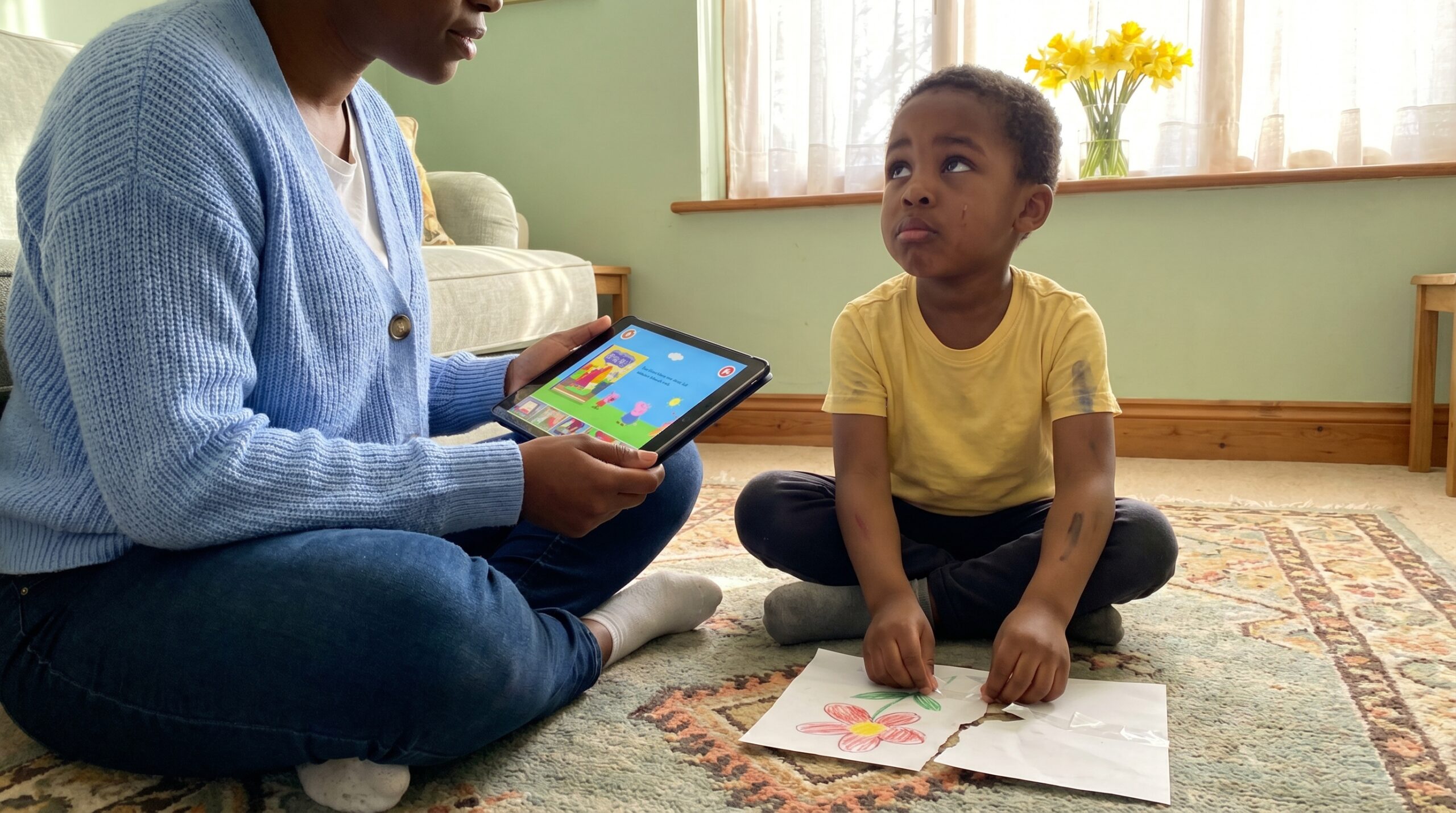
Guilt in children is a small, sharp feeling that tells them they hurt someone or broke a rule. Often it signals empathy and a readiness to repair. Healthy guilt nudges action. Unhealthy guilt lingers and shrinks joy. Research shows that guilt is not just an emotional experience; it has identifiable neural correlates in the brain. A voxel-based meta-analysis published in Brain Sciences found that specific brain mechanisms are activated when experiencing guilt, which is crucial for understanding its emotional impact on children.
Guilt in Children: What it Does
Guilt is an interpersonal moral emotion. In simple terms it points to a specific behavior: I did something wrong. Its main purpose is repair. When children feel guilt they often say sorry, try to fix things, and reconnect. This loop supports relationships and growing responsibility. Moreover, guilt can be complex and is often intertwined with other mental health issues. For instance, a systematic review published in 2024 highlighted the pervasive nature of guilt in conditions like obsessive-compulsive disorder (OCD) and depression, indicating that guilt can significantly affect emotional development.
Guilt versus Shame
Guilt focuses on behavior. Shame attacks the self and leads to hiding or withdrawal. Remorse is guilt plus the desire to change. Parents who respond calmly and model apologies encourage reparative guilt. However, harsh responses tend to create shame instead. Interestingly, a study using fMRI found that the brain activation patterns during guilt scenarios can distinguish between different mental health conditions, such as bipolar disorder and major depressive disorder, which may inform approaches to emotional education in children facing mental health challenges.
When Guilt Appears
Basic guilt-like responses begin around ages two to three. Preschoolers build conscience and empathy. School-age children apply rules and imagine consequences. Expect age-appropriate steps.
- Toddlers can offer a quick apology and help a little.
- Preschoolers can name feelings and try a small fix.
- Older kids can problem-solve restitution and plan better choices.
A Simple Three-Step Approach
Try a tiny, mighty ritual to turn mistakes into lessons. First, calmly name the feeling and the action. For example say, “You look sorry. The cup fell and the plant spilled.” Next, encourage a brief apology plus a concrete repair. Ask, “Can you say I am sorry and help sweep up?” Finally, problem-solve and teach alternatives for next time. A pilot randomized controlled trial published in 2024 found that combining cognitive techniques with loving-kindness meditation significantly reduces trauma-related guilt, suggesting that such approaches can be beneficial for children as well.
How to Keep It Short and Sweet
Keep scripts brief and genuine. A one-line prompt often works best. For instance say, “The vase broke and Grandma is sad. You look worried. Can you say I am sorry and help put the flowers back?” Then let the child follow through.
Age-Friendly Examples
Tailor your approach to the child’s stage. Toddlers need immediate and brief cues. Preschoolers benefit from role-play. School-age kids can help with restitution and planning. Teens usually need validation of complex feelings and a chance to take responsibility without lecturing. In today’s digital age, children are also facing new forms of guilt, such as ‘AI guilt’, which includes concerns about perceived laziness and authenticity when using technology for schoolwork, as noted in a recent study.
Signs of Trouble
Watch for persistent rumination, withdrawal, physical complaints, or school refusal. If guilt is disproportionate, long-lasting, or paired with anxiety or self-harm, seek professional help.
Do and Don’t
- Do name feelings, model apologies, offer one small repair, and praise the attempt.
- Do keep exchanges calm and short.
- Don’t shame, call a child bad, or force scripted apologies.
Practical Scripts
Short scripts work best. Try lines that name the feeling, name the action, and invite a tiny repair. Keep your voice gentle and real. Then end with a soft chat about next steps.
Read or listen to a story about Guilt now: For 3-5 year olds, For 6-8 year olds, For 8-10 year olds, and For 10-12 year olds.
When a child practices apology and repair, guilt becomes a quietly brilliant nudge toward empathy. Try the tiny routine after an afternoon mishap: name it, ask for a short apology plus a small repair, and end with a soft conversation about next steps. Also explore more gentle stories on Storypie to support your family’s learning.
Get the Storypie app to hear more gentle stories about feelings today.