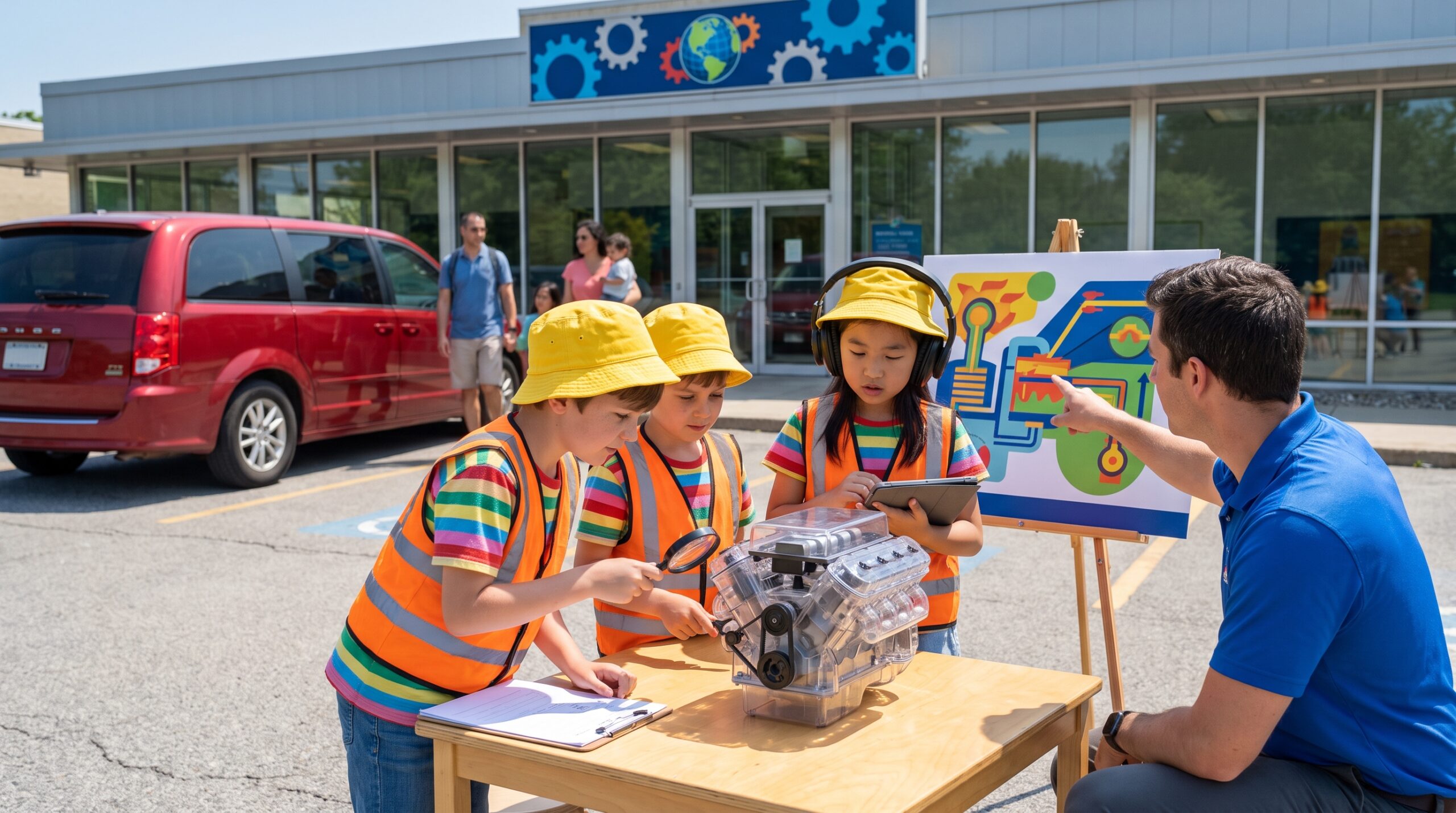
internal combustion engine for kids explained in a friendly way. Think of tiny bicycle pumps. Each pump gets a quick pop that pushes and turns. Those little pops make wheels go round. Tiny pop, big wonder.
How an internal combustion engine for kids works
Inside each cylinder a mix of fuel and air is drawn in. Then the mix is squeezed tight. Next a spark or hot air lights the mix. The tiny pop pushes a piston down. After that the piston pulls on a crankshaft. The crankshaft turns the pistons into wheel motion. For gasoline engines a spark plug is the tiny hero. For diesel engines the fuel ignites from heat alone. You can say: breathe in, squeeze, pop, blow out. In 2023, 73% of all light-duty vehicles produced in the United States were equipped with gasoline direct injection systems, a technology that injects fuel directly into the combustion chamber to enhance efficiency.
Main kinds of internal combustion engines
There are several main kinds to know. Each type works a little differently.
- Spark ignition engines. Also called Otto cycle engines. They are common in cars.
- Compression ignition engines. These are diesel engines. They ignite by pressure and heat.
- Two-stroke engines. They combine steps and tend to be lighter but smokier.
- Rotary or Wankel engines. They use a spinning triangle instead of pistons.
Parts kids can spot
Look for a few easy parts. They tell the engine story at a glance.
- Cylinder and piston
- Crankshaft and valves
- Spark plug or injector
- Exhaust and radiator for cooling
- Oil to keep parts from rubbing raw
Short history of the internal combustion engine
Early inventors built the first practical engines. Étienne Lenoir made an early gas engine. Nikolaus Otto then made the four-stroke idea practical. Karl Benz, Gottlieb Daimler, and Wilhelm Maybach brought engines into everyday life. Rudolf Diesel later invented the diesel engine. Together they helped make travel smaller, closer, and friendlier for families. The global internal combustion engine market was valued at approximately $248.6 billion in 2023 and is projected to reach $441.0 billion by 2033, showing significant growth potential in the automotive industry.
Safety and simple care
Safety is important when exploring engines with kids. Never run an engine in a closed garage because of carbon monoxide. Also keep hands away from hot exhaust parts and moving belts. Show basics like checking oil and coolant from a safe distance. Regular care helps engines last longer.
Words that explain performance
Horsepower and torque tell how strong an engine feels. Displacement and the number of cylinders show size. Many car engines are 1.0 to 3.5 liters. Common cylinder counts include 3, 4, 6, and 8. In 2023, the automotive segment accounted for 69.0% of the internal combustion engine market volume, indicating its dominant role in the industry.
Where engines are headed
Engines are getting cleaner with turbocharging and direct injection. In addition hybrids and filters help too. However electric vehicles are growing fast. So learning about engines teaches both history and the future. For instance, in 2022, petroleum combustion from internal combustion engines accounted for 46% of U.S. energy-related CO₂ emissions, totaling 2,260 million metric tons, highlighting the environmental impact of these engines.
Quick activities to try
- Listen for the pop and count cylinders from outside the car at a safe distance.
- Ask: Which part makes the pop? Answer in one sentence about the piston and spark plug.
- Draw a simple four-step picture: intake, compression, pop, exhaust.
Read or listen to a story about Internal Combustion Engine now: Read or listen to a story about Internal Combustion Engine now: For 3-5 year olds, For 6-8 year olds, For 8-10 year olds, and For 10-12 year olds.
Finally, an internal combustion engine is a neat mix of science and sound. It makes a great springboard for curiosity. Celebrate the tiny spark plug, a little hero. Keep asking Why and How. For more kid-friendly stories and tracks, visit Storypie.