Iron ore for kids turns a plain rock into a tiny hero. In this short, tactile guide you will find bright facts, simple science, and playful details to spark curiosity.
Iron Ore for Kids: What is it?
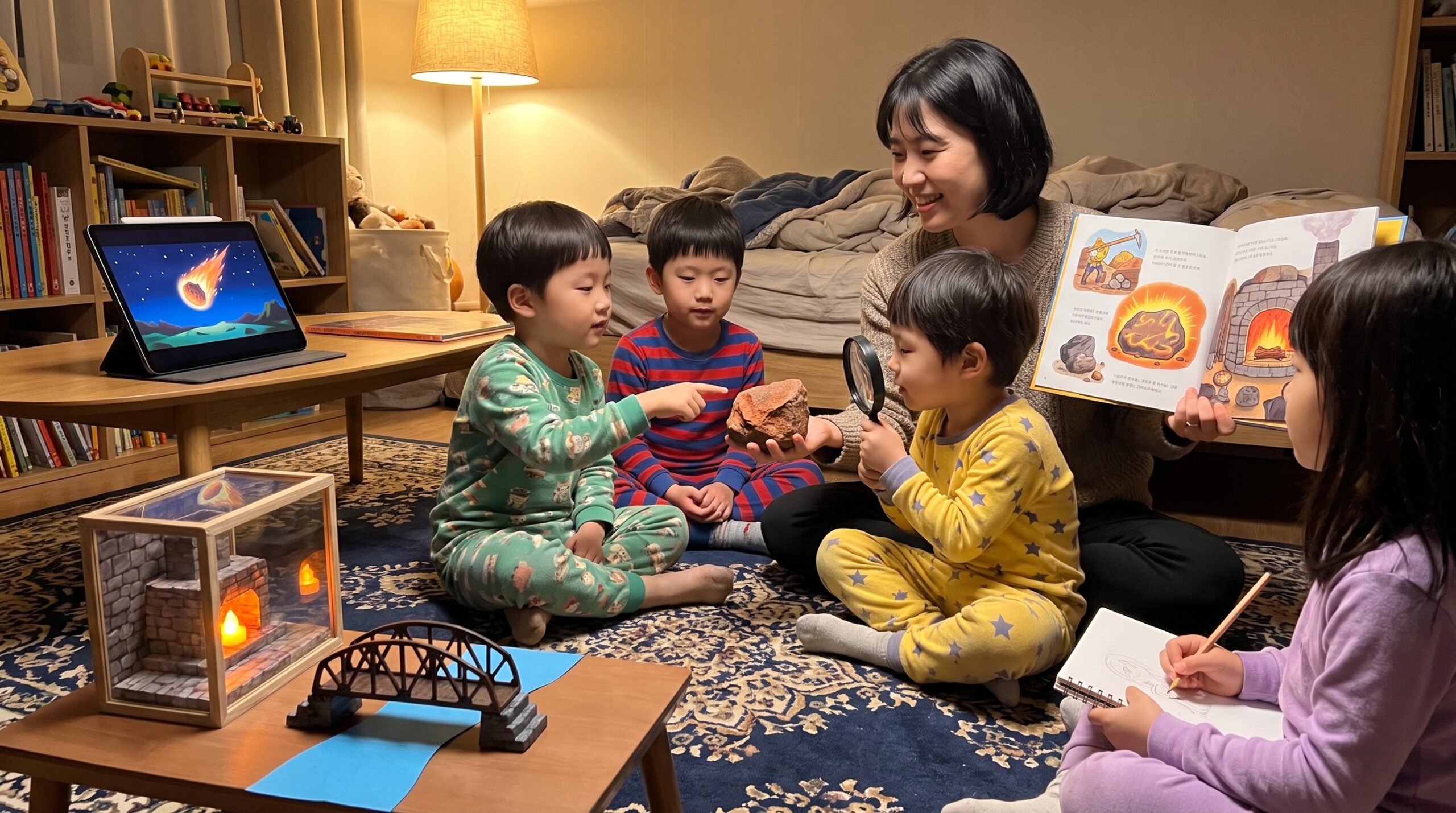
Iron ore is rock or mineral that people turn into metallic iron. Most iron hides in oxides and hydroxides such as hematite, magnetite, goethite, and limonite. For example, hematite looks reddish brown and can shine like rusty treasure. Magnetite is black and strongly magnetic. Goethite and limonite look yellowish to brown and feel earthy. A single reddish flake can feel like a tiny prize.
How iron ore forms
Long ago, seas, volcanic vents, and hot springs concentrated iron. Over time, weathering and chemistry pulled iron from water and laid down thick beds. As a result, some deposits are billions of years old. Also, meteorites carried metallic iron to Earth. Before people learned smelting, they sometimes used that space iron for tools, such as Tutankhamun’s famous dagger.
A quick history touch
Around 1200 BCE people learned to smelt iron from ore. Later, iron and steel replaced bronze because they were stronger and cheaper. In the 19th century, the Bessemer process let factories make steel at mass scale. Today furnaces melt iron and reshape it into buildings, cars, bridges, and tools.
Mining and processing
Miners find large deposits with open pit methods. They use underground mining for smaller or deep deposits. Then they crush, wash, and separate ore by magnetic or gravity methods. This cleaning process is called beneficiation. Next, the cleaned ore becomes sinter or pellets for furnaces.
- Crush the ore
- Wash and separate minerals
- Form sinter or pellets
- Smelt in blast furnaces
In a blast furnace, workers use coke and limestone to remove oxygen. The result is molten pig iron. Then plants convert pig iron into steel in other furnaces.
Where iron ore matters
More than 98 percent of mined iron ore becomes steel. Steel builds houses, playgrounds, ships, cars, and tools. In 2024, global production of iron ore reached an estimated 2.5 billion tonnes, representing a 1 percent decline from 2023. Australia was the largest producer at 930 million tonnes, accounting for 37.2 percent of the global total, highlighting its significant role in the market, according to Natural Resources Canada. China, India, and Russia also produce lots of ore. Higher grade ores contain more iron and need less processing.
People and planet
Mining changes landscapes and uses water and energy. Also, large sites can make dust and tailings. Steelmaking that uses coal creates CO2. The good news is recycling scrap steel saves ore and energy. New technologies like electric furnaces and hydrogen-based reduction aim to cut emissions.
Hands-on science for little explorers
Try small, safe activities at home with adult supervision. These tests bring iron ore to life for curious kids.
- Magnet test: try a magnet on different rocks. Magnetite will jump. Delightful and simple.
- Rust experiment: put a nail in plain water and another in salty water. Watch rust form over days with adult help.
- Sort your finds like an explorer. Look for color, weight, and magnetism.
Where to go
Visit a local science museum, a mineral show, or a rock shop. Field collecting is fun where rules allow it. Also, read or listen to a story about Iron Ore now: Read or listen to a story about Iron Ore now.
Read or listen to a story about Iron Ore now: For 3-5 year olds, For 6-8 year olds, For 8-10 year olds, and For 10-12 year olds.
Why iron ore matters to families
Iron ore connects a rock you can hold to the steel that shapes daily life. Ask one small bedtime question and you may open a wide door to wonder. Tiny rocks, big stories. Happy exploring, little geologists!
Learn more at Storypie for friendly stories and listening options for kids.