
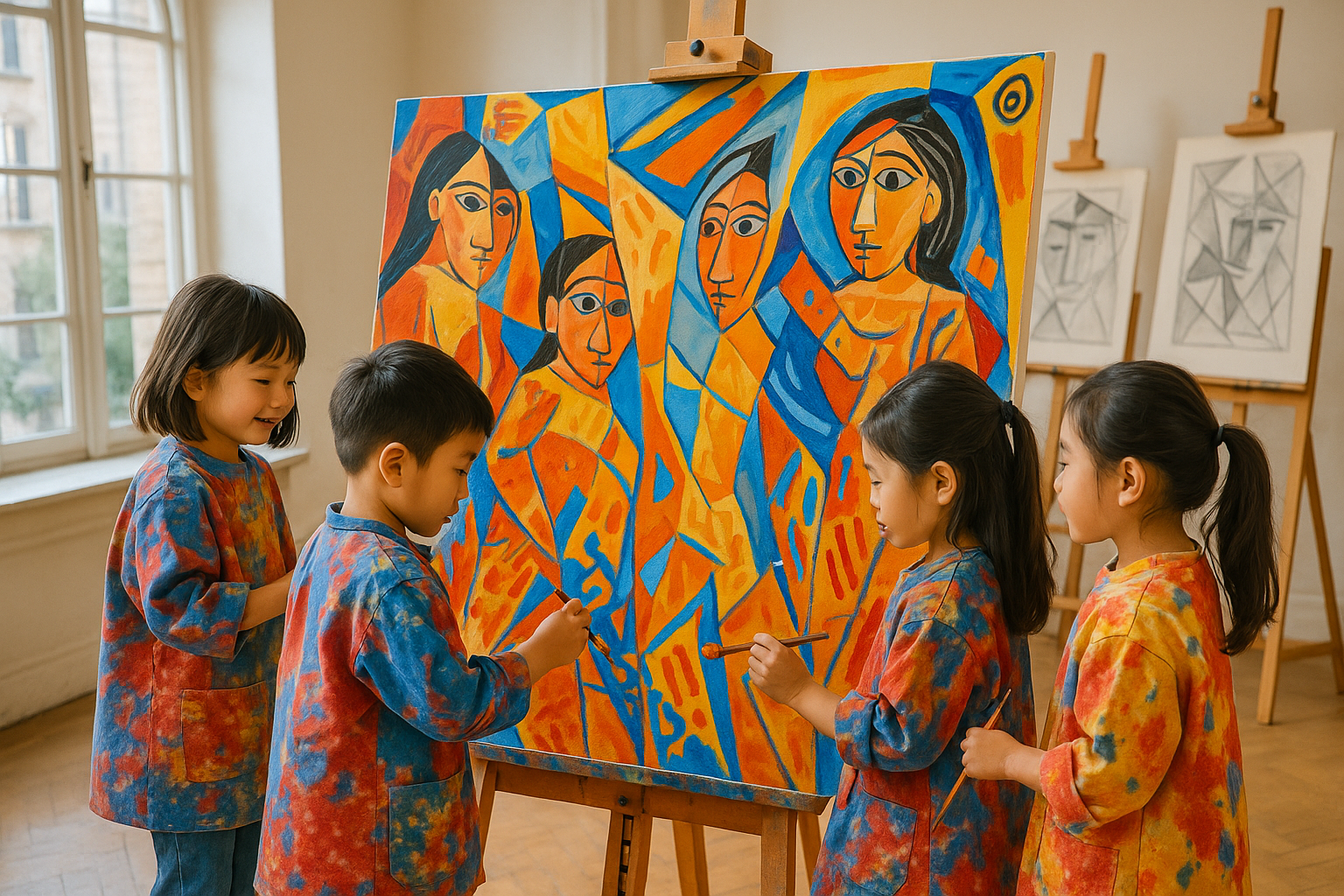
Discovering Les Demoiselles d’Avignon
Imagine stepping into a lively room filled with colors and shapes you’ve never seen before. This is the world of Les Demoiselles d’Avignon, a painting by Pablo Picasso that changed the art world forever. Painted in 1907 when Picasso was only 25, this daring artwork broke all the old art rules. Instead of painting people realistically, Picasso used sharp, geometric shapes and mask-like faces inspired by African tribal masks and ancient sculptures. This mix gave the painting a wild and exciting energy.
The Story Behind the Name and Faces
The painting’s name comes from a street in Barcelona, not a distant French city. It shows five women who might be prostitutes, standing with confidence and a hint of challenge. The massive canvas—almost 8 by 7 feet—surrounds you with powerful shapes and bright colors. Picasso captures many sides and angles of his subjects all at once, unlike traditional paintings that show only one view. This bold approach gave birth to Cubism, an art movement that changed how artists express their ideas.
The Birth of Cubism in Les Demoiselles d’Avignon
By showing multiple perspectives in one image, Picasso invited artists everywhere to see differently. At first, many friends and art critics were shocked or puzzled by the painting’s wild style. But this shock is what makes Les Demoiselles d’Avignon so remarkable. It opened new doors for creativity that still inspire artists today.
Why Les Demoiselles d’Avignon Matters for Kids and Parents
This painting is a fantastic way for kids and parents to explore big ideas about creativity. It helps us see the world with fresh eyes and understand that art can be more than just pretty pictures. Plus, it reminds us how cultures from around the world inspire amazing creativity.
Curious to explore more? Read or listen to a story about Les Demoiselles d’Avignon now:
This playful journey sparks young imaginations and deepens understanding of art’s power to make us dream and think bigger.