
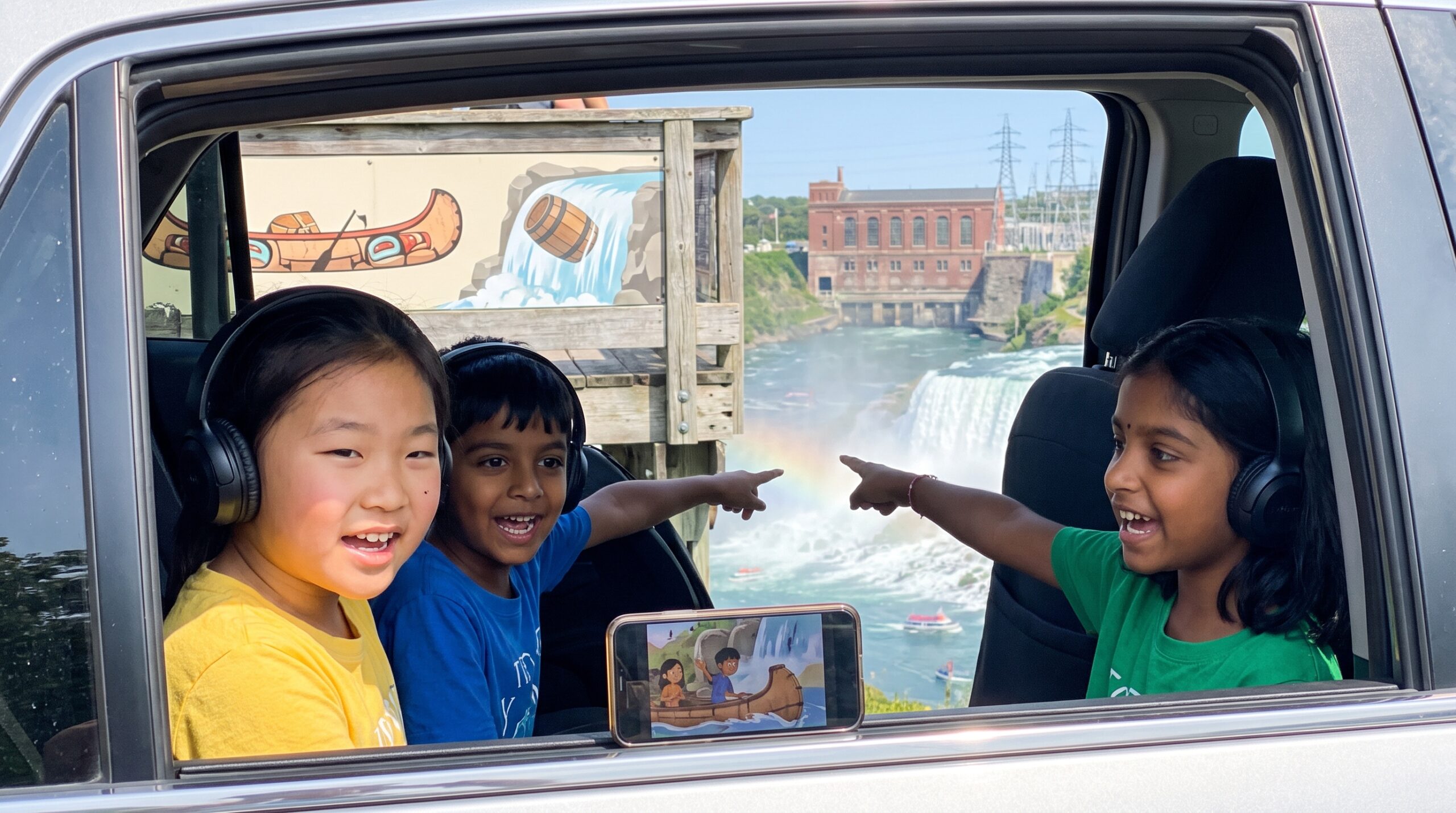
Niagara Falls family guide: kids gasp, point, and ask big questions at the roaring water. The falls sit on the Canada and U.S. border. In fact, Niagara is three waterfalls: Horseshoe Falls, the American Falls, and Bridal Veil Falls. The Canadian Horseshoe Falls have a height of 180 feet (57 meters) and carry nine times more water than the American Falls, sending 6 million cubic feet (168,000 cubic meters) of water over the crest every minute during peak hours, making it a spectacular sight for families to behold according to the City of Niagara Falls.
How the falls formed
Near the end of the last Ice Age, melting glaciers carved channels through the Niagara Escarpment. Over thousands of years, softer rock wore away. As a result, the falls slowly moved upstream. That motion created the cliff faces we see today.
Quick facts kids will like
The Niagara River links Lake Erie to Lake Ontario. It is part of the Great Lakes watershed. Roughly one Olympic-size pool of water goes over the edge every second. Horseshoe Falls is about 57 meters high and nearly 790 meters wide. The American Falls are lower. Bridal Veil Falls is the smallest. During peak daytime tourist hours (April 1 to September 15), the flow over Niagara Falls must not drop below 2,832 cubic meters per second, as mandated by the 1950 Niagara Treaty. These numbers often surprise young explorers.
Indigenous and human history
Haudenosaunee and other Indigenous peoples have long cared for this land. The name Niagara comes from an Iroquoian word. European accounts appear in the 1600s. Later, 19th-century visitors helped protect parkland for future generations.
Power, parks, and daredevils
In the 1890s, Niagara became a center for hydroelectric power. Large generating complexes grew along the river, and the Niagara Power Project generates approximately 2.4 million kilowatts of electricity, enough to power about 3.8 million homes. Today, water is shared for power and tourism under international agreements. Daredevils also created a long history here. However, stunts are now illegal and extremely dangerous.
What to see and do with kids
Boat tours like Maid of the Mist or Hornblower bring families close to the spray. You will wear life vests and feel the roar. Also try tunnels and walkways that let you stand near the falls. Observation towers offer sweeping views. Small museums have hands-on exhibits that appeal to curious kids.
Practical tips for families
- Visit late spring to early fall for better weather and more boat runs.
- Use stroller-friendly paths and plan short stops for little legs.
- Bring snacks, rain jackets, and spare clothes for misty fun.
- Take photos at observation towers and riverfront walkways.
Safety and conservation
Stay on marked paths and behind rails. Parks provide staff, signs, and viewing platforms to keep visitors safe. Both countries work on water management, pollution cleanup, and invasive species control. In 2023, Niagara Falls State Park (U.S. side) received about 9.5 million visitors, while Niagara Falls, Ontario (Canadian side) welcomed approximately 12.3 million visitors according to RoadGenius. These efforts protect the river and shorelines for future kids to enjoy.
Read or listen to a story about Niagara Falls now: For 3-5 year olds, For 3-5 year olds, For 6-8 year olds, For 8-10 year olds, and For 10-12 year olds.
For more stories and kid-friendly content, visit Storypie. Play a Storypie summer story narrated by Niagara to spark curiosity on your next car ride.
Best time to visit
Late spring to early fall is the most kid-friendly time. Warm weather, frequent boat tours, and stroller paths make outings easier. Plan a picnic and short rest stops. Above all, bring a sense of wonder and some snacks. Let tiny explorers notice what a splash can teach. In 2023, visitor spending in Niagara County, NY reached US$1.08 billion—an increase of 11.7% compared to 2022—while spending in Niagara Falls, Ontario was estimated at CA$2.5 billion as reported by RoadGenius.