Petra for families: Begin with a small moment
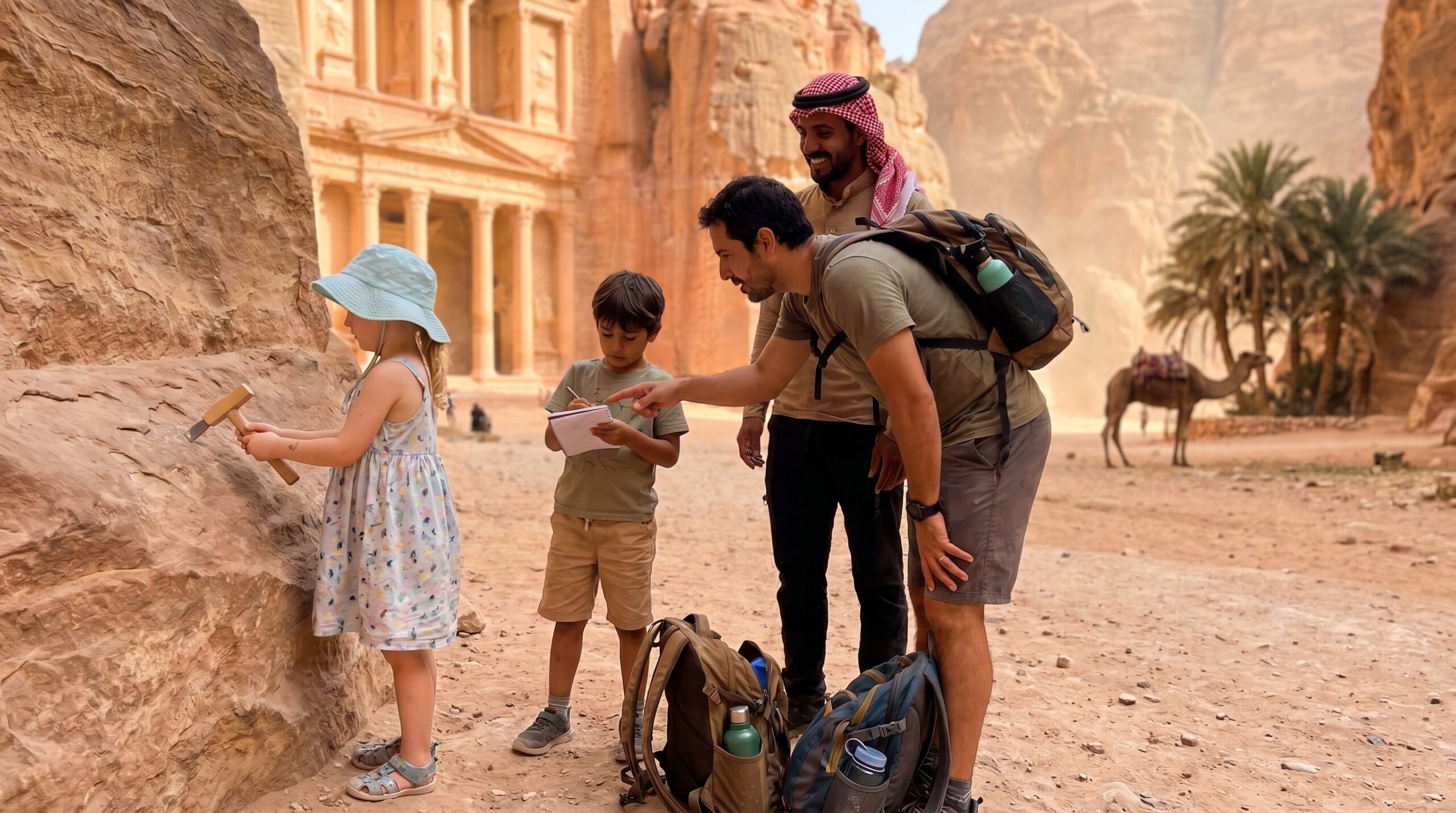
Petra for families starts with a single image. Close your eyes and picture a narrow canyon. The Siq is that hidden doorway. It winds for about a kilometer and opens to the legendary façade of Al-Khazneh, the Treasury. The stone glows pink and red. No wonder people call Petra the Rose City.
Petra for families: A short story of the place
Long ago Petra became the Nabataean capital around the fourth century BCE. The Nabataeans were clever caravan traders of frankincense, myrrh and spices. They grew Petra by controlling water and trade routes. Next, Rome annexed the city in 106 CE. Then an earthquake in 363 CE and later changes slowly emptied it. Finally, Europeans largely forgot Petra until 1812 when Johann Ludwig Burckhardt reintroduced it to the wider world. In recent years, the site has regained its popularity; in 2025, Petra welcomed approximately 582,550 visitors, marking a 27% increase from the 457,215 visitors in 2024.
What you will see
The carved façades will make jaws drop. Tombs, temples and a theatre are cut right from sandstone. The Monastery, Ad Deir, sits high above the valley. Climb the steps and then enjoy one of Petra’s grandest views. The Royal Tombs and colonnaded streets show Nabataean, Hellenistic and Roman touches. Archaeologists have found inscriptions, coins and pottery that tell everyday stories of trade and craft.
Petra for families: Ancient engineering that surprises kids
One of Petra’s cleverest ideas was its water system. The Nabataeans built dams, cisterns and channels to catch rare rain. Then they stored and moved that water around the city. Imagine harvesting a desert storm to fill a cistern. That is ancient engineering at its most practical and cool.
Practical tips for families visiting Petra
Petra sits in southern Jordan near Wadi Musa. First, plan visits in spring or autumn for milder weather. Also, expect hot summers and rainy winters. The site spreads for several kilometers and includes steep steps. Therefore bring comfortable shoes, sun hats and plenty of water. Keep children close in the Siq and near ledges. Consider a local guide for stories and context. Finally, check animal ride options for safety and welfare before you use them. In 2025, foreign visitors to Petra totaled 373,752, accounting for 64% of all visitors and representing a 45% increase from 2024. This demographic can provide families with opportunities for enriching cultural interactions during their visit.
Packing checklist
- Comfortable walking shoes
- Sun hats and sunscreen
- Water bottles and snacks
- Small first aid kit
Conservation and respectful visiting
Sandstone is soft and wears easily. Rain, salt and too many footsteps can harm carved surfaces. So teach children to stay on paths and not touch fragile carvings. Also carry out litter and leave the place as you found it. Petra is a living classroom about protecting shared places.
Quick timeline to tuck into pocket conversations
- Nabataean rise: c. 4th century BCE
- Peak: 1st century BCE to 1st century CE
- Roman annexation: 106 CE
- Earthquake: 363 CE
- Rediscovery: 1812
- UNESCO World Heritage List: 1985 (covering an area of 26,171 hectares)
Try a tiny activity with your child
Draw the Treasury in six lines. Then ask, what would you carve into rock? Record your short story. That tiny act turns a visit into a memory.
Wadi Musa has hotels, local guides and simple meals for children. Petra appears in books and films, which adds a thrilling backdrop for family imagination. Above all, enjoy the wonder and teach gentle care for this shared place.
Read or listen to a story about Petra now: For 3-5 year olds, For 3-5 year olds, For 6-8 year olds, For 8-10 year olds, and For 10-12 year olds.
Also visit Storypie for more child-friendly place stories and audio.