
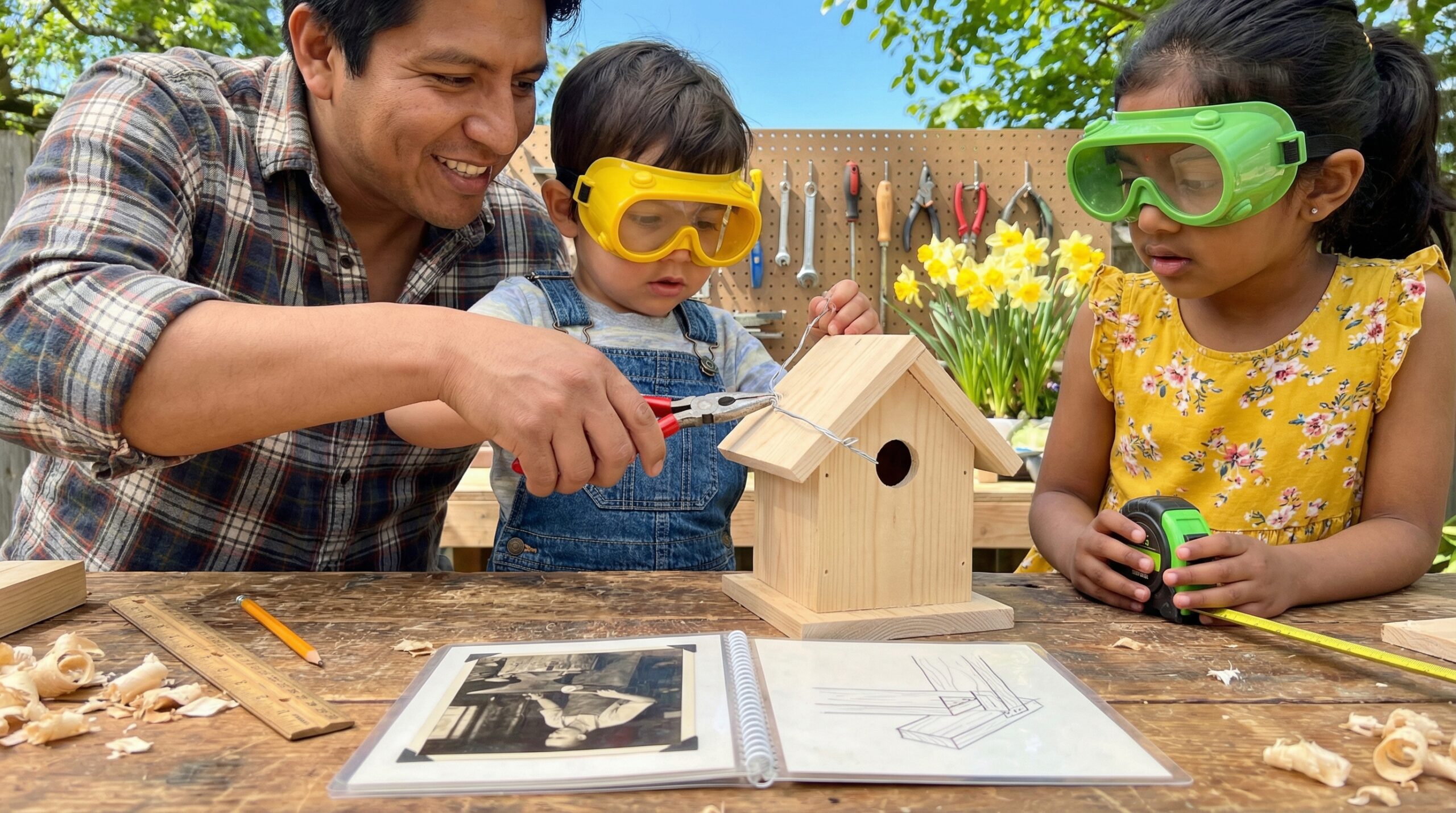
This spring afternoon Storypie shares a short, warm tale and a tiny tool lesson about pliers for kids. Pliers for kids help hands learn grip, bend, and cut with care.
Pliers for kids: A little history
Long ago, pliers began as tongs in blacksmith shops. Over time, makers made them smaller and handier for daily tasks. In 1933, Howard H. Manning improved the tongue-and-groove design. As a result, adjustable pliers became common in homes. Today, pliers live in toolboxes and craft drawers across the world. In fact, the global plier market was valued at USD 3.4 billion in 2023 and is projected to reach USD 4.8 billion by 2032, growing at a compound annual growth rate (CAGR) of 4.2% from 2024 to 2032, highlighting their economic significance in the tools and crafts sector according to Global Market Insights.
Pliers for kids: What they are and main parts
Pliers are simple hand tools. They have two handles and a pivoting head. Also, pliers grip, bend, cut, or hold things that are too small for fingers. Next, here are the main parts:
- Handles often coated for better grip.
- Pivot or rivet, the tool s hinge.
- Jaws shaped for gripping or bending.
- Cutting edge sometimes built into the jaws.
Common types and what they do
- Needle-nose: long tapered jaws for tight spots and delicate bends. Great for crafts and electronics. The global needle-nose pliers market was valued at USD 248.5 million in 2023 and is projected to grow at a CAGR of about 3.3% (2024–2032), with a 2032 forecast size of roughly USD 330.9 million, showing its popularity in various applications according to Global Market Insights.
- Slip-joint: adjustable pivot for two jaw positions. A dependable generalist.
- Tongue-and-groove: many jaw positions along a track. Ideal for odd shapes and plumbing.
- Diagonal or cutting pliers: made to cut wire neatly.
- Lineman s pliers: heavy duty for cutting and twisting wire.
- Locking pliers: clamp and hold without constant squeezing. In 2023, locking pliers accounted for approximately USD 1.5 billion in revenue and are projected to grow at a CAGR of around 3.4% from 2024 to 2032, emphasizing their financial importance within the overall plier market according to Global Market Insights.
- Round-nose and chain-nose: jewelry making and tiny loops.
Safety first with pliers for kids
Always supervise children when they use pliers. Also, wear eye protection for cutting or prying. Use the correct pliers for each job. Never use pliers as a hammer or wrench substitute. Remember, ordinary coated handles do not equal electrical safety. Only use tools certified for live work when you must handle energized circuits. Finally, a quick safety tagline for parents: Always supervise, wear eye protection, and use the right pliers for the job.
A short supervised activity to build confidence
Try reshaping a paperclip into a small hook using needle-nose pliers and soft craft wire. Keep the moment small and proud. A tiny win builds respect for tools and curiosity to try again.
- Put on safety glasses.
- Hold the paperclip with pliers near one end.
- Gently bend 90 degrees and make a rounded hook.
- Trim any sharp tip with diagonal cutters.
- Smooth edges with a file or fine sandpaper.
Care, choice, and curation
Wipe pliers clean after use. Also, oil the pivot occasionally. Store tools dry to prevent rust. Check insulated handles for cracking and replace worn tools. For a handy starter trio choose a small needle-nose, a slip-joint, and diagonal cutters. The U.S. plier market was valued at USD 700 million in 2023 and is estimated to grow at a CAGR of over 3.6% from 2024 to 2032, indicating a healthy demand for these essential tools according to Global Market Insights. Curation beats clutter: one tidy drawer with three well-maintained pliers invites safe, repeated use.
Tiny, tactile, and useful, pliers teach care and focus. Finally, enjoy the calm satisfaction of fixing something together and sharing a proud, small moment.
Read or listen to a story about Pliers now: Read or listen to a story about Pliers now: For 3-5 year olds, For 6-8 year olds, For 8-10 year olds, and For 10-12 year olds.
Also, get the Storypie app to listen and explore more simple invention stories. Visit Get the app for details.