
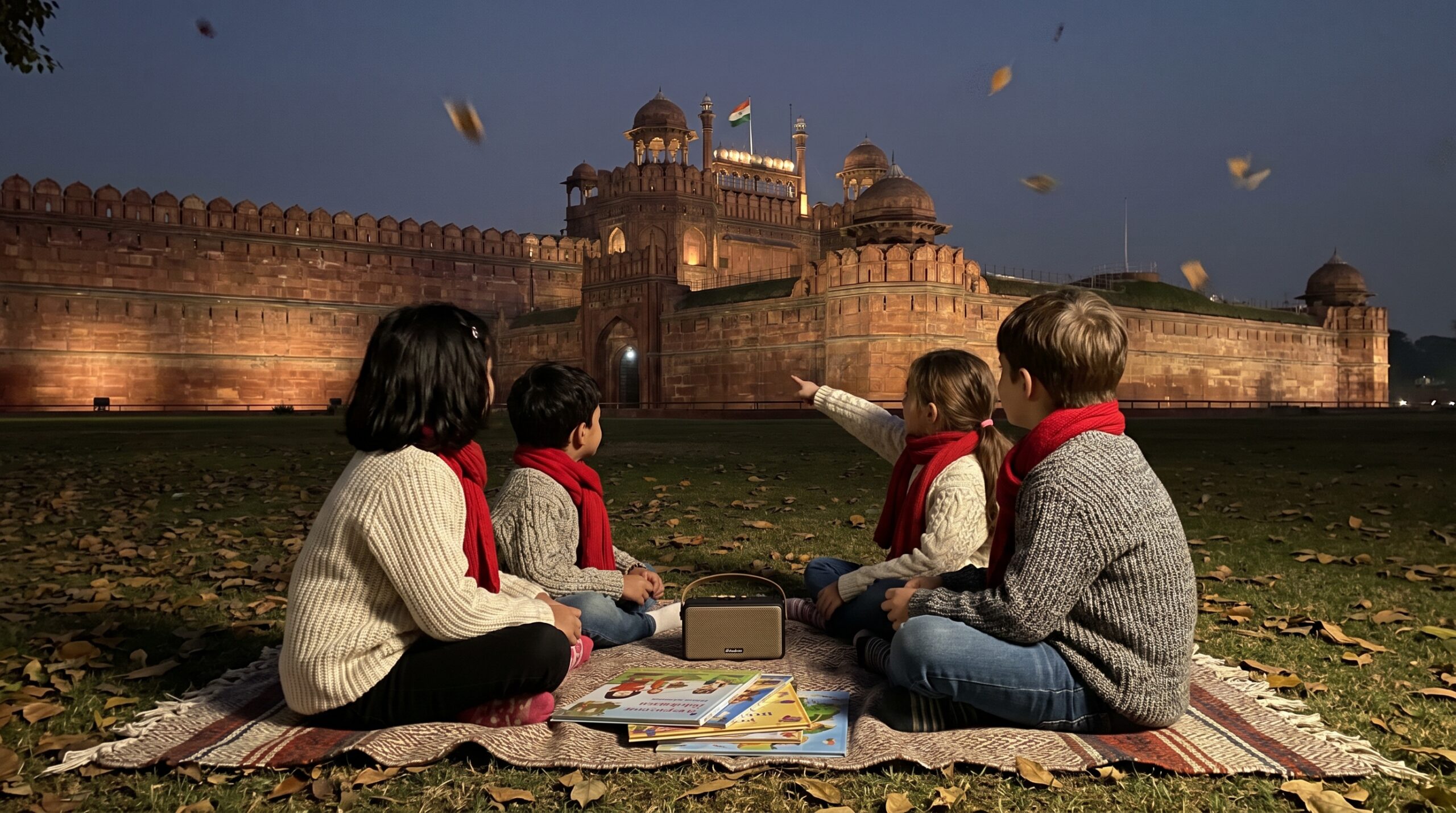
The Red Fort Delhi stands tall in Old Delhi. It is also called Lal Qila and sits in Shahjahanabad. The Mughal emperor Shah Jahan began building it around 1638, establishing it as the palace fort of Shahjahanabad, the new capital of the fifth Mughal Emperor of India. Most of the work finished by 1648. Its red sandstone walls look warm and monumental. Inside, cool gardens, water channels, carved arches, and marble halls await curious visitors.
Red Fort Delhi: Key moments in time
1638 to 1648, Shah Jahan built the fort. In 1739, Nader Shah took the Peacock Throne to Persia. In 1857 the fort became central to the Indian Rebellion. The British then used parts of the complex. On August 15, 1947, Jawaharlal Nehru raised India’s flag here for the first time. In 2026, India celebrated its 80th Independence Day at the Red Fort Complex, which has served as the site of India’s Independence Day speeches since 1947. In 2007, UNESCO named the Red Fort a World Heritage Site, recognizing its sprawling area of 49.1815 hectares, which includes a buffer zone of 43.4309 hectares. These dates give the fort a grand, living story.
What to notice on a visit
Start at Lahori Gate or Delhi Gate. Also, look for the Naubat Khana, the drum house. Imagine drums calling the court. The Diwan i Aam is a wide public hall. The Diwan i Khas once held the glittering Peacock Throne. The charbagh gardens and the Nahr i Bihisht, or Stream of Paradise, bring cool breezes and soft splashes. Children love the glowing carvings and the echo in high halls. The fort mixes royal design with simple delights.
A simple 3-step family mini tour
Step 1: Enter through Lahori Gate and count five carved arches. Step 2: Find the drum house and clap twice to pretend you announce a royal visitor. Step 3: Walk the river-facing wall and spot three water channels or fountains. This tiny treasure hunt makes the Red Fort feel playful and grand at once.
Quick family activities
- Count five carved arches and cheer.
- Pretend to be a royal guard and march for thirty seconds.
- Tell a one sentence story about a lost peacock feather.
Practical tips for families
The Red Fort sits in Old Delhi near Chandni Chowk and Jama Masjid. The nearest metro is Red Fort station. Expect security checks and some restricted areas during events. Bring water, plan for crowds, and pair the visit with a market walk. Parts of the complex house museums. Sometimes evening light and sound shows run. Also, remember that entrances can get busy on holidays. In the financial year 2024–2025, the Red Fort received 2,963,710 visitors and generated ₹175,369,076 in revenue under Archaeological Survey of India management, showcasing its popularity as a major tourist attraction.
Conservation, meaning, and memory
The Archaeological Survey of India cares for the site. Pollution, crowds, and wear need ongoing restoration. More importantly, the fort remains a living symbol of independence. The Prime Minister raises the national flag here each Independence Day. That act keeps history present and powerful for each new generation.
Read or listen to a story about Red Fort now: For 3-5 year olds, For 3-5 year olds, For 6-8 year olds, For 8-10 year olds, and For 10-12 year olds.
Explore Storypie for a ten minute audio story to spark curiosity tonight. Press play to share a short, vivid tale with your family. The Red Fort makes a perfect backdrop for wonder and questions. It mixes royal rooms, rushing water, and national memory in one warm place.