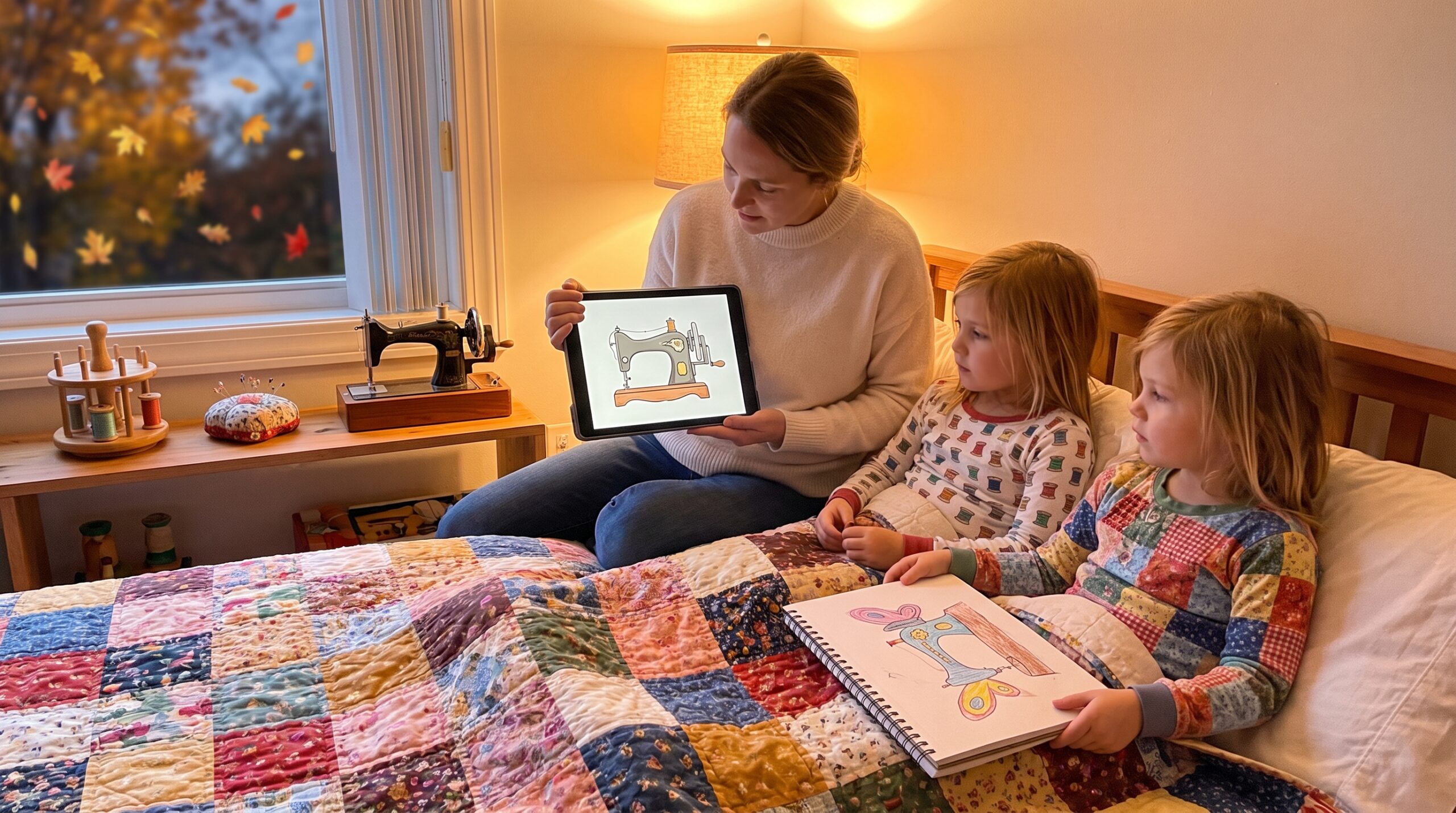
There is something quietly thrilling about a sewing machine for kids. It sparks curiosity and invites hands-on wonder. At Storypie we love how this simple tool starts big questions.
What a sewing machine is
A sewing machine joins fabric and other materials with thread. It makes neat stitches far faster than hand sewing. As a result, it helped create ready-to-wear clothing and new kinds of work. In fact, the global sewing machine market was valued at USD 4.7 billion in 2025 and is projected to reach USD 6.1 billion by 2033, showcasing the economic significance and growth potential of the sewing machine industry.
Short invention timeline
First, inventors like Thomas Saint and Barthelemy Thimonnier tried ideas. Then Elias Howe patented a practical lockstitch machine in 1846. Next, Isaac Singer added the foot pedal and smart marketing. In fact, he was granted U.S. Patent No. 8,294 for his improved sewing machine on August 12, 1851, which featured a straight vertically moving needle and a reciprocating shuttle. Together these advances moved the sewing machine into homes and factories.
Why it mattered
For families, the sewing machine cut time and lowered clothing costs. For communities, it created factory jobs, especially for women in the 19th century. By 1860, annual production of sewing machines in the U.S. had reached approximately 110,000 units, with 74 different manufacturers in operation. Today many people still use sewing machines at home and in small businesses. Notably, Singer’s company achieved a global market share of approximately 90% by 1890, making it the dominant player in sewing machine manufacturing worldwide.
How stitching works
The common home stitch is the lockstitch. One thread comes from the needle and one from a bobbin. They meet between fabric layers and lock like two friends holding hands. For decoration, some machines make a chain stitch that looks like looping links.
Parts to point out together
Make a little guessing game and name parts on a turned-off machine. Point and say each word aloud. You can keep it playful and cozy.
- Needle
- Bobbin (holds the lower thread)
- Presser foot (holds fabric in place)
- Feed dogs (pull fabric along)
- Handwheel and foot pedal or treadle
- Tension and stitch length dials
Kinds of sewing machines for kids to notice
There are many kinds of sewing machines. First, hand-crank and treadle machines move without electricity. Then electric mechanical and computerized home models add speed and features. Also, industrial machines sew very fast, and sergers finish raw edges.
Everyday uses and impact
Sewing machines helped home sewing, mending, and new businesses grow. They changed how clothes were made and who made them. The “Sewing Machine Combination,” a patent-pooling arrangement among major manufacturers, was formed in 1856 to resolve extensive patent litigation across the industry, showcasing the collaborative efforts within the sewing machine industry. Today, people still sew at home and in factories. Small shops use sewing machines to create unique items and keep traditions alive.
Safety and care for families
Always supervise children near a sewing machine. Turn it off and unplug before changing needles or parts. Keep pins and sharp tools in a closed container. For care, remove lint, change dull needles, and use correct thread and bobbins. Finally, follow the maker’s cleaning and oiling directions.
Try this together
Play a pointing game on a turned-off machine. Tell a short invented story about an idea that changed the world. Cozy up this autumn evening and share a 10-minute bedtime tale. Then ask, “What would you invent?”
Read or listen to a story about Sewing Machine now: For 3-5 year olds, For 6-8 year olds, For 8-10 year olds, and For 10-12 year olds. You can also visit Read or listen to a story about Sewing Machine now for all age versions.
For a friendly next step, explore more family-friendly inventions on Storypie.