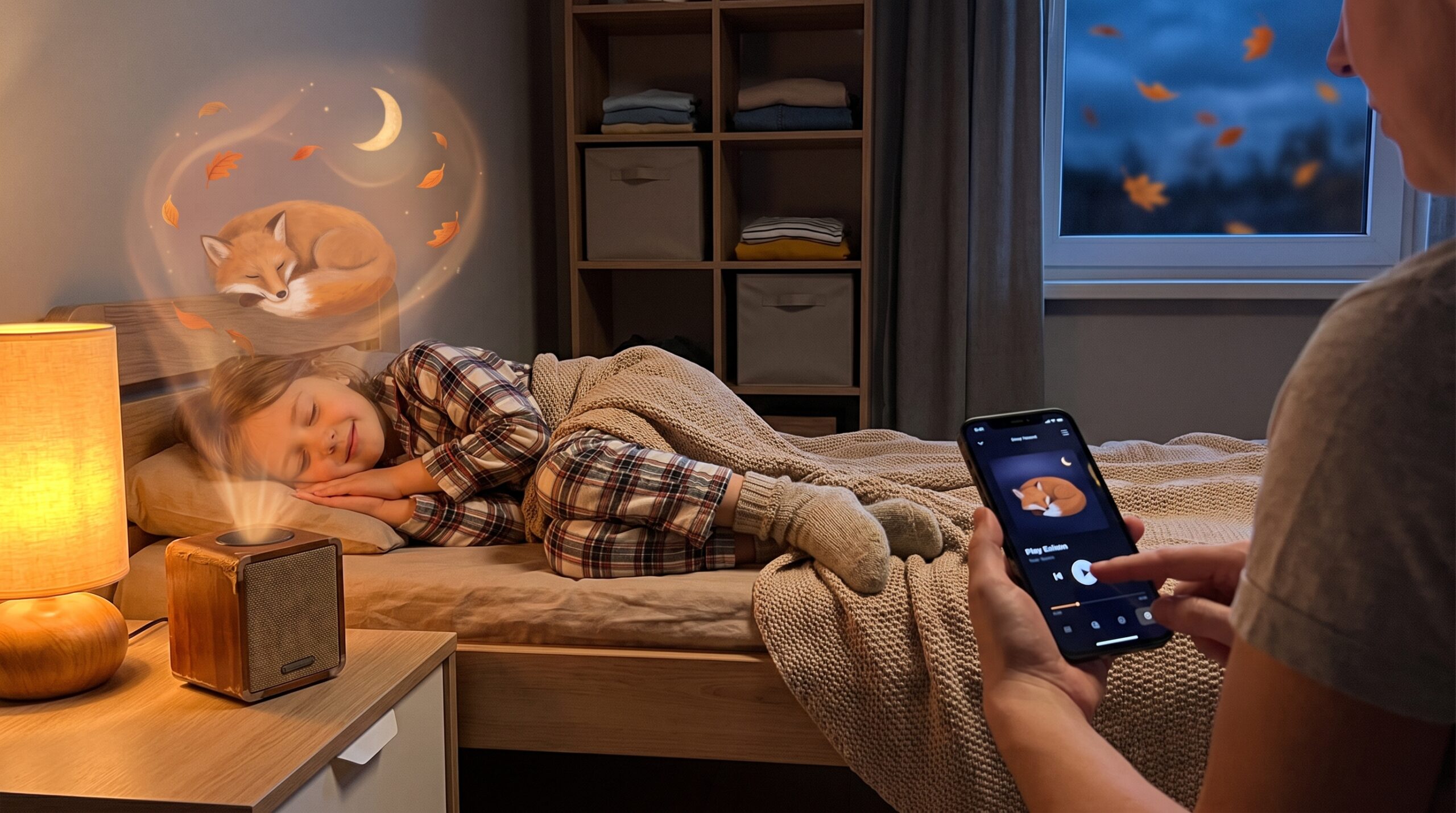
Audio first bedtime imagination makes evenings calmer and invites big inner pictures. I use this rule at home and in our product work. For parents and teachers it is simple and powerful.
Why audio first helps
Listening removes visual decoding and screen noise, so working memory can focus on meaning. Consequently, children use that freed capacity to build mental images. Also, spoken stories activate the verbal system and invite kids to imagine scenery, voices, and small details. In fact, a 2024 study found that viewers reported significantly higher cognitive load when watching subtitled videos without sound, suggesting that audio can significantly reduce cognitive load compared to visual-only formats.
Three quick reasons it works:
- Lower load: No visual decoding means more space for plot and feelings.
- Bigger pictures: Kids craft images that deepen memory and creativity.
- Better listening: Regular listening builds vocabulary and narrative sense. A 2024 report from Edison Research revealed that 47% of the U.S. population aged 12 and older had listened to a podcast in the past month, highlighting the growing popularity of audio formats.
Practical timing, safety, and routines
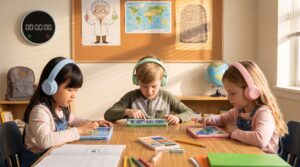
Short, well paced pieces of 10 to 20 minutes match young attention spans. For example, a 15 minute Storypie tale fits most bedtime routines. In addition, audio does not emit blue light and often eases the transition to sleep.
Be mindful though. Too exciting stories late at night can backfire. Also, keep volume safe and avoid headphones for little ones while they sleep.
Try it tonight
Dim lights, cue a short tale, and listen without screens. Then breathe together and enjoy the hush. After the story, ask one simple question: “What did you picture?”
- Pick a calming Storypie bedtime pick from our collection: Storypie.
- Set a 15 minute limit and stick to it.
- Keep narration slow and clear. Pause for effect.
Why I love audio first bedtime imagination
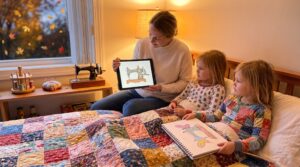
It builds tiny rituals and reduces evening friction. Also, it supports early readers and children who find decoding hard. At our place my daughter often draws big pictures after a short tale. She can describe whole scenes from a single line of narration. Research from Cognitive Research: Principles and Implications supports this idea, reporting that in multimedia learning, presenting audio-only information can reduce extraneous visual load, supporting higher cognitive efficiency.
If you want a gentle nudge, explore Storypie for picks and routines. Try audio-first for a week and notice whether evenings feel calmer and imaginations grow. Above all, remember that audio-first stories complement reading, they do not replace it.