
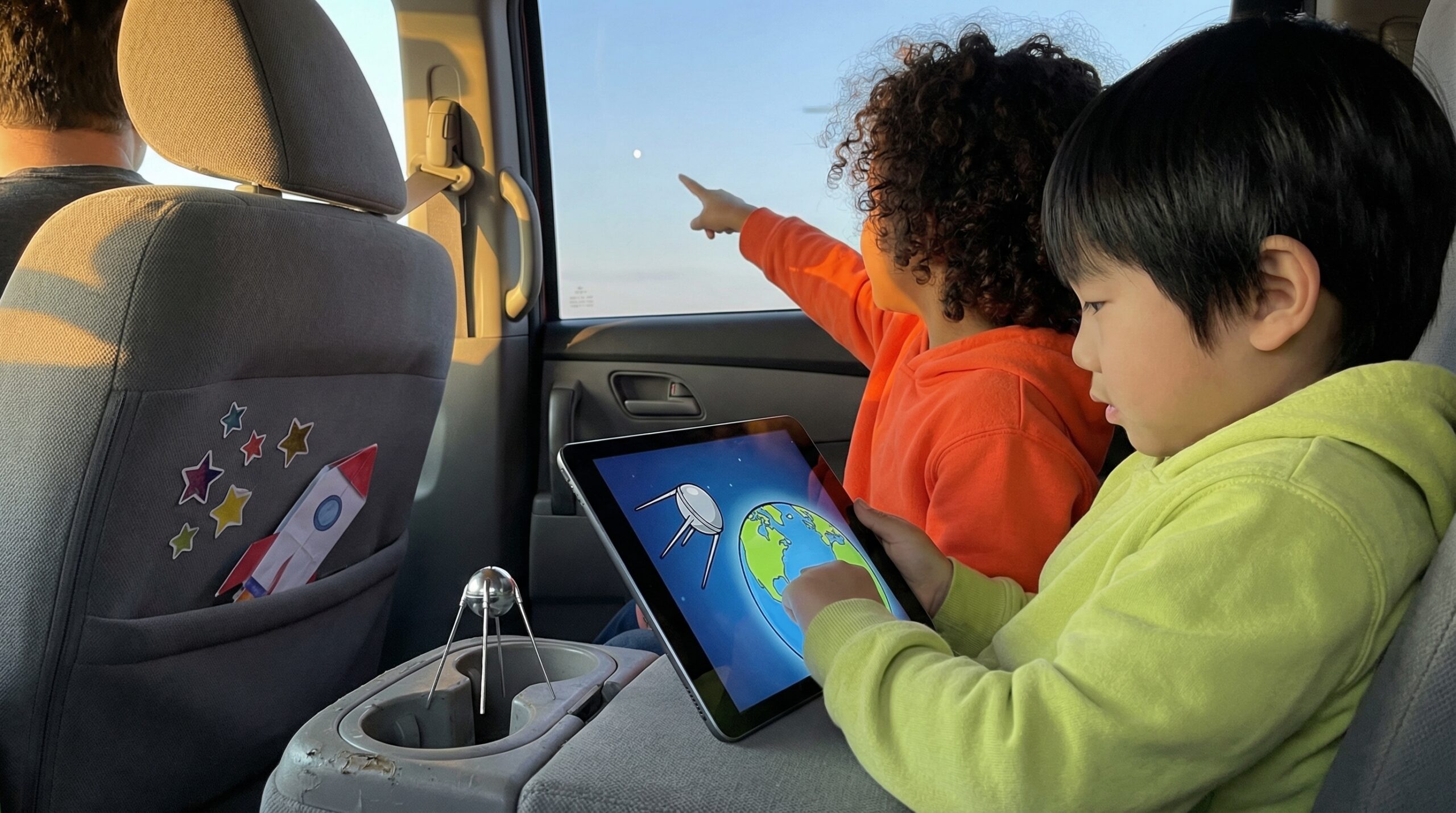
Satellite for kids feels like a tiny helper above our heads. Right away, the phrase sparks wonder and curiosity. Also, short stories and soft images make the idea easy to enjoy.
What is a satellite for kids?
Some satellites are natural, like our Moon. Others are human made machines that circle Earth. For example, Sputnik 1 began it all on October 4, 1957. It weighed about 83.6 kilograms and sent a steady radio beep. That beep felt small and enormous at the same time. Today, as of January 16, 2026, approximately 14,200 satellites are still functioning in Earth’s orbit, showcasing the incredible growth and utility of these machines.
How satellites stay up
Think of throwing a ball so fast the ground curves away beneath it. Gravity pulls. Yet forward speed keeps the ball falling around Earth instead of into it. That balance is orbit. In Low Earth Orbit, things zip around every 90 to 120 minutes.
Common orbits and where things live
- Low Earth Orbit: satellites and the International Space Station.
- Medium Earth Orbit: navigation systems like GPS.
- Geostationary Orbit: satellites that seem to hang above one spot.
- Highly elliptical orbits: stretch far out and return close for special jobs.
What satellites do
Satellites work quietly and help our daily lives. For instance, they:
- beam communications for TV and internet,
- guide cars and phones with navigation,
- watch clouds and storms for weather reports,
- help farmers and rescue teams with Earth observation,
- carry science instruments to study space,
- and sometimes become big, habitable space stations.
Sizes, launches, and lifetimes
Satellites range from huge telescopes to tiny CubeSats. For example, a 1U CubeSat is about 10 by 10 by 10 centimeters. Often it weighs close to one kilogram. Rockets launch satellites into orbit. In 2024, a record 259 launches deployed 2,695 satellites into Earth orbit, with the U.S. launch market share increasing to 65%. Sometimes the International Space Station releases small craft.
Lifetimes vary. Some satellites work for months. Others last decades. At end of life, satellites may re-enter to burn up, move to a higher graveyard orbit, or be safely passivated. Space debris can cause damage, so careful plans matter. Currently, space surveillance networks track about 35,000 human-made objects in Earth orbit, including approximately 9,100 active payloads and around 26,000 tracked debris objects larger than 10 cm.
Everyday magic and family rituals
Satellites quietly make family life easier. For example, they help with navigation on road trips and with weather forecasts for muddy picnics. They also support phone calls in far places and aid in emergency rescues.
Try a tiny ritual. Before a car trip, press play and listen to a short space story together. Also, watch for the International Space Station from your backyard. Make a small basket with a flashlight, a sky map, and a notebook for “one bright thing we saw.” These tiny acts turn wonder into memory.
Read or listen to a story about Satellite now: For 3-5 year olds, For 3-5 year olds, For 6-8 year olds, For 8-10 year olds, and For 10-12 year olds.
Also, listen on the Storypie app for tiny beeps and big skies. These short listening moments spark smiles and questions.
Satellites for kids are small miracles. They feel friendly, useful, and full of wonder. Enjoy the sky together.