
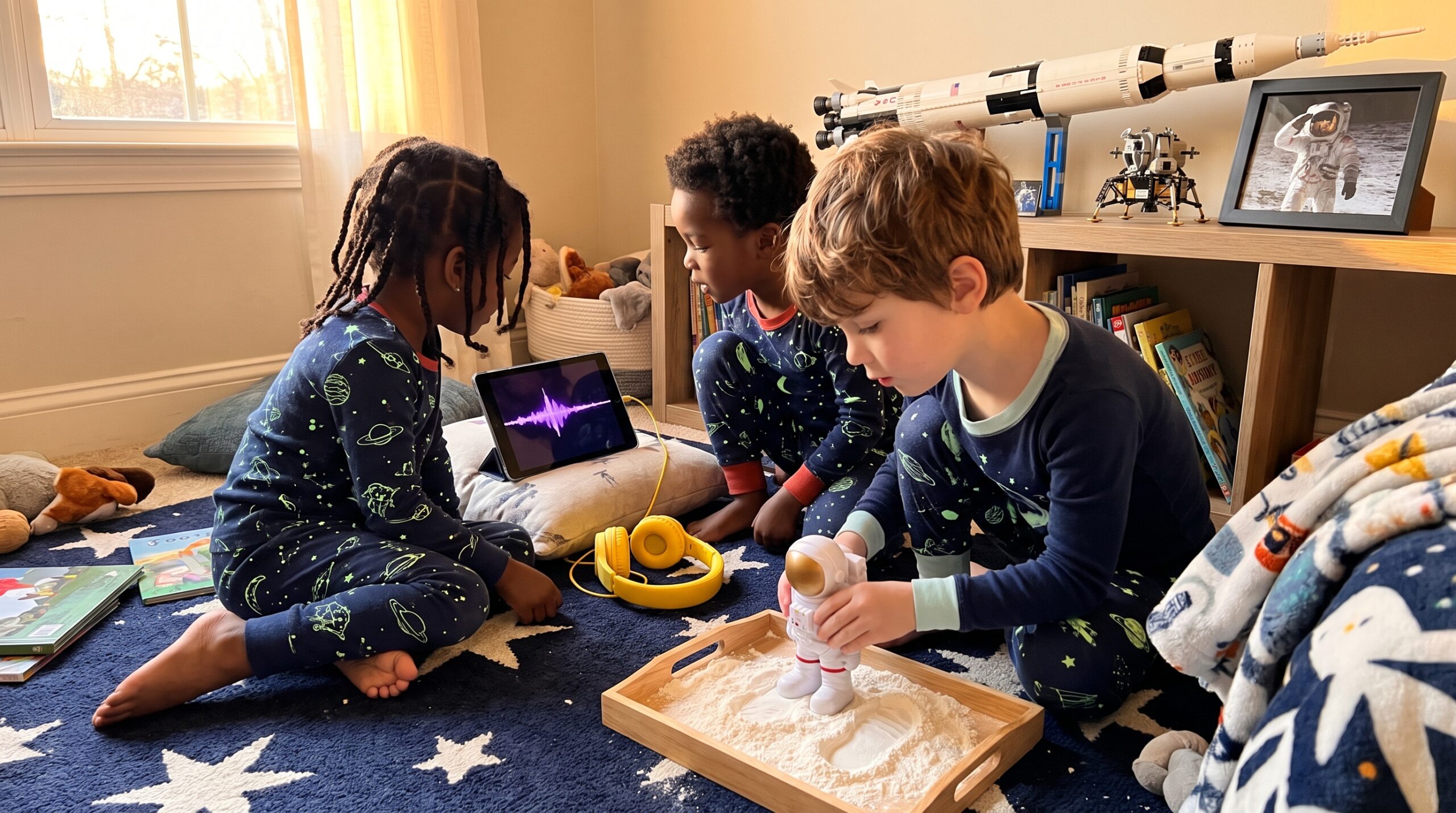
The space race for kids can feel like a grand adventure. In short, the Space Race was a Cold War contest between the United States and the Soviet Union. It ran from the late 1950s through the early 1970s and filled classrooms and imaginations with wonder. Today, the legacy of that competition continues, as in 2023, the United States led the global space race by conducting 109 out of a record-high 210 orbital launches, surpassing the Soviet Union’s previous record of 108 launches in 1982.
Space Race for Kids: Key milestones
First, on October 4, 1957, the Soviet Union launched Sputnik 1. That tiny satellite amazed the world. Next, Soviet Luna probes reached the Moon in 1959 and sent back first photos of the far side.
Also, Yuri Gagarin became the first human in space on April 12, 1961. The United States then responded with Mercury and Gemini missions. Those missions tested orbit, spacewalks, and rendezvous skills. As of November 7, 2023, a total of 676 people have journeyed to space, with 86% completing at least one orbit around Earth.
Finally, Apollo led to Moon landings. Apollo 11 launched July 16, 1969, landed July 20, and splashed down July 24. The last Apollo Moon visit was Apollo 17 in December 1972.
Why nations raced to space
Politics and prestige mattered. Also, military and scientific goals were linked. Because of that, nations invested heavily in rockets, spacecraft, navigation, and early computers. NASA’s annual budget rose from $500 million in 1960 to a peak of $5.2 billion in 1965, representing 5.3 percent of the total U.S. federal budget at that time.
Notable rockets included the Soviet R-7 and the American Saturn V. In 1967, nations agreed the Outer Space Treaty. This treaty aimed to keep space peaceful and opened doors for later cooperation.
How a Moon landing worked
First, a heavy rocket launched the spacecraft into Earth orbit. Then a translunar burn sent the ship toward the Moon. In lunar orbit, a smaller module separated and descended to the surface.
Astronauts walked and collected rocks. Next they lifted off, docked with the command module, and returned to Earth. Each step required exact math and brave people. It sounds like a bedtime adventure, and yet every step had real risk.
People behind the missions
Famous names are easy to spot: Neil Armstrong, Buzz Aldrin, Michael Collins, and Yuri Gagarin. However, many heroes worked behind the scenes.
- Engineers and technicians
- Tracking teams and flight controllers
- Mathematicians like Katherine Johnson
These teams turned ideas into rockets and radios. Without them, Moon landings would not have happened.
Risks, legacy, and wonder
The Space Race involved real loss. For example, Apollo 1 suffered a fatal cabin fire in 1967. Soyuz 1 also cost a life that year. Apollo 13 faced an in-flight explosion in 1970, yet returned safely because teams worked quickly and bravely.
Its legacy lives on. Satellites guide navigation, monitor weather, and help farmers. In 2023, the global space economy was valued at approximately $630 billion, with projections estimating it could reach $1.8 trillion by 2035. Museums and visitor centers keep artifacts and stories alive for tiny explorers and grown-ups alike.
Read or listen to a story about Space Race now: For 3-5 year olds, For 6-8 year olds, For 8-10 year olds, and For 10-12 year olds.
Play Neil Armstrong’s 10-minute tale. To listen, get the app at Storypie. It is a gentle spark for moon-sized curiosity.
Final thought: the Space Race mixed competition with inspiration. For families, it offers vivid stories, simple science, and lasting wonder. Point to the Moon, ask questions, and let imagination lift off.