The Starry Night painting by Vincent van Gogh bursts with color and motion. He painted it in June 1889 during his stay at the Saint-Paul-de-Mausole asylum in Saint-Rémy-de-Provence, France. The work uses oil on canvas and measures about 73.7 cm × 92.1 cm (29.0 in × 36.3 in). Today many children first meet the painting online or at the Museum of Modern Art in New York, which attracts over 3 million visitors annually, with the painting being a major draw.
What you see in The Starry Night painting
Look for a swirling night sky, big bright stars, and a glowing moon. A dark cypress tree rises from a quiet village. Van Gogh used thick paint and short rhythmic strokes to make the sky feel alive. The main colors are deep blues and bright yellows, with warm earthy tones in the houses. The village in the painting is imagined, not a photo. That imaginative mix creates much of the painting’s charm and mystery.
Why the painting feels like a story
The Starry Night painting often feels like a tiny drama. Some people see hope. Others feel turbulence. Many viewers read both feeling at the same time. Van Gogh painted from memory and imagination more than from a window view. The heavy texture, called impasto, makes the stars seem to move. Children often want to trace the swirls with a finger or crayon. That playful urge makes the work feel friendly and alive. Recent research published on September 17, 2024 analyzed the painting’s swirling patterns, finding they align with Kolmogorov’s theory of turbulence, which connects art with science, providing a unique perspective on the painting’s composition and its relevance today.
Short facts for curious kids
- Vincent van Gogh painted about 150 works while at Saint-Rémy.
- He wrote often to his brother Theo about night skies and color.
- The Starry Night belongs to Post Impressionism and points toward Expressionism.
- The painting has been part of the Museum of Modern Art’s permanent collection in New York City since 1941.
- Van Gogh created at least four major night-themed works featuring stars, including “The Starry Night” (1889) and “Starry Night Over the Rhône” (1888).
Because the painting shows feeling more than a copy of reality, it remains one of the most loved works in modern art. The Starry Night painting inspires questions and quiet wonder in children and grownups alike.
Read or listen to a story about The Starry Night now: For 3-5 year olds, For 6-8 year olds, For 8-10 year olds, and For 10-12 year olds.
Hands-on ideas to bring The Starry Night painting to life
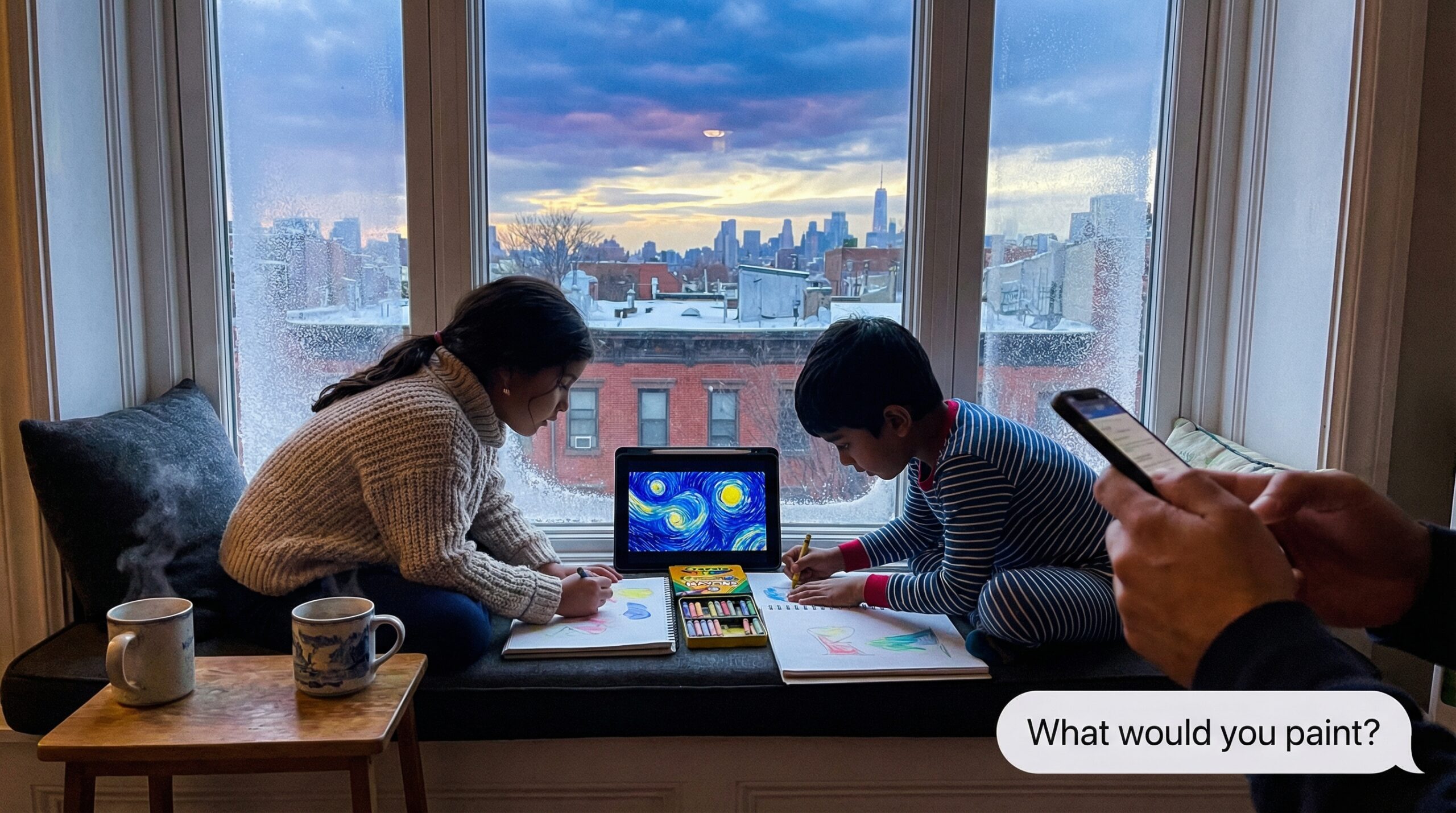
Try these quick activities at home or in the classroom. Recreate the swirling sky with tempera, crayons, or finger paint. Use short brushstrokes to notice how texture changes the look. Ask simple questions like What do you notice first, the sky or the tree? or How does the painting make you feel? These prompts invite conversation and creative play.
At Storypie, we tell The Starry Night from the painting’s view. We show how Van Gogh turned wonder into hope and how the painting found a home in New York. For a cozy moment, listen together and ask What would you paint? Then draw one small bright star and name it aloud.
Final thought
The Starry Night painting sparks small brave questions and big gentle conversations. It is both a masterpiece and a friendly invitation to wonder. For easy listening and playful prompts, try the Storypie app and bring audio narration to your next family art moment. Visit Storypie for details.