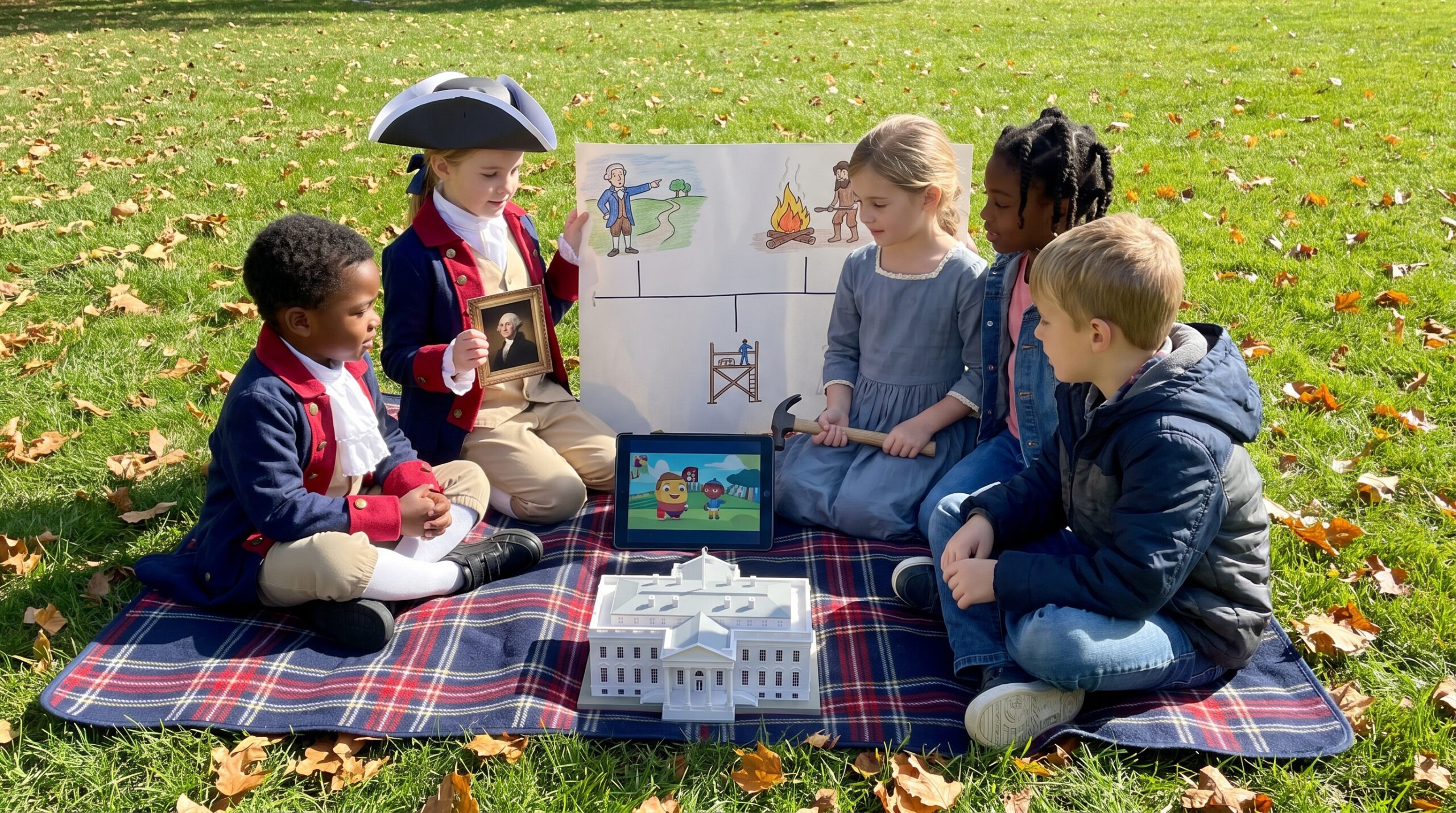
The White House for kids feels like a giant dollhouse with grown-up jobs. In this cozy guide, children meet rooms, moments, and a tiny bedtime activity to try tonight.
The White House for Kids: Quick timeline and early history
Workers laid the cornerstone in 1792. James Hoban, an Irish-born architect, won the design contest. His plan nodded to Leinster House in Ireland.
Then John and Abigail Adams moved in by 1800. George Washington chose the site, but never lived in the finished house.
In 1814 British troops damaged parts of Washington during the War of 1812. Dolley Madison saved a famous portrait of George Washington before she left.
Afterward James Hoban led repairs and crews painted the walls white. That look helped the name stick: The White House.
Also, from 1948 to 1952 President Truman rebuilt the unsafe interior. He kept the familiar outside. The Truman Balcony came later.
What is The White House for kids?
The White House is the President’s home and office at 1600 Pennsylvania Avenue NW, Washington, D.C. It holds family rooms, guest rooms, and West Wing offices.
The Oval Office sits in the West Wing. The State Floor hosts big ceremonies and parties. Kids often picture a favorite armchair for bedtime stories.
Rooms, numbers, and small wonders
The White House has about 132 rooms—including 16 family-guest rooms—and 35 bathrooms. It spans approximately 55,000 square feet across six floors, and rises across those floors with around 28 fireplaces. According to the White House Historical Association, it also features about 412 doors, 147 windows, eight staircases, and three elevators.
Also, the grounds measure roughly 18 acres, enclosed by a fence. Gardens include the Rose Garden and the Jacqueline Kennedy Garden.
Pets sometimes live at The White House, which always delights children. For many families, that is the most charming fact.
Famous moments and people
Dolley Madison stands out as a hero for saving the Washington portrait. Later presidents changed and added rooms to fit new needs.
In 1901 the house took the official name The White House. Over time the home grew into a living museum with art and historic furniture.
Visiting tips and a simple activity
Tours are real but you must request them ahead. U.S. residents ask through a member of Congress. International visitors work with their embassy.
Bring ID and check rules on official sites before you go. Also, expect security procedures and limited items on tours.
Activity idea: Make a six-sentence story together. Try problem, an attempt, an oops, a fix, a small celebration, and a quick drawing. Then ask, Which room would you pick for bedtime stories?
Why The White House matters
The White House stands as a symbol, a home, an office, and a museum. It hosts state dinners, egg rolls on the South Lawn, holiday trees, and a gingerbread house at Christmas.
According to the U.S. Government Accountability Office, the fiscal year 2022 expenditures for the care, maintenance, and official functions of the Executive Residence totaled $16,433,006. In addition, the fiscal year 2022 federal budget allocated $15,077,000 for necessary expenses of the Executive Residence, including $2,500,000 specifically for the White House Repair and Restoration account. These details can help children understand the importance of financial planning in government.
Read or listen to a story about The White House now: Read or listen to a story about The White House now: For 3-5 year olds, For 6-8 year olds, For 8-10 year olds, and For 10-12 year olds.
If this little guide sparks a question, a drawing, or a family story, try a short Storypie listening session tonight. For more family-friendly places, explore Storypie for other cozy histories.