
Touchscreen for families explains the small marvel in your pocket and the big museum table. First, this guide shows how touchscreens sense touch and why they feel so smooth. Also, it offers safety tips, care advice, and accessibility notes for parents and teachers.
How a touchscreen for families works
Capacitive screens sense tiny changes in an electrical field when a finger touches them. These screens power most phones and tablets, and in 2023, they dominated the market with a 57% market share due to their superior sensitivity, durability, and multi-touch functionality. Next, resistive screens register pressure when two layers meet. Then, infrared systems use light beams or cameras around the edge. Finally, surface acoustic wave systems use ultrasonic waves across glass.
Materials and durability
Manufacturers often use toughened glass and oleophobic coatings. These features resist scratches and fingerprints. However, coatings wear over time. So, protect devices with cases and screen protectors.
Where you find touchscreens
Touchscreens appear in many places. For example:
- Phones and tablets
- Smart TVs and kiosks
- Museum tables and classroom displays
- Some toys and point-of-sale terminals
Large displays often invite group play. Small screens suit quiet, focused moments. Interestingly, about nine-in-ten U.S. adults report owning a smartphone, showcasing the prevalence of touchscreen-equipped devices in daily life.
Multi-touch, gestures, and playful learning
Many devices support multi-touch. That means they register more than one touch at once. Children can pinch to zoom. Also, they can swipe to flip pages or tap to play. The multi-touch screen market was valued at USD 14.46 billion in 2023 and is expected to reach USD 41.73 billion by 2032, growing at a CAGR of 12.54% over the forecast period 2024-2032. Try a gentle two-finger rotate on a drawing app to spark wonder.
Accessibility and learning
Touchscreens support screen readers, magnification, and high-contrast modes. In addition, styluses and switch control offer alternatives. Apps that let children trace shapes or explore sounds help speech and fine motor practice.
Safety, screen time, and privacy
Follow age-sensitive screen time guidance. For very young children, keep sessions short and co-use devices. Also, choose high-quality interactive content and watch together. To reduce eye strain, follow the 20-20-20 rule: every 20 minutes look 20 feet away for 20 seconds. Finally, teach privacy basics. For example, turn off unnecessary location sharing and use parental controls.
Cleaning, care, and repair
Use a soft microfiber cloth and gentle, water-based cleaners. Also, when recommended, use 70% isopropyl alcohol wipes. Do not spray liquid directly on the screen. Avoid abrasive cleaners. When devices age, consider repair options before replacement. Recycling old electronics reduces environmental impact.
Try a safe experiment at home
With supervision try this quick test. Ask a child to tap a phone with a fingertip, then with a regular glove, and then with a stylus. Observe which touches register. Then ask, why did one not work? This simple test sparks observation and curiosity.
Listen together
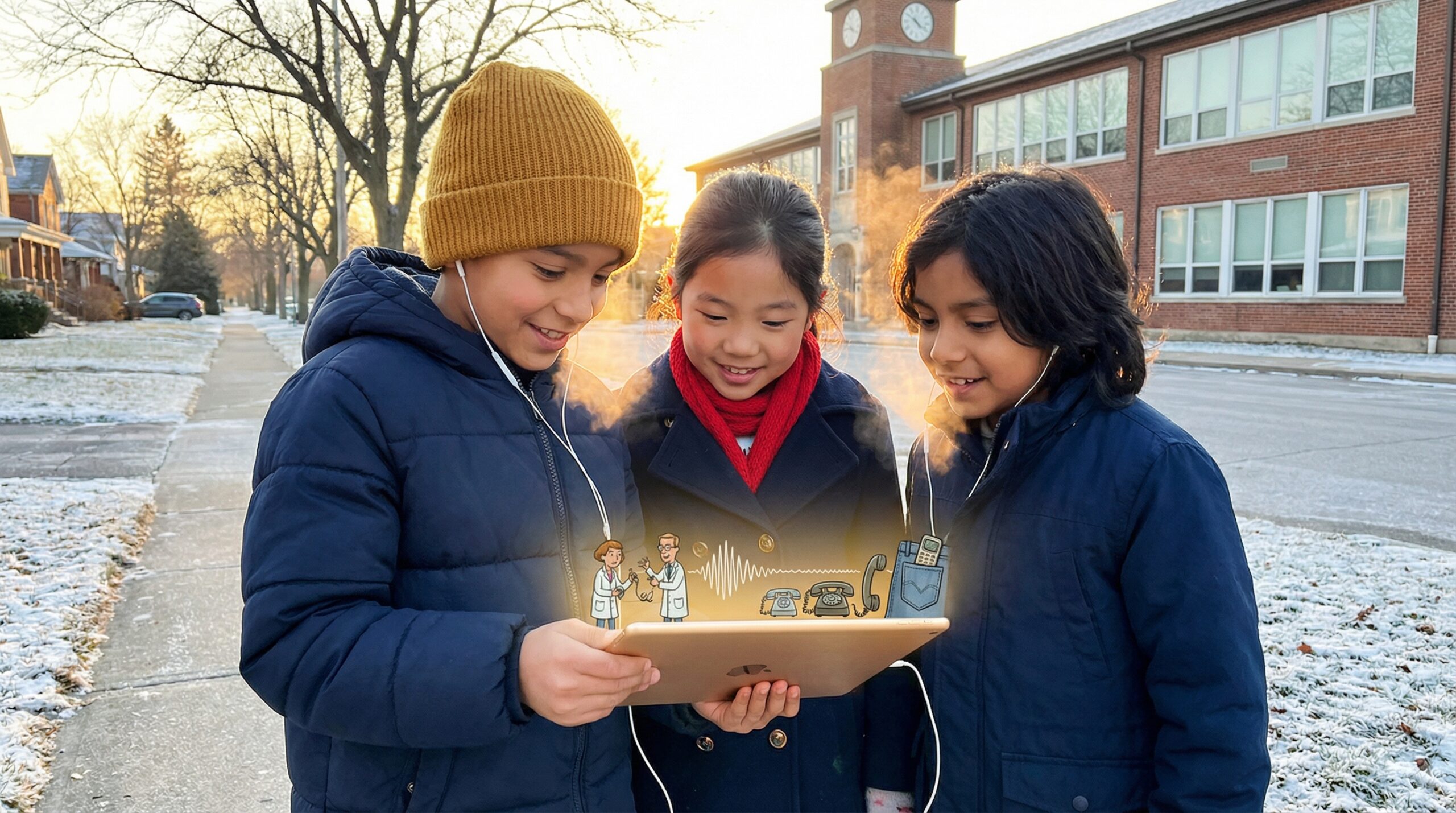
On a crisp morning from Storypie, a ten-minute audio tale lets a touchscreen tell its own story. It travels from 1960s labs to your pocket. Tip: play it on the way to school to spark calm curiosity. Also, try other short tales to make transitions joyful.
Read or listen to a story about Touchscreen now: For 3-5 year olds, For 6-8 year olds, For 8-10 year olds, and For 10-12 year olds.
For more short audio tales and parent-friendly prompts, visit Storypie.
Final thought: touchscreens are both a practical tool and a bright little delight for learning. With care and curiosity, they open playful doors with a grown-up nearby.